
Urea Metering Pump Selection for SCR: Flow, Crystals and Accuracy
Good urea metering pump selection starts with one question most RFQs skip: is the pump handling concentrated urea solution from the storage tank, or the diluted solution going to the injectors? Once that is clear, size the flow with margin, set pressure from the injector back to the pump, treat materials and crystal prevention as must-haves, and only then compare turndown and accuracy. This urea metering pump selection guide is written for process engineers preparing an SCR or SNCR package and for buyers who have to get quotes that actually match the job.
Urea Metering Pump Selection Starts With the Dosing Stage
A typical denitrification skid has at least two liquid stages. Concentrated urea solution leaves the storage tank, then it is blended with demineralized water and sent to the lances or the hydrolysis unit. A pump on the concentrated side handles a small, strong flow where crystals are the main enemy. A pump on the dilute side moves far more volume, sees less crystal risk, and has to be interlocked with the dilution water ratio.
We regularly see inquiries that just say "urea pump, one unit." The supplier guesses, and the mistake shows up during commissioning. Mark the stage on the P&ID first; urea metering pump selection without it is guesswork.
SCR and SNCR also differ. In SCR, urea is usually converted to ammonia upstream of the catalyst. In SNCR, solution is sprayed straight into the furnace through many lances in several zones, so distribution and pressure balance matter much more.
Flow Range in Urea Metering Pump Selection
The reagent demand comes from flue gas flow, inlet NOx, the emission limit and the molar ratio. We covered that calculation in how to work out the urea dosing rate. For urea metering pump selection, what you do with that number is just as important:
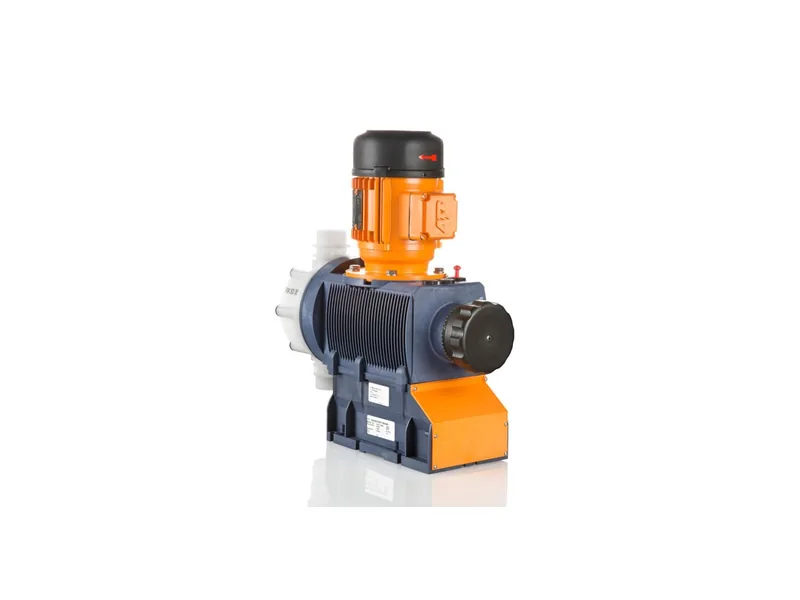
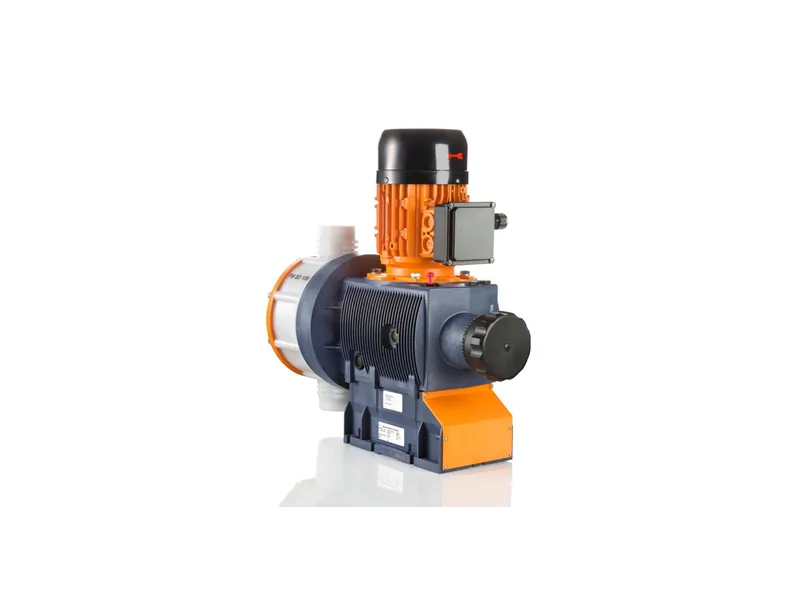
Figure 1: ProMinent Sigma/3 motor-driven diaphragm metering pump. Image source: ProMinent official website
- Upper end. Take the flow at maximum continuous load and the worst inlet NOx, then add margin. Many engineers size somewhere around 1.2 to 1.3 times that figure. Too little margin and a change in coal quality leaves you short.
- Lower end. Low-load flow must still sit inside the pump's useful adjustment range. An oversized pump running at a tiny stroke setting doses poorly.
- Number of pumps. Duty plus standby is the usual arrangement. Large SNCR systems sometimes get one pump per zone.
The classic urea metering pump selection trap is sizing only for rated load and forgetting start-up, low load and fuel swings. Then a summer peak arrives, the pump is already at full stroke, and stack NOx still will not come down.
Discharge Pressure: Work Back From the Injector
Required discharge pressure is the injector atomizing or spray pressure plus losses through piping, filters and flow meters, plus static height. The pump's rated pressure should sit clearly above that total, not right at the edge.
Long SNCR headers with many lances can lose a lot of pressure before the last lance. Fix the routing early in the design, otherwise poor atomization will be blamed on the pump. Fit a pressure relief valve on the discharge so a blocked lance cannot overpressure the diaphragm.
Materials and Crystal Prevention Are Non-Negotiable
In urea metering pump selection, remember that urea solution attacks carbon steel. Liquid ends and piping are normally 316L stainless steel; plastics such as PVDF may be acceptable depending on temperature and concentration, but confirm it with the manufacturer. PTFE-faced diaphragms are common. Check seal elastomers for urea compatibility instead of copying a water pump spec.
Crystal prevention is a combination of measures, and a sound urea metering pump selection plans for all of them:
- Heat tracing and insulation on the concentrated line, pump head and filters, with temperature feedback to the control system.
- A recirculation loop from tank to pump and back, so the solution keeps moving when dosing stops.
- Flushing the pump head and lines with demineralized water before shutdown, and draining for long outages.
- Pump close to the tank, with a short, generously sized suction line.
Heat tracing details are in our article on urea dosing pump installation. In cold climates, an outdoor pump is a liability; a heated pump room is usually worth it.
Control, Turndown and Accuracy
SCR and SNCR control follows outlet NOx and boiler load, so the pump must accept a 4–20 mA signal. A common setup is a motor-driven diaphragm metering pump with a variable frequency drive for speed, with stroke length set manually at a sensible position. See urea pump load following and speed control for tuning.
Turndown and accuracy close out urea metering pump selection. Diaphragm metering pumps hold good steady-state accuracy within their rated range, but only with stable back pressure. If the discharge is close to atmospheric or pressure swings, add a back pressure valve and consider a pulsation dampener.
From Urea Metering Pump Selection to a Model
For small to medium flow at moderate pressure, a mechanical diaphragm metering pump is usually enough. Motor-driven pumps such as the ProMinent Sigma/2 and Sigma/3 are offered with stainless steel and other liquid end materials; check the current catalog for exact sizes. Higher flow or higher pressure points toward hydraulic diaphragm or plunger pumps. Compare options in our mechanical diaphragm metering pump range and on the ProMinent brand page.
To get a quote that fits first time, send all of this at once: dosing stage, solution concentration, minimum and maximum flow, injector pressure, ambient temperature range, hazardous area classification and the control signal. A complete datasheet makes urea metering pump selection a quick exercise instead of three rounds of emails.
Conclusion
Urea metering pump selection follows a fixed order: dosing stage, flow range with margin, discharge pressure, materials and crystal prevention, then control and accuracy. The first steps size the pump; the later ones decide whether it runs reliably through winter and low load. If you have your flow range, pressure, concentration and site temperatures ready, contact our engineers and we will check the pump type and package with you.
FAQ
Can a urea dosing pump use a plastic liquid end?
Sometimes. Some plastics work at ambient temperature, but heat-traced concentrated lines run warmer, so verify compatibility with the manufacturer before you choose.
Can the duty and standby pumps run together?
Yes, if the control system knows both are running. Otherwise the combined flow will overdose. Check flow and logic for that case.
Does every SNCR lance need its own pump?
No. Usually one pump feeds a zone and a distribution module with flow control valves splits it between lances.
Should the metering pump be interlocked with dilution water?
Yes. Concentrated urea with no dilution water will crystallize at the lance tips, so a low dilution flow alarm should stop the pump.
Do I need an explosion-proof pump?
Urea solution is not flammable, but if the pump room sits in a classified area, motor and drive must match that zone. The site safety assessment decides.