
Vortex vs Magnetic Flow Meter: How to Choose by Fluid and Flow
A boiler house retrofit lists flow points for steam, softened water, demineralized water and compressed air, and the buyer asks whether mag meters can cover all of them. They cannot. The short answer to the vortex vs magnetic flow meter question: a mag meter measures only conductive liquids, while a vortex flow meter handles liquids, gases and steam but struggles at low velocity. If the liquid conducts, start with a mag meter. Steam and gas are vortex territory. Low-conductivity water needs a different answer. This guide is for engineers and buyers specifying meters for water treatment plants and boiler rooms.
Vortex vs magnetic flow meter: how each one works
A magnetic flow meter applies Faraday's law. A conductive liquid moving through a magnetic field generates a voltage proportional to velocity, picked up by electrodes in the tube. The bore is unobstructed, so pressure loss is negligible.
A vortex flow meter places a bluff body in the pipe. As fluid passes it, vortices shed alternately from each side at a frequency proportional to velocity, and a sensor counts them. Conductivity does not matter, so liquids, gases and steam are all possible, but there is now an obstruction in the line.
Conductivity: the first filter in vortex vs magnetic flow meter selection
A mag meter needs a minimum liquid conductivity, typically in the range of a few µS/cm depending on the model. Raw water, wastewater, softened water and most treatment chemicals are fine.
Demineralized water, RO permeate, condensate, oils and most organic solvents are not. Put a mag meter on them and the reading wanders or disappears. Do not put a mag meter on demineralized water or condensate. It is the most common mistake in boiler rooms. For chemical lines specifically, see magnetic flow meters for chemical dosing.
Vortex vs magnetic flow meter on steam and gas
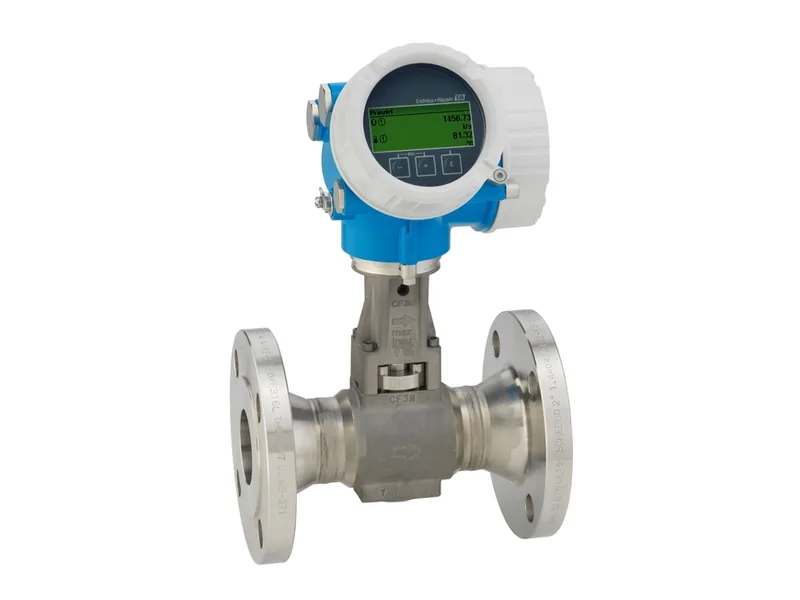
Steam metering is mostly done with vortex meters. Steam is billed and balanced by mass, while the vortex meter measures volume, so temperature and pressure compensation is used to get density. Some vortex meters integrate those measurements: the Endress+Hauser Prowirl F 200, for example, is offered with a mounted pressure measuring unit, which saves an external transmitter and flow computer wiring.
Compressed air, biogas and natural gas are also common vortex applications, again with compensation. A mag meter cannot measure any gas.
Low-flow cutoff in a vortex vs magnetic flow meter comparison
Vortex shedding needs enough velocity to stay regular. Below that the meter applies a low-flow cutoff and reads zero. Lines that run at low load overnight or sit idle seasonally can show long periods of no reading.
By contrast, a mag meter keeps measuring at low velocity, with some loss of accuracy, and usually has a wider turndown. For liquid lines with big flow swings, it is the safer choice. If you must use a vortex meter on a low flow, a reduced line size raises velocity, but check the added pressure drop.
Pressure loss and straight runs in the vortex vs magnetic flow meter decision
The mag meter bore is open, so pressure loss is negligible, which suits systems with little pump head to spare. The bluff body in a vortex meter costs some pressure. On steam mains that is usually acceptable; on liquid systems with tight head, calculate it.
Vortex meters are more sensitive to the upstream flow profile and normally need longer straight runs than mag meters, especially after elbows, valves or reducers. Pipe vibration can also disturb the vortex signal, so avoid mounting close to pump discharges or on poorly supported pipe. Mag meter installation details are a separate topic.
Typical split in water treatment and boiler rooms
In practice, the vortex vs magnetic flow meter split usually looks like this:
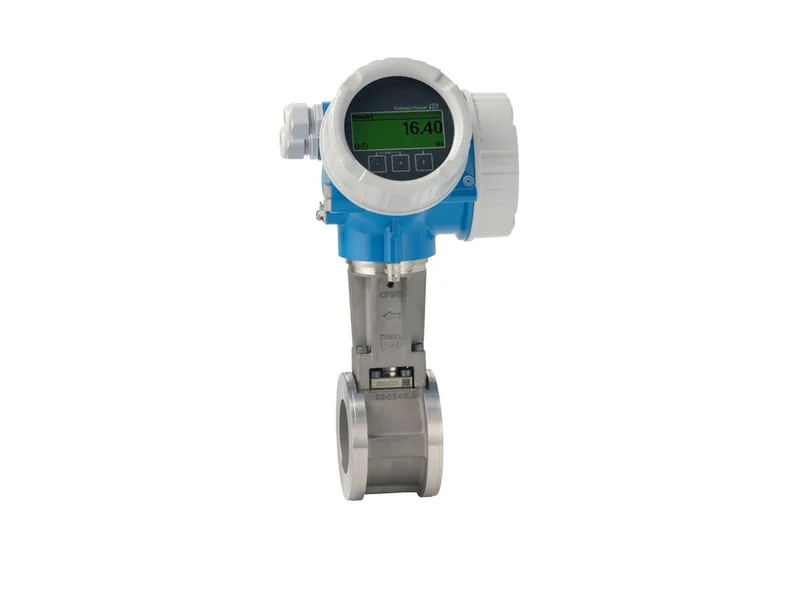
Figure 1: Endress+Hauser Proline Prowirl D 200 wafer vortex meter. Image source: Endress+Hauser official website
- Raw water, influent, effluent, sludge return: mag meter. Conductive, may carry solids, low pressure loss.
- Softened water and cooling tower make-up: mag meter.
- Demineralized water, RO permeate, condensate: conductivity too low for a mag meter; consider vortex or another principle.
- Steam mains and header branches: vortex with pressure and temperature compensation.
- Compressed air and main aeration air: vortex is common; small branches may need a different meter.
- Small-bore chemical feed lines: often neither fits; see dosing pump flow meter selection.
Questions to answer before a vortex vs magnetic flow meter choice
For each point, ask: Is the fluid a liquid, gas or steam? If liquid, does it conduct? What are the minimum, normal and maximum flows? What pressure, temperature and allowable pressure drop apply? How much straight pipe is available, and how much vibration? Answer these and the vortex vs magnetic flow meter choice is usually obvious.
Cost for both depends on line size, materials, protection rating, compensation options and communication. Comparing unit prices alone misses the point; a meter that cannot measure the fluid is the expensive one.
Conclusion
In the vortex vs magnetic flow meter comparison, neither replaces the other. Choose a mag meter for conductive liquids, low velocities and lines that cannot afford pressure loss. Choose a vortex flow meter for steam, gases and low-conductivity liquids, and respect its low-flow cutoff, pressure loss and straight-run needs. Start with the fluid, then the flow range and the installation. Browse our flow meters, and for boiler water chemistry see boiler water treatment dosing essentials. Send us the fluid, flow range, pressure, temperature and pipe size, and contact our engineers to confirm the right meter.
FAQ
Can a mag meter measure steam?
No. Steam and gases are not conductive, which makes this the easiest vortex vs magnetic flow meter call: use a vortex meter or another principle for steam.
Can a vortex flow meter measure wastewater?
Not recommended. Fibers and grit can foul or wear the bluff body, and wastewater flows swing widely. A mag meter is more stable there.
What meter suits demineralized water?
Its conductivity is too low for a mag meter. Consider a vortex meter, or ultrasonic or Coriolis meters that do not rely on conductivity, depending on size and accuracy needs.
My vortex meter reads zero at night. Is it faulty?
Probably not. Flow has likely dropped below the low-flow cutoff. Check the actual night flow; for long low-flow periods consider a reduced line size or a different meter.
Vortex vs magnetic flow meter: which needs less maintenance?
A mag meter has no obstruction; upkeep is mainly electrode fouling and grounding. A vortex meter needs attention to bluff body deposits and vibration. Which is easier depends on the fluid.