
RO Membrane Biocide Dosing: Non-Oxidizing Biocides and Shock Feed
RO membrane biocide dosing has to use a non-oxidizing biocide, usually DBNPA or an isothiazolinone product, injected ahead of the cartridge filter by a metering pump on a timed shock schedule rather than continuously. The reason is the membrane itself: thin-film polyamide RO membranes are damaged by free chlorine and other oxidants, and the loss of salt rejection is permanent. So chlorine stays in pretreatment, a reducing agent removes it before the membranes, and biofouling on the membranes is handled by a non-oxidizing biocide.
This guide to RO membrane biocide dosing is for water treatment operators and for engineers who build RO chemical dosing skids.
Why oxidizing biocides cannot reach the membrane
Sodium hypochlorite, chlorine dioxide and ozone are oxidizing biocides. They kill quickly and cost little, which is why they work well in pretreatment. The polyamide separating layer of an RO membrane, however, is attacked by oxidants, and even low concentrations add up over time. The typical story on site is a slow drop in rejection and rising permeate conductivity that cleaning does not fix. An autopsy then shows oxidation damage.
That is why RO feed water usually gets two treatments: sodium bisulfite or a similar reducing agent to remove residual chlorine, monitored by an ORP or chlorine analyzer, and a non-oxidizing biocide for biofouling control on the membranes.
Common non-oxidizing biocides for RO membrane biocide dosing
DBNPA
DBNPA kills fast and breaks down quickly in water, so it is the most common choice for RO membrane biocide dosing. It degrades faster at higher pH, so follow the supplier's guidance on dose point and contact time.
Isothiazolinones
These act more slowly than DBNPA but persist longer. Some plants use them for shutdown preservation or alternate them with DBNPA to reduce the chance of microbial tolerance.
In RO membrane biocide dosing, which product, what dose and how often depend on biofouling potential of the feed water, the membrane manufacturer's compatibility list and the chemical supplier's program. Operators should not switch chemicals on their own.
Why RO membrane biocide dosing uses shock feed
Shock dosing means raising biocide concentration for a short period at set intervals, then stopping. Continuous low-level dosing costs more and lets microbes adapt. A shock exposes the biofilm on membrane surfaces and in piping to an effective concentration for long enough to work, with lower overall chemical use.
Decide in advance where permeate goes during a shock. If permeate is used for drinking water, food or high-purity service, it is generally diverted to drain during dosing. Follow local rules and the biocide label.
Where to inject in RO membrane biocide dosing
The injection point is normally upstream of the cartridge filter. The biocide treats bacteria on the filter cartridges on the way through and is fully mixed by the time it reaches the first membrane stage.
One trap catches many sites: some non-oxidizing biocides react with reducing agents. If the biocide quill sits right next to the bisulfite quill, part of the biocide is consumed before it ever reaches the membranes. Keep biocide, bisulfite and antiscalant injection points separate, with spacing and order as the supplier recommends. For quill details, see how to tie a dosing line into a main pipe; for antiscalant feed, see low-flow antiscalant dosing for RO.
Timer control for RO membrane biocide dosing
Biocide volumes are small and dosing periods short, so a solenoid metering pump is the natural fit. A typical control setup:
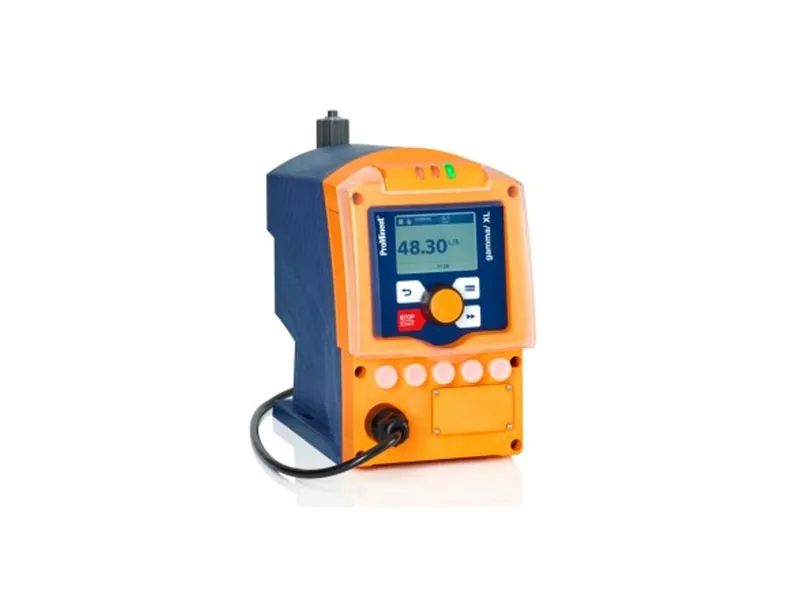
Figure 1: ProMinent gamma/XL solenoid-driven metering pump. Image source: ProMinent official website
- a built-in or external timer starts and stops the pump on a set cycle and duration;
- an interlock with the RO high-pressure pump so no biocide is fed when the RO is off and chemical cannot sit in the lines;
- a permeate divert valve that switches to drain during the shock, where needed;
- a low-level alarm on the chemical tank to prevent dry running.
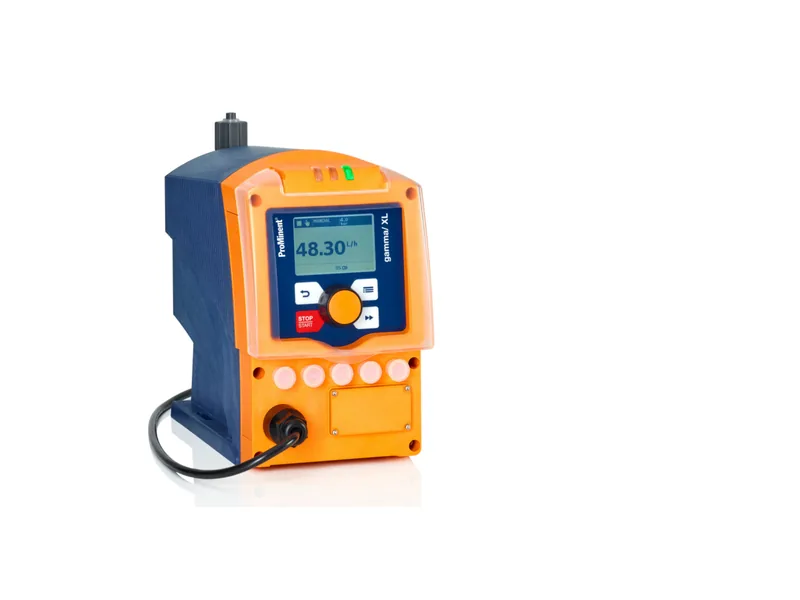
The ProMinent gamma/XL solenoid metering pump has an integrated process timer, and ProMinent lists biocide metering as one of its typical uses. Flow is set directly in l/h, and integrated pressure measurement shows discharge pressure during commissioning. On small RO units it can serve as a simple control unit for the whole biocide feed. See the ProMinent brand page, other solenoid metering pumps, and what an antiscalant dosing system includes for packaged skids.
Wetted materials
For RO membrane biocide dosing, biocide solutions are somewhat corrosive, so a PVDF head with PTFE seals is the usual choice. Store the tank out of direct light and do not keep diluted solution for long.
Safety
RO membrane biocide dosing chemicals need careful handling. DBNPA and isothiazolinones irritate skin and eyes. Wear goggles and chemical-resistant gloves and mix in a well-ventilated area. Before removing a pump head or injection valve, stop the pump, close valves and relieve pressure, then flush residue with clean water.
Conclusion
RO membrane biocide dosing must use a non-oxidizing biocide, most often DBNPA or an isothiazolinone. Feed it as a timed shock, inject ahead of the cartridge filter, and keep the injection point apart from bisulfite and antiscalant. A metering pump with a timer, interlocked with RO operation and backed by permeate diversion and a low-level alarm, gives a reliable non-oxidizing biocide program. Send us your RO permeate flow, biocide name and the supplier's recommended cycle and dose, and contact our engineers to check pump and control choices.
FAQ
Can sodium hypochlorite be fed straight into an RO system?
Not to the membranes. Hypochlorite can be used in pretreatment, but residual chlorine must be removed with a reducing agent before the RO.
How often should RO membrane biocide dosing run?
It depends on feed water biofouling and the chemical program. Suppliers usually set the interval from pressure drop trends, flow decline and microbial tests.
Can DBNPA and sodium bisulfite share one injection point?
It is not recommended. They can react and consume the biocide, so use separate injection points in the order the supplier specifies.
Can permeate be used during a shock dose?
That depends on the end use. For drinking water, food or high-purity water, permeate is generally sent to drain during dosing; industrial users follow local rules and the label.
Pressure drop keeps rising despite biocide. What next?
First confirm the biocide actually reaches the membranes at the right concentration and contact time. If differential pressure keeps climbing, schedule a chemical clean; biocide will not remove established fouling.