
Pot Feeder vs Dosing Pump: Which Suits Your Water System?
The pot feeder vs dosing pump question comes down to how much your system loses water and how tightly you need to hold chemical levels. A pot feeder, also called a bypass feeder or shot feeder, is a small pressure vessel piped across two points in a closed loop. Differential pressure pushes a side stream through the pot and carries the chemical into the system, with no power and no moving parts. A dosing pump feeds a measured amount continuously and can follow a signal. Low-makeup closed loops usually do fine with a pot; open or high-makeup systems need a pump. This guide walks through the pot feeder vs dosing pump trade-offs from an operator's point of view.
Pot Feeder vs Dosing Pump: How a Bypass Pot Feeder Works
A typical bypass feeder includes:
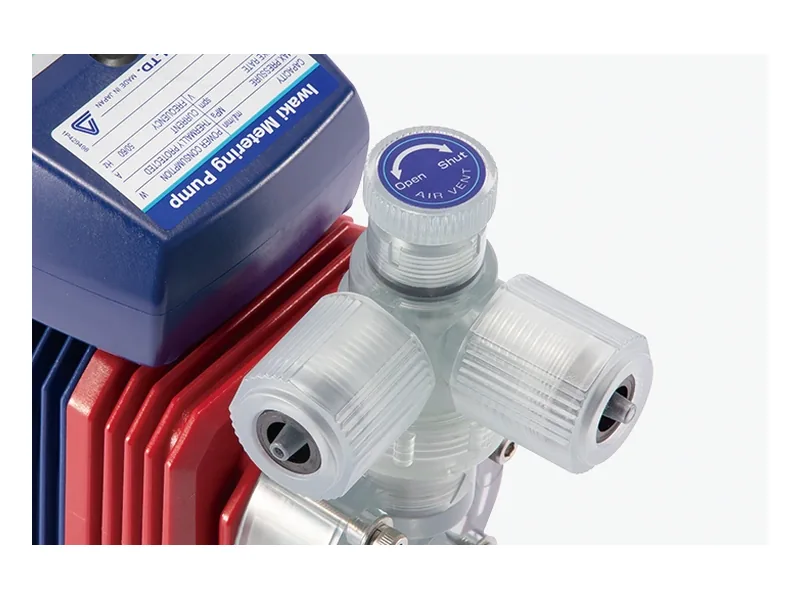
Figure 1: IWAKI EHN-R pump head air vent valve. Image source: IWAKI official website
- A pressure-rated vessel with a fill opening and a sealed cap;
- An inlet and an outlet line, each with an isolation valve;
- A drain valve and a vent valve;
- On some models, a funnel for charging.
The inlet ties into a higher-pressure point, usually the circulating pump discharge, and the outlet returns to a lower-pressure point such as the pump suction. Only a small portion of the main flow goes through the pot.
The chemical is washed out, not pumped in. Right after charging, the outflow is strong. As the pot dilutes, less and less chemical leaves, until the vessel holds mostly water. That decay curve is the heart of the pot feeder vs dosing pump debate.
Where Closed Loop Dosing With a Pot Feeder Works Well
Pot feeders are best for closed loop dosing where makeup is very low. Water volume barely changes, chemical is added a few times a year, and it circulates evenly. Nobody needs to control concentration hour by hour.
Common applications:
- Hot water heating loops;
- Chilled water and closed condenser loops;
- Small closed process cooling circuits;
- Intermittent treatment on some small boilers.
Corrosion inhibitors and scale inhibitors added on a schedule are the typical chemicals. For these loops, the pot feeder vs dosing pump choice usually lands on the pot.
Sizing a Bypass Feeder Before the Pot Feeder vs Dosing Pump Call
Volume. Size it for one charge of chemical. A pot that is too small means frequent charging; one that is too large leaves chemical sitting for a long time.
Pressure and temperature rating. The vessel and valves must be rated at or above system working pressure, and heating loops add temperature. Stainless or internally protected carbon steel vessels are common on hot water systems.
Connection points. The differential across the two taps sets the flow through the pot. Too little and the chemical never leaves; too much and it all goes in at once. A throttling valve on the bypass gives some adjustment.
Compatibility. Vessel, gaskets and valves must suit the chemical. Acid cleaners should not go through a pot feeder.
How to Charge a Pot Feeder Safely
Always isolate and depressurize first. A typical sequence:
- Close the inlet and outlet valves;
- Open the vent, then the drain, and empty the pot;
- Close the drain and add the chemical through the fill opening;
- Refit the cap and close the vent;
- Open the outlet valve first, then slowly open the inlet.
The classic accident is opening the cap under pressure. Liquid sprays out at face height. Wear goggles and gloves, and fit a pressure gauge on the vessel so you can see it reach zero before you touch the cap.
Limits That Shape the Pot Feeder vs Dosing Pump Choice
Anyone who has run a pot feeder knows these:
- Dose is an estimate based on experience;
- Concentration in the system rises after charging and then sags;
- No automatic response to water quality or makeup;
- Every charge is manual, which becomes a burden as makeup grows;
- The pot is a pressure vessel, so rating and inspection apply.
Dissolution rate also matters in any pot feeder vs dosing pump review. Slow-release solid products last longer than liquids, so the same charge can behave very differently.
When a Dosing Pump Wins the Pot Feeder vs Dosing Pump Comparison
Switch to a metering pump if any of these apply, because here the pot feeder vs dosing pump trade-off clearly favors the pump:
- Open cooling towers with high makeup and blowdown;
- Boiler feedwater needing continuous or flow-proportional feed;
- Control from online instruments such as conductivity or pH, as explained in dosing system control principles;
- Tight upper and lower limits on chemical residual.
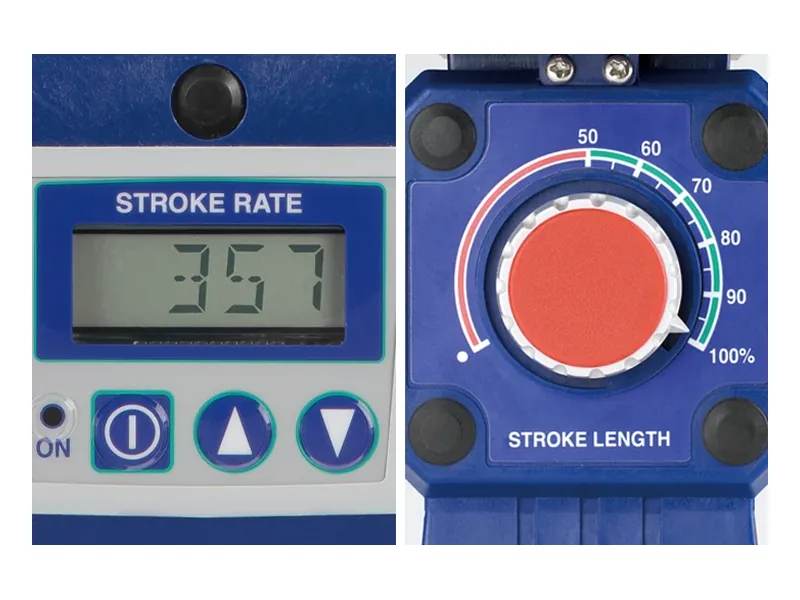
A pump-based system adds a tank, metering pump, injection valve and controls; see how a dosing system works. For small flows a solenoid pump is usually enough. The IWAKI EHN-R series is one example: IWAKI lists a capacity range of 38 to 450 mL/min, a digital controller setting 1 to 360 strokes per minute in single-stroke steps, stroke length adjustment for a wide setting range, and an air vent valve on the head. Browse solenoid metering pumps and IWAKI pumps. For injection locations, see chemical injection points.
Conclusion
In the pot feeder vs dosing pump decision, the pot feeder wins on simplicity: no power, low cost, and a good match for low-makeup closed loops treated on a schedule. Its weaknesses are imprecise dosing, a rise-and-fall concentration curve, manual work and the need to depressurize before every charge. Where makeup is high, feed must be continuous or proportional, or instruments should drive the dose, a metering pump is the better tool. Tell us the system type, volume, makeup rate and chemical, and we will help you choose the right feed method.
FAQ
Is a bypass feeder the same as a pot feeder?
Generally yes, and both sit on the same side of a pot feeder vs dosing pump comparison. Bypass feeder, shot feeder and pot feeder all describe a vessel piped across a pressure differential.
Does a pot feeder need electricity?
No. It runs on the differential created by the circulating pump; when that pump stops, flow through the pot stops too.
How much chemical goes in per charge?
It is usually estimated from system volume and the supplier's target concentration, then adjusted from test results.
Can a pot feeder serve an open cooling tower?
Not well. High makeup and blowdown wash chemical out quickly, so continuous pump feed is the usual answer.
Can a closed loop use a dosing pump instead?
Yes, and that is the other side of pot feeder vs dosing pump. Where stable residuals or automated control matter, closed loop dosing with a pump works well, at higher cost and complexity.