
How a Milton Roy Metering Pump Works: Diaphragm vs Plunger
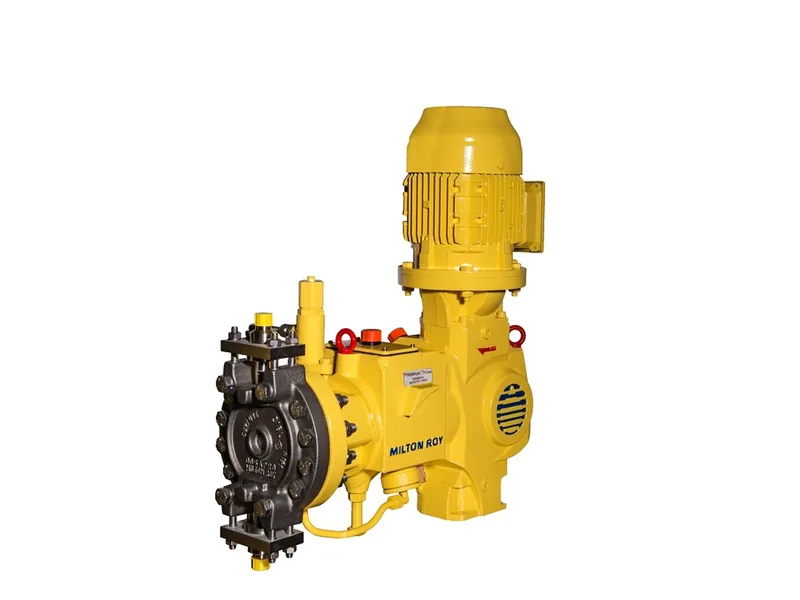
Here is how a Milton Roy metering pump works in one sentence: a motor drives a piston back and forth, each stroke moves a fixed volume, and a suction and a discharge check valve make that volume go one way. Milton Roy builds mechanical diaphragm, hydraulic diaphragm and packed plunger liquid ends on top of that idea, and the real difference between them is how the piston's force reaches the chemical.
If you have inherited Milton Roy equipment or need to specify a type, this guide explains how a Milton Roy metering pump works by starting with the shared drive and then covering each liquid end.
The common core: how a Milton Roy metering pump works
Every design starts with the drive, which turns motor rotation into straight reciprocating motion, and on industrial models it runs in an oil bath for continuous duty. Milroyal pumps use a polar crank, while Primeroyal pumps use a variable eccentric that moves the center of the eccentric shaft, and stroke can be adjusted with the pump running or stopped.
Flow follows a simple rule: flow = displacement per stroke × strokes per minute. So you have two ways to change output, stroke length or stroke speed.
The check valves do the rest:
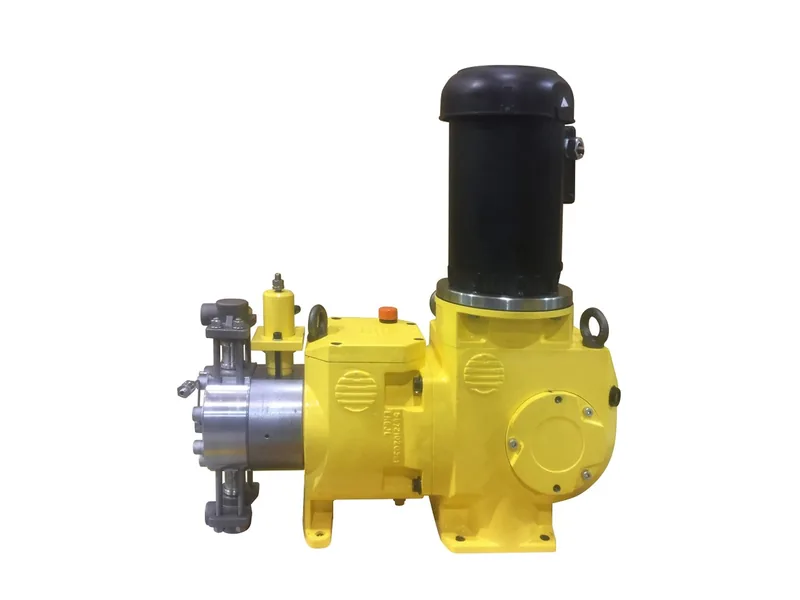
Figure 1: Milton Roy Primeroyal PH plunger liquid end. Image source: Milton Roy official website
- On the suction stroke the piston pulls back, chamber pressure drops, the suction ball lifts and liquid flows in. Back pressure holds the discharge valve shut.
- On the discharge stroke the piston moves forward, the suction valve closes, the discharge valve opens and the dose leaves the pump.
One detail trips up a lot of operators. Milton Roy's own training material says the flow-versus-stroke curve is linear but not necessarily proportional, so 50% stroke is not automatically 50% flow. Measure flow at two settings, draw a line through the points, and read other settings from that line. That calibration habit is part of how a Milton Roy metering pump works in practice, not just on paper.
Mechanical diaphragm: the piston pulls the diaphragm directly
The G series (GM and GB) is the simplest place to see how a Milton Roy metering pump works. Here the plunger is bolted and clamped straight to the center of the diaphragm. Push forward and the diaphragm bulges into the chamber; pull back and it draws liquid in.
There is no hydraulic oil, and the space behind the diaphragm sits near atmospheric pressure, so a ruptured diaphragm shows up as leakage there. That makes leak detection cheap. The design also tolerates slurries and viscous liquids reasonably well.
The limit is pressure. The diaphragm takes the full pressure difference, and Milton Roy states that this family generally peaks around 175 psi (about 12 bar). Standard turndown is 10:1, and adding a VFD with remote stroke control can stretch that to 100:1. For off-gassing chemicals such as sodium hypochlorite or hydrogen peroxide, a degassing valve is recommended. Our Milton Roy G series GM/GB selection guide covers the sizes.
Hydraulic diaphragm: oil between piston and diaphragm
If you want to see how a Milton Roy metering pump works at high pressure, look at the hydraulic diaphragm. It is used across mRoy, MAXROY, Milroyal and Primeroyal. The piston never touches the diaphragm. It pressurizes a trapped volume of hydraulic oil, and the oil flexes a PTFE diaphragm between two contour plates.
Pressure on both sides of the diaphragm is essentially equal, so the diaphragm carries very little stress. That is why it lasts and why it can handle high pressure. Milton Roy says its disc diaphragm liquid end can serve injection pressures of 3500 psi or more.
Much of how a Milton Roy metering pump works in this design depends on three valves that keep the oil volume right:
- Refill valve replaces the small amount of oil that slips past the piston each stroke.
- Relief valve dumps oil back if pressure goes too high, protecting the diaphragm and drive.
- Automatic air bleed removes air from the oil, because air makes the stroke soft and output drops.
Accuracy is typically in the ±0.5–1% range, and output changes little when back pressure moves. The weak point is solids: process liquid passes through small holes in the contour plate, so heavy slurries are usually a poor fit. Our article on Milton Roy hydraulic pump internal structure shows where each valve sits.
Packed plunger: the piston touches the process liquid
The packed plunger is the most direct version of how a Milton Roy metering pump works, and the only Milton Roy liquid end where the piston contacts the chemical directly. The plunger moves in and out of the chamber and displaces liquid, and packing seals it from the atmosphere.
That gives the highest suction and discharge pressure capability, good temperature tolerance and the lowest NPSH requirement. The trade-off is the packing. It is a dynamic seal, it weeps a little by design, and it needs adjustment and replacement. With abrasive liquids the packing and plunger wear faster, and Milton Roy's manual suggests a flushing connection with V-type or chevron packing. For toxic or costly fluids that must not leak, a plunger is usually not the first choice.
Matching how a Milton Roy metering pump works to the job
Selection then gets easier:
- Water treatment dosing at modest pressure with non-hazardous chemicals: mechanical diaphragm.
- High pressure, toxic or expensive fluids, tight accuracy: hydraulic diaphragm, with a double diaphragm and leak detection if needed.
- Very high pressure or temperature where some packing maintenance is acceptable: packed plunger.
The Primeroyal H shows the logic well, since it is offered with both a diaphragm liquid end and a plunger liquid end on the same drive. For a brand-neutral comparison, read hydraulic vs mechanical diaphragm metering pumps. Product ranges are listed under hydraulic diaphragm metering pumps and Milton Roy.
Conclusion
How a Milton Roy metering pump works comes down to one reciprocating drive and two check valves, with flow equal to displacement times stroke rate. The liquid end decides the rest. A mechanical diaphragm is pulled directly and generally stays around 12 bar. A hydraulic diaphragm is balanced by oil, reaches much higher pressure and typically holds ±1% or better. A packed plunger reaches the highest pressure and temperature but needs packing care. Once you see how a Milton Roy metering pump works in each liquid end, pin down pressure, fluid hazard and accuracy before choosing the family. If you want a second opinion on your duty point, contact us with the fluid, pressure and flow.
FAQ
How does a Milton Roy metering pump differ from a centrifugal pump?
Here is how a Milton Roy metering pump works differently: it is positive displacement and moves a fixed volume per stroke. Discharge pressure changes have little effect on its flow, unlike a centrifugal pump.
Why is a mechanical diaphragm pump limited in pressure?
The piston pulls the diaphragm directly, so the diaphragm carries the full pressure difference. Milton Roy rates the G series family at roughly 175 psi peak.
Does a hydraulic diaphragm pump need separate oil?
Yes, the hydraulic oil and the gear oil are separate systems. Use the oil grades and change intervals given in the manual for your specific model.
Is a little leakage from a packed plunger normal?
A small, visible weep from the packing is normal. If it increases, adjust or replace the packing and check the plunger surface for scoring.
Does 50% stroke give 50% of rated flow?
Not exactly, and this is a practical part of how a Milton Roy metering pump works. The curve may not pass through zero, so calibrate at several settings such as 100%, 50% and 10% before relying on the dial.