
Plunger Metering Pump Commissioning: Startup Checklist and First Run
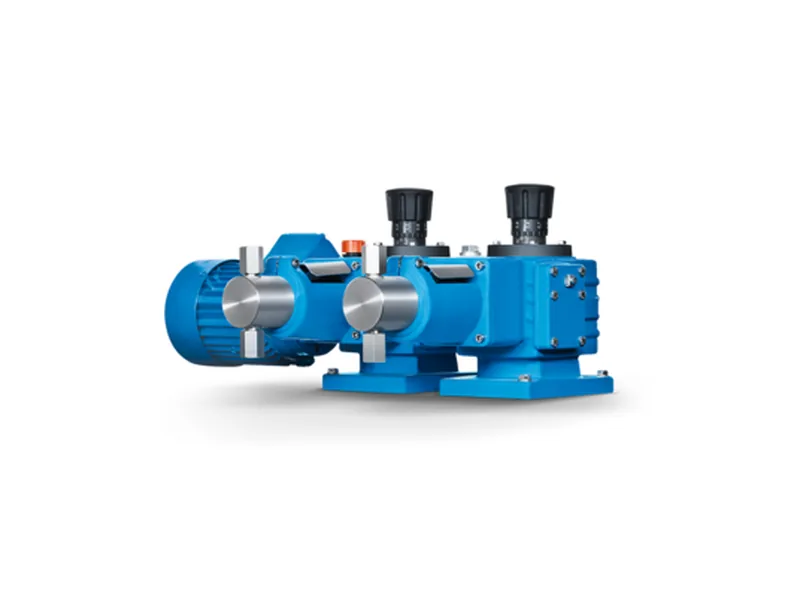
Good plunger metering pump commissioning follows one rule: prove the pump can turn safely before you ask it to work against pressure. After installation, go through pre-start checks, a no-load run, a water run, a chemical run, packing adjustment and flow calibration, in that order. A packed plunger pump moves liquid with a plunger sliding through a gland, and it often runs at higher pressure than a diaphragm pump. Skip a step and you risk burnt packing at best and a dead-headed, ruptured line at worst. We use the LEWA ecoflow packed plunger pump as the reference here, and the checklist suits site installers and maintenance crews.
Piston Pump Startup Checklist Before Power On
Most problems in plunger metering pump commissioning can be caught with the motor still off.
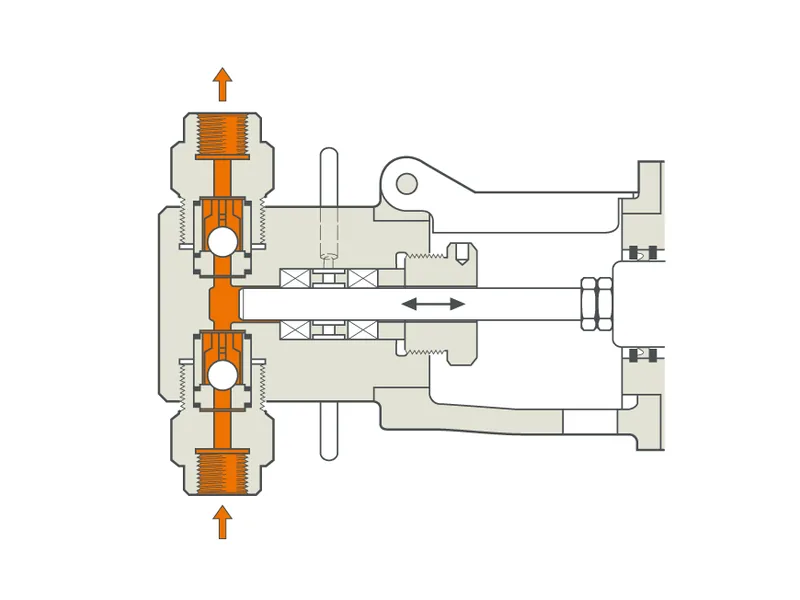
Figure 1: LEWA ecoflow K pump head cross section. Image source: LEWA official website
- Gear oil. Some drives typically ship without oil. Check the manual and the sight glass, fill to the mark, and do not substitute the oil grade.
- Motor rotation. Bump the motor and compare with the arrow on the housing. Reverse rotation is hard on the gearbox and the plunger.
- Line flushing. Weld slag and thread tape fragments are the classic cause of stuck check valves. Flush the suction line before it ever meets the pump, ideally with the inlet disconnected.
- Relief valve. Confirm the discharge relief valve is installed, set below the pump's rated pressure, and piped back to the tank or a safe drain.
- Packing gland. Leave the gland nuts on a new pump only a little past finger tight so you have room to adjust during the run.
Open every valve on the discharge side and the suction side. Starting against a closed discharge valve is one of the most dangerous mistakes on a plunger pump; our article on dead heading a plunger pump explains why.
No-Load Run: Mechanical Checks in Plunger Metering Pump Commissioning
Run the drive with the stroke set to zero or the head empty. Watch three things: steady motor current, no knocking or oil weeping from the gearbox, and normal temperature rise.
The point is to separate mechanical faults from hydraulic ones. If the pump is noisy with no load, the problem is in the drive, not the head or the piping. Stop and fix it before you go further in plunger metering pump commissioning.
Water Run: The Core of the First Run Test
Running clean water instead of chemical is the most valuable part of plunger metering pump commissioning. Problems found on water usually do not damage equipment or hurt people.
Priming and suction
Start at a short stroke and let the pump clear air from the suction line. Where suction conditions are poor, prime the head or arrange flooded suction. LEWA states that the ecoflow packed plunger pump can work with an absolute suction pressure as low as 0.1 bar, but that is no excuse for a long, high suction lift. Keep the suction line short and straight.
Raising pressure step by step
Once delivery is steady, lengthen the stroke gradually and watch the discharge gauge. Pressure should rise smoothly with line resistance, not jump straight to the relief setting. If the relief valve keeps lifting, check for a closed valve or blockage downstream, then review the set point using our guide to pressure relief valve settings for dosing pumps.
Chemical Run and Packing Adjustment
Switch to chemical only after the water run is stable. For corrosive liquids, wear goggles and gloves, and plan how you will relieve pressure and drain the head before you start.
On a packed plunger pump, a light drip during run-in is normal. The packing needs a little liquid for lubrication and cooling. Adjust in small, even steps: turn both gland nuts slightly, run for a while, then look again. Over-tightening heats the packing, scores the plunger and makes leakage worse later. LEWA uses ceramic oxide plungers and offers a plunger seal with a flushing connection so leakage can be carried away safely; if your pump has one, connect it during plunger metering pump commissioning rather than after. For packing wear and plunger checks later on, see plunger pump packing replacement and plunger wear.
Common traps during plunger metering pump commissioning
No back pressure valve with a low-pressure injection point gives a small pressure difference across the pump, so flow runs high and unsteady. Several pumps sharing one discharge header may behave alone and fight each other when they run together. In winter, a thicker chemical raises suction resistance, so a pump that primed fine in summer may struggle. Look for these during plunger metering pump commissioning and you save rework later.
Flow Calibration: Finishing Plunger Metering Pump Commissioning
When delivery is steady and the packing has settled, calibrate with a calibration column or a measuring cylinder. Test at several stroke settings and check that actual flow tracks the scale in a straight line. Always calibrate at real process pressure, because figures taken while discharging to open air will read high.
Record the results as part of the plunger metering pump commissioning file. They become your baseline for spotting lost output later. Interlocks with level switches, instruments and the control system come next; our dosing system commissioning procedure covers that stage.
Conclusion
Plunger metering pump commissioning works best in sequence: oil, rotation, flushing, relief valve and gland before power on; a no-load run for the drive; a water run for priming and pressure; a chemical run followed by careful packing adjustment; and calibration at process pressure. Each step answers one question, so stop at the step where something looks wrong. To compare configurations, browse our plunger metering pump range and the LEWA brand page, or send your fluid, flow and pressure to contact our engineers.
FAQ
Is it normal for the packing to drip during the first run?
Yes, a light drip during run-in is normal. Only tighten the gland a little more if the drip turns into a steady stream.
Can a new plunger pump start straight on chemical?
It is not recommended. Prove suction, pressure and the relief valve on water, and only then switch.
Pressure will not build during the first run test. Where do I look first?
Check for air leaks on the suction side and debris in the check valves, then make sure the relief valve is not set too low or leaking at the seat.
How long should plunger metering pump commissioning take?
There is no fixed time; it depends on the duty. Run until temperature, current, pressure and leakage are all stable, then patrol more often during the first days on chemical.
How often should I recheck flow calibration?
After any packing or valve change, and whenever process pressure changes. Otherwise spot-check on your routine inspection schedule.