
Oval Gear Flow Meter for Viscous Chemicals: Polymer, Antiscalant, Oil
Is an oval gear flow meter a good choice for viscous chemicals? In most cases, yes, and higher viscosity often improves accuracy rather than hurting it. The meter does have three weaknesses: solids, entrained air and hard pulsation. This article is for engineers and operators of chemical dosing systems. It covers how an oval gear flow meter works, where it fits on polymer stock solution, neat antiscalant and oils, and the field problems that usually decide success: strainers, pulsation and jammed gears. A full comparison of every flow meter type is outside its scope.
How an oval gear flow meter measures
An oval gear flow meter is a positive displacement (PD) meter. Two meshing oval gears sit in a measuring chamber. Liquid entering the chamber turns the gears, and each revolution carries a fixed volume through the crescent-shaped pockets between gears and housing. Count the revolutions and you know the volume.
Magnets in the gears usually trigger a Hall-effect sensor or reed switch. The resulting pulses go to a register or transmitter that shows totals and rate.
Several consequences follow from that principle:
- It measures volume regardless of conductivity, so oils and solvents are fine.
- Straight-run requirements are minimal, which makes installation flexible.
- The gears need running clearances, and a small amount of liquid slips through them. That slip is the main source of error.
Why a positive displacement flow meter suits viscous fluids
Slip depends strongly on viscosity. Thin liquids like water leak through the clearances more easily. Thicker liquids resist the gap, slip falls and the oval gear flow meter becomes more repeatable. Many velocity-type meters behave the other way and lose signal quality as viscosity rises.
Higher viscosity does have a price: pressure drop rises sharply because the liquid has to drive the gears. Check the manufacturer's viscosity and pressure-loss curves at maximum flow and the highest expected viscosity, and confirm the pump and piping can absorb that loss. Chemicals thicken in winter; that seasonal jump in pressure drop is often left out of the sizing.
Polymer stock, antiscalant and oil: what to watch
Polymer (PAM) stock solution. High viscosity is not a problem for the principle. The trouble is "fish-eyes" and gel lumps from incomplete make-down that lodge in the clearances, worst when ageing time was cut short. Fixing dissolution upstream helps more than anything you do at the meter. Related symptoms are covered in PAM dosing pump not pumping.
Neat antiscalant. Moderate viscosity and easy to measure. The risk is crystals forming between gears and housing during a long shutdown, so the gears refuse to turn on restart. Flushing with clean water before a planned stop is the simplest prevention.
Oils. Diesel and lubricating oil are classic oval gear flow meter duties. Watch for viscosity changes with oil temperature, and for water or dirt in the oil.
For any fluid, confirm housing, gear and seal materials against the chemical before ordering.
Strainers and why particles jam the gears
Clearances between gears and housing are small. Hard particles, weld slag or crystals cause wear and drift at best and a locked rotor at worst, which also blocks the line.
Fit a strainer ahead of the oval gear flow meter with the mesh the manufacturer specifies. Flush new piping before installing the meter, or the first load of slag and debris ends up inside it. Clean the strainer on a schedule; rising differential pressure means it is loading up. Mesh selection and placement are discussed in metering pump Y strainer.
Keep air out as well. A PD meter cannot tell liquid from gas, so bubbles still turn the gears and the reading runs high. Suction leaks and low tank levels that draw in air both distort the total. Add an air eliminator where needed and keep the line full.
Does metering pump pulsation affect an oval gear flow meter?
Yes. A diaphragm metering pump delivers flow in pulses, so the gears accelerate and stop with each stroke. Inertia adds error, and gears and bearings wear faster.
Common field fixes:
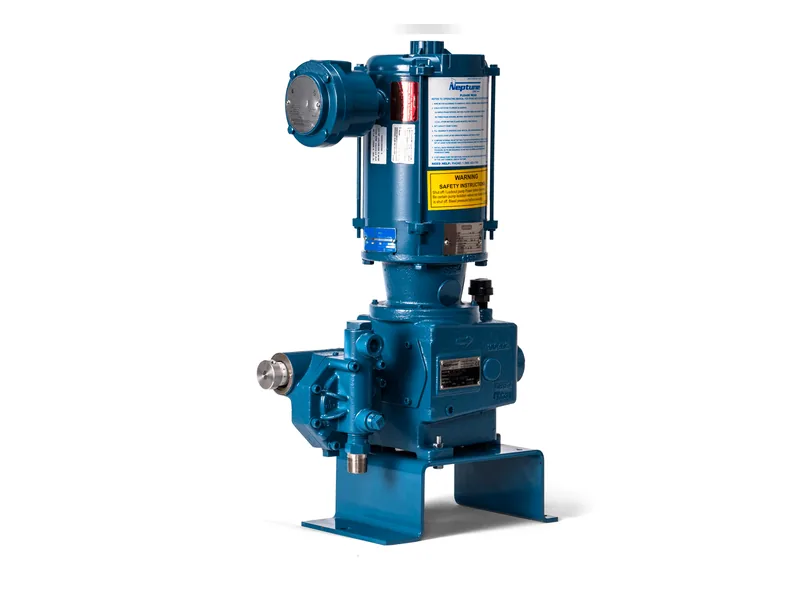
Figure 1: Neptune 500-VS high-viscosity hydraulic metering pump for viscous chemicals, not an oval-gear flow meter. Image source: Neptune official website
- Install a pulsation dampener between the pump and the meter to smooth flow; see metering pump pulsation dampener.
- Add a back-pressure valve so the line stays pressurized and siphoning or overrun downstream is reduced.
- Judge dose from totals over time rather than the instantaneous rate.
If the goal is simply to confirm pump output, a calibration column may be easier than any meter; see metering pump calibration methods.
Safety note: before cleaning the meter or strainer, stop the pump, close isolation valves and relieve pressure. Wear gloves and goggles with corrosive chemicals.
Conclusion
An oval gear flow meter works well as a flow meter for viscous chemicals because the positive displacement principle slips less as viscosity rises and does not need a conductive fluid. Success depends on three habits: a clean strainer ahead of it to stop particles and crystals, a full line free of air, and a dampener plus back-pressure valve when it follows a metering pump. Size it on worst-case viscosity for pressure drop and materials. Browse flow meters, then send the chemical, viscosity range, flow and line pressure and contact our engineers to check the fit.
FAQ
Can an oval gear flow meter measure water?
It can, but water's low viscosity increases slip, so low-flow accuracy suffers. Other meter types usually suit water better.
Does higher viscosity always make an oval gear flow meter more accurate?
Within the manufacturer's viscosity limits, thicker fluids usually slip less and read more consistently. Pressure drop climbs too, and beyond the rated limit the meter is unsuitable.
The meter suddenly stopped turning. Why?
Most often particles or crystals have jammed the gears. Stop the pump, relieve pressure, check the strainer and chamber, clean them and see whether the gears turn freely by hand.
Why does my flow meter for viscous chemicals read high?
Check for entrained air first. Suction leaks or a low tank that draws in air send bubbles through the meter, and the gears count them as liquid.
Does a positive displacement flow meter for viscous fluids need straight pipe runs?
Very little. Long upstream and downstream runs are not normally needed, but a strainer is essential and the flow arrow must point the right way.