
NEWDOSE Chemical Dosing System: How to Configure Pump, Tank and Controls
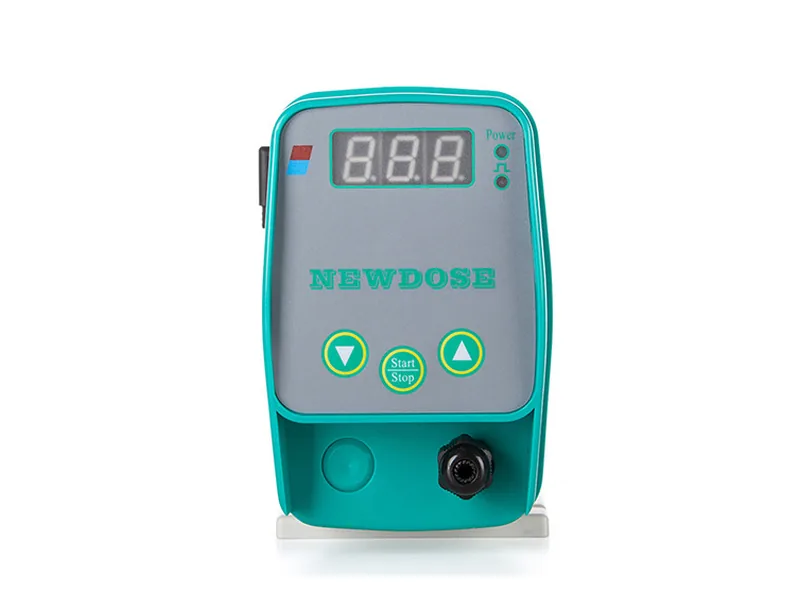
Configuring a NEWDOSE chemical dosing system comes down to one rule: pick the pump type from the chemical and the dose rate first, then build the tank, mixer, valves and controls around that pump. Small disinfection duties, pools and compact water systems usually need nothing more than a solenoid pump on an integrated tank. Continuous feed, higher flows or higher line pressure call for NDJ, ND2000 or similar mechanical diaphragm pumps with a separate tank and a skid. We have covered general skid selection elsewhere; this guide is about fitting NEWDOSE pumps and accessories into a working package.
Which Pump Goes Into a NEWDOSE Chemical Dosing System?
Everything else follows from this decision. A practical split looks like this:
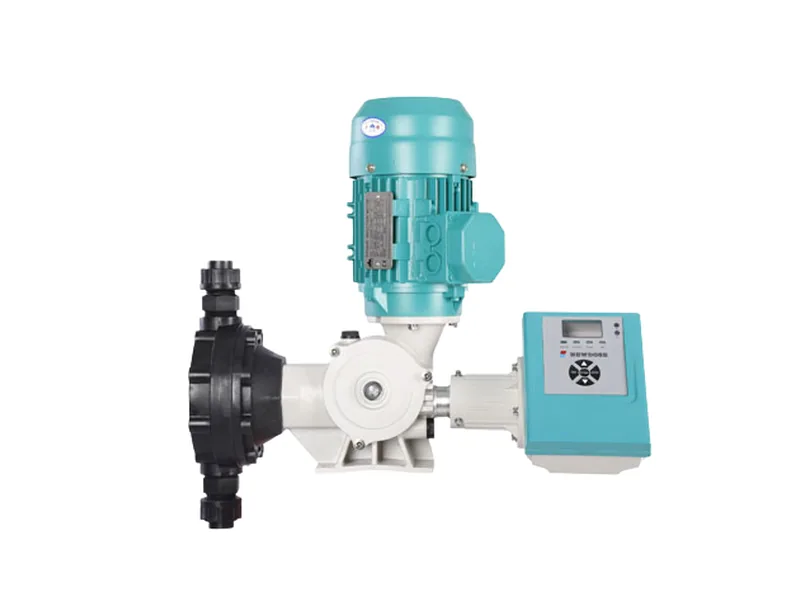
Figure 1: NEWDOSE ND series mechanical diaphragm pump with electric stroke adjuster. Image source: NEWDOSE official website
- Low flow, intermittent or flow-paced dosing such as hypochlorite disinfection or small cooling loops: a solenoid diaphragm pump. DFD is manually adjusted, DP accepts a water-meter pulse, and DM accepts a 4-20 mA signal.
- Continuous feed at larger flows such as PAC or diluted polymer in wastewater plants, or boiler make-up treatment: mechanical diaphragm pumps from the NDJ, ND2000, NDWS, NDWL or ND1000 ranges.
- Clearly higher line pressure: look at the HND high-pressure mechanical diaphragm pump and confirm against the selection manual.
Flow is not the only filter when sizing a NEWDOSE chemical dosing system. Gassing, viscosity and line back pressure all shift the choice. Sodium hypochlorite releases gas, so a solenoid pump on that duty should have a bleed valve; thicker chemicals tend to run more steadily on a mechanical pump.
Small Duties: A Compact NEWDOSE Chemical Dosing System
NEWDOSE offers the TANK integrated dosing system. The 60 L TANK-60-1-M carries one pump, and the 120 L TANK120-2-M carries one or two. The body is PE and it accepts the full NEWDOSE solenoid range, so there is no separate base frame to build.
The tank has a multifunction valve for calibration, draining and filtering. Options include a mixer, level sensor, safety lock and an instrument or controller, and the narrow bottom section leaves less unused chemical in the tank. This kind of NEWDOSE chemical dosing system suits pools, building booster stations and small wastewater units where space is tight and doses are small.
Continuous Feed: Skid-Mounted NEWDOSE Chemical Dosing System
Once flows rise, the tank becomes a separate PE or other chemically resistant vessel, and a skid frame holds the pumps, valves and instruments. Duty and standby pumps are common, so one can be serviced while the other keeps running.
Chemicals that are made up on site, like PAC or polymer, need a mixer. NEWDOSE NDM mixers are sized by tank volume, with versions listed from 100 L up to 2000 L. Impellers come in PP as standard with PVDF or stainless steel options, and shafts come coated or in stainless steel. Match both to the chemical, not just to the tank size.
For automatic control of a mechanical pump, an electric stroke adjuster can take a signal and set stroke length directly, which is often simpler than adding a variable frequency drive.
Valves and Accessories in a NEWDOSE Chemical Dosing System
Piping accessories in any NEWDOSE chemical dosing system follow the pump:
- Suction side: foot valve with strainer or a Y strainer, plus an isolation valve.
- Pump discharge: relief valve, pulsation dampener, back pressure valve and pressure gauge.
- Line end: injection valve at the dosing point.
- Calibration column so flow can be measured on site.
Mechanical pumps can take a multifunction check valve whose PTFE spring element can be set for back pressure or relief duty, which helps on compact skids. Either way, the relief valve belongs between the pump and the first isolation valve, with its outlet returned to the tank. That detail is missing from a surprising number of drawings.
Level Monitoring and Controls
In a NEWDOSE chemical dosing system, level control is the item most often cut from the budget and the one that causes the most trouble. Every tank needs at least a low-level alarm or pump stop. Otherwise the pump keeps stroking on an empty tank and nobody at the dosing point knows the feed has stopped.
Control follows the process:
- Flow-proportional dosing: a flow sensor such as the ARK61 paddle-wheel unit sends pulses straight to a DP solenoid pump.
- Closed-loop dosing on water quality: a pH, ORP or chlorine analyzer sends 4-20 mA to a DM pump or to a mechanical pump with electric stroke control.
- Plant SCADA: instruments such as the ARK81 flow transmitter-controller offer RS485 output.
Details That Get Missed
When a NEWDOSE chemical dosing system is specified in a hurry, the same gaps appear. Pump height relative to the tank: the pump should ideally sit below the minimum liquid level. Winter: cold chemicals get thicker, so leave capacity margin. The calibration column: people drop it until the day they need to prove the dose. And signal priority in the control panel: define clearly how manual and automatic modes hand over.
Conclusion
In short, a NEWDOSE chemical dosing system for small, flow-paced or quality-paced duties pairs DFD, DP or DM solenoid pumps with a TANK integrated tank. Continuous, larger duties pair NDJ, ND2000 and related mechanical pumps with a separate tank, NDM mixer and a skid, and high-pressure lines point to HND. Valves, level and controls are then chosen around the pump. For the full parts list see our guide to metering pump dosing system components; for solenoid model differences see NEWDOSE DFD, DP, DM and DC series; for mechanical pumps see NDJ vs ND2000 compared. Packaged units are listed under dosing skids and on the NEWDOSE brand page. Send us the chemical, concentration, dose rate and control requirements and contact our engineers for a NEWDOSE chemical dosing system proposal.
FAQ
Can one tank feed two pumps?
Yes. The TANK120-2-M takes two solenoid pumps, and larger tanks with duty and standby mechanical pumps are common. Give each pump its own suction line instead of sharing one small pipe.
Can solenoid and mechanical pumps share one skid?
Yes. A mechanical pump can feed the main chemical continuously while a solenoid pump adds a minor chemical. Keep power and control separate, and give each pump its own back pressure and relief protection.
Does every NEWDOSE chemical dosing system need a mixer?
No. Ready-made liquids such as hypochlorite usually do not. PAC or polymer made up on site does, and the mixer is sized by tank volume.
Can I automate dosing without an analyzer?
You can dose in proportion to flow by sending pulses from a flow sensor to a DP pump. Adjusting to water quality still needs a pH, ORP or chlorine analyzer.
What tank material should I use?
PE is the usual choice. For strong oxidizers or special chemicals, check compatibility, including valves and seals, not just the tank shell.