
Metering Pump Selection Example: From Process Data to Pump Model
This metering pump selection example walks one anonymous duty through five steps: flow margin, pressure, materials, control, and finally pump type. The short answer is that the pump model is the last thing you pick. If the first four steps are done properly, the model almost chooses itself.
Every number in this metering pump selection example is an assumption made up to show the method. It is not a real project and not data from any catalog. Swap in your own values as you read. The article is written for consulting engineers, buyers and plant operators who have to defend a pump choice later.
The duty in this metering pump selection example
An industrial wastewater plant needs caustic soda (sodium hydroxide solution, around 32%) to raise pH in a neutralization tank. Here is what the plant knows:
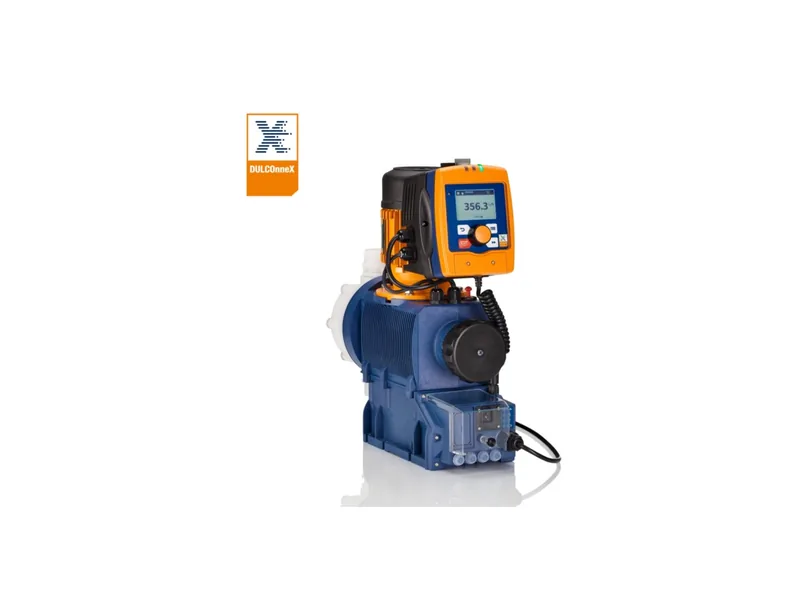
Figure 1: ProMinent Sigma/X control type S2Cb motor-driven diaphragm pump. Image source: ProMinent official website
- Peak chemical demand works out to about 40 L/h; typical demand is about 25 L/h.
- The injection point is on a pressurized pipe running at roughly 3 bar.
- The day tank sits next to the pump, with liquid level above the pump suction.
- An online pH analyzer already provides a 4-20 mA output.
- The plant runs 24/7 indoors, in a region with cold winters.
The common mistake is to open a catalog and look for "a 40 L/h pump." That is where most sizing problems start, and why a metering pump selection example is worth following step by step.
Step 1: Flow margin, not peak flow
Peak demand is not the rated flow. Diaphragm metering pumps usually hold their accuracy best between roughly 30% and 100% of stroke length, and you want normal demand sitting somewhere in the middle of that range. A margin of about 1.2 to 1.5 times peak demand is typical.
In this metering pump selection example we use 1.3, which gives about 52 L/h, and then round up to the next size in the range. At 25 L/h the pump runs near half capacity, which leaves room in both directions. A pump rated at exactly 40 L/h would need full stroke at peak, with nothing in reserve. Oversize it badly and it spends its life at 20% stroke, where repeatability suffers. There is more on this in our note on why normal flow should sit mid-range.
Step 2 of the metering pump selection example: worst-case pressure
The pump's rated pressure has to exceed the highest discharge pressure it will ever see. That is not just the 3 bar line pressure. Add friction in the discharge line, the opening pressure of the injection valve, and the setting of any back pressure valve.
The back pressure valve is the one people forget. With low line pressure and a tank level above the pump, liquid can siphon straight through the pump and you overdose. A back pressure valve stops that, but it also sets the minimum discharge pressure, so it belongs in the calculation. Adding everything up, a 10 bar pressure class is a comfortable choice for this metering pump selection example. For more detail on how stroke and pressure margins interact, see mechanical diaphragm pump sizing margins.
Step 3: Materials and cold-weather behavior
Caustic soda at this strength is generally fine with PP or PVDF liquid ends and a PTFE-faced diaphragm at ambient temperature, and 316 stainless steel heads are also commonly used. Confirm the seal material together with the head; a compatible head with the wrong O-ring still leaks.
In a metering pump selection example for caustic, the real trap is temperature. Strong caustic can crystallize when the dosing room gets cold, and crystals jam the check valve balls. The symptom is a pump that strokes normally but delivers nothing. Viscosity also climbs in winter, so a long, narrow suction line that worked in summer may starve the pump in January. Insulating the room, heat tracing the tank and lines, or diluting the caustic before dosing are the usual fixes. Our caustic soda dosing pump guide covers this chemical in more depth.
Step 4: Let the available signal decide control
Since a pH analyzer with a 4-20 mA output already exists, automatic control is the obvious route in this metering pump selection example. Motor-driven pumps can take a VFD to vary stroke frequency or an electric stroke actuator; solenoid pumps accept an analog input directly.
One warning: pH neutralization is nonlinear. Driving the pump straight from the analyzer signal, one to one, tends to overshoot back and forth. A PID loop in the controller works better, along with a capped maximum output so a failed probe cannot leave the pump at full stroke. Mount the probe downstream of proper mixing, or the loop will chase a lagging reading.
Step 5: Choose the pump type last
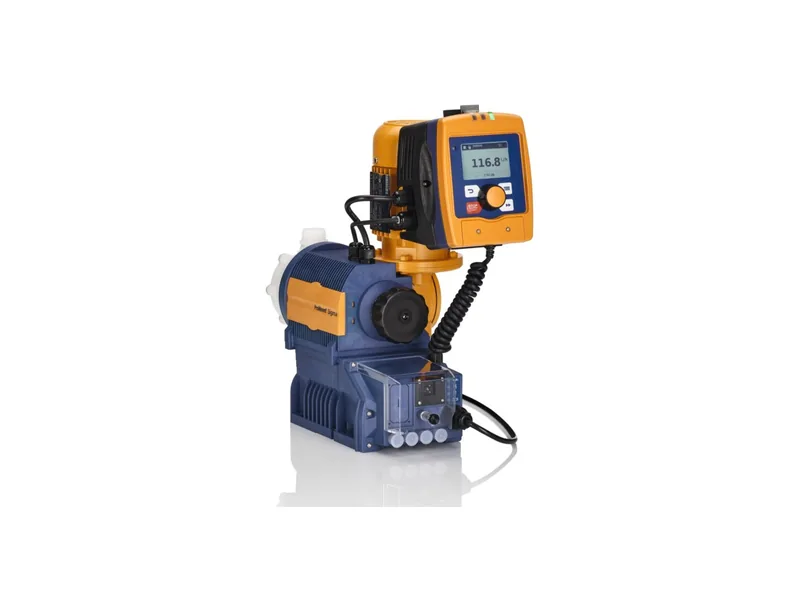
The first four steps leave us with these requirements: about 52 L/h or more, a 10 bar class, plastic or 316 SS wetted parts, continuous duty and 4-20 mA control. At that flow and duty cycle, a motor-driven mechanical diaphragm pump is generally a better fit than a solenoid pump. Motor-driven diaphragm pumps such as the ProMinent Sigma/X control type (S1Cb, S2Cb), which carry their own control module and accept external signals, are the kind you would shortlist here, then confirm the exact size against the published performance curves.
Change the inputs and the answer changes. If the same metering pump selection example had a peak of only a few L/h and intermittent operation, a solenoid pump would usually be the simpler choice. Compare options on our mechanical metering pump range and the ProMinent brand page.
Conclusion
The point of this metering pump selection example is the order of work. Calculate peak flow and add margin. Size pressure for the worst case, including the back pressure valve. Check chemical compatibility and winter crystallization. Match control to the signal you actually have. Only then pick the pump type and model. Write down the reason for each number, because when the process changes or a pump underperforms, those notes tell you which assumption moved. Send us your flow, pressure, chemical, temperature and control signal and contact our engineers to run the numbers with you.
FAQ
How do I size a metering pump if I only know the dose in mg/L?
Convert it to liquid flow first. Multiply process flow by dose, divide by the product concentration and density, and you get L/h of chemical. That figure becomes the peak demand in step 1.
Is the 1.3 factor in a metering pump selection example always right?
No. It is a common middle value. Use more margin where water quality swings or future expansion is likely, and less where the load is steady.
Do I need to count back pressure if the line pressure is near zero?
Yes. Low line pressure is exactly when a back pressure valve is usually needed to stop siphoning, and its setting becomes the pump's working pressure.
Why does my caustic pump stroke but deliver nothing in winter?
Most often the valve balls are stuck with crystals or the suction line cannot pull the thicker liquid. Warm the room or trace the lines before replacing parts.
After working a metering pump selection example, how do I confirm the model?
Plot your duty point on the flow-pressure curve. Normal flow should land mid-stroke, maximum pressure should stay below the rating, and the wetted materials must match the chemical.