
Dosing Pump Bleed Valve Leaking? Causes and Replacement Tips
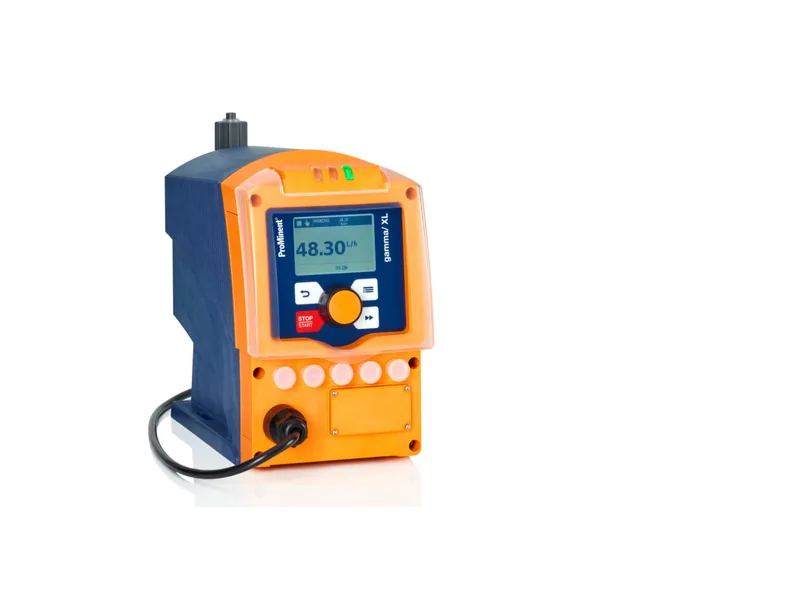
The little clear tube on the side of the pump head keeps dripping, and the floor by the tank is always wet. A dosing pump bleed valve leaking looks like a minor issue, but over time it wastes chemical, corrodes nearby equipment and upsets dosing accuracy.
What the bleed valve does
If gas collects in a diaphragm pump head, the diaphragm compresses gas instead of pushing liquid, and output drops sharply or stops. The bleed valve, also called a vent or degassing valve, lets that gas out.
There are two common types:
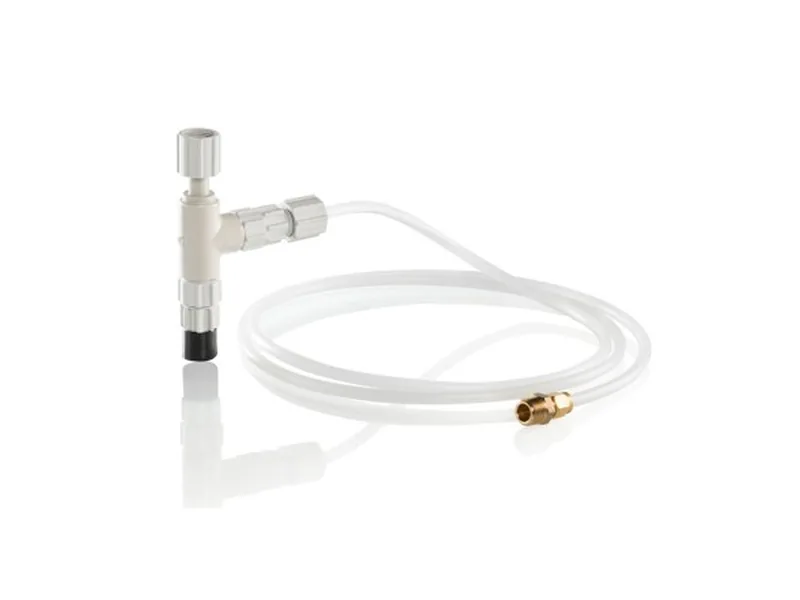
Figure 1: ProMinent flushing and relief valve assembly. Image source: ProMinent official website
- Manual bleed valve: a small knob on the head, opened during start-up or after a chemical change and closed once liquid flows steadily.
- Automatic degassing valve: fitted to self-degassing heads, it continuously returns a small amount of gas and liquid to the tank during operation. It suits gassing chemicals such as sodium hypochlorite and hydrogen peroxide.
Both types have a bleed line, which should run back to the tank or suction side.
Is it really a leak?
On a self-degassing head, a small flow of chemical back to the tank is part of the design. Many operators see liquid in the bleed line and assume the valve has failed. It has not.
A true dosing pump bleed valve leaking problem looks like this:
- The manual valve is closed but chemical still weeps around it.
- Bleed line flow is clearly higher than before and pump output has dropped.
- Liquid comes from the joint between valve body and head, not from the bleed line.
- The bleed line is not piped to the tank and drips straight onto the floor.
Common causes of a dosing pump bleed valve leaking
Worn cone, seat or O-ring
The valve has a small cone or needle, a seat and O-rings. Repeated opening and chemical attack wear the sealing faces until the valve cannot close. This is the most frequent reason for a dosing pump bleed valve leaking on older pumps.
Crystals or debris
Sodium hypochlorite, PAC and caustic crystallise easily in small passages. A crystal holds the cone off its seat and the valve leaks continuously. On these chemicals, a dosing pump bleed valve leaking after a weekend shutdown is a classic sign of crystals.
Not closed, or closed too hard
Some operators close the knob only half way after bleeding. Others use pliers and crush the seat, leaving the dosing pump bleed valve leaking even when fully closed.
Wrong seal material
If the chemical changed but the valve did not, seals swell and soften. A dosing pump bleed valve leaking soon after a chemical change usually points here.
Bleed line faults
An aged, cracked tube, a loose fitting, or a line run above the tank without support can all leak at the connection.
Diagnosis and repair on site
- Dry the head, run the pump for a few minutes and see where liquid appears.
- Close the manual valve gently by hand and check again.
- Stop the pump, relieve pressure and remove the valve. Inspect cone, seat and O-rings.
- Dissolve crystals with warm water or a suitable cleaner. Do not scrape sealing faces with metal tools.
- If sealing faces are scratched or deformed, replace the valve or its seals.
- Replace cracked bleed tubing and route it back to the tank.
- Bleed the head, run the pump and confirm the closed valve stays dry.
The head may still hold chemical under pressure, so wear gloves and eye protection. Keep the old parts and compare them with the new ones. Wear, swelling or crystal marks tell you why the dosing pump bleed valve leaking problem started and which material to order next time.
Replacement tips
- Order the original valve for your pump model and head size. Connections and cone sizes differ between brands.
- Match seal material to the chemical. For hypochlorite, FKM or PTFE-based seals are typical; follow the manual.
- Tighten moderately. Threads in plastic heads strip easily.
- Bleed the head again after replacement and confirm output has recovered.
ProMinent offers manual and self-degassing heads for the gamma/XL solenoid pump, and valves and seals can be ordered separately. See ProMinent spare parts.
Piping the bleed line on gassing chemicals
Hypochlorite and peroxide release gas constantly, so their bleed valves work hardest, and a dosing pump bleed valve leaking is most common on these lines. Practical tips:
- Use a self-degassing head and run the bleed line back to the tank above liquid level, as short as possible.
- Avoid downward loops in the bleed line that trap liquid and block gas.
- Keep the tank cool. Warmer chemical gives off more gas.
- Keep suction lines short and free of high points.
For a complete layout, see our sodium hypochlorite dosing skid.
What happens if you leave it
A dosing pump bleed valve leaking for weeks causes more than a wet floor:
- Chemical is wasted and the dose is no longer accurate.
- The head and nearby equipment corrode; solenoid pump electronics are especially sensitive.
- Air enters the head, output falls and the pump may stop dosing. See why a pump is not dosing.
Conclusion
First decide whether you are seeing normal return flow from a self-degassing head or a real leak. A real dosing pump bleed valve leaking problem usually comes from worn seals, crystals, poor operation, the wrong material or a faulty bleed line. Relieve pressure before stripping the valve, dissolve crystals, replace damaged parts with original spares and pipe the bleed line back to the tank. On gassing chemicals, a self-degassing head and a short, loop-free bleed line prevent most leaks.
For bleed valves and seal kits, contact our team.
FAQ
Is constant flow from a self-degassing bleed line normal?
A small return flow is normal. Investigate if it increases noticeably or pump output drops.
How tight should a manual bleed valve be?
Hand tight. Tools can crush the seat and cause a dosing pump bleed valve leaking problem.
Can I wrap PTFE tape around a leaking bleed valve?
No. The leak is at the internal seal, not the thread. Clean or replace the valve.
Can the bleed line drain to a floor channel?
Not recommended. It wastes chemical and can corrode the drain. Return it to the tank.
How often should the bleed valve be checked?
Weekly on gassing chemicals, monthly on others.