
Closed Loop Metering Pump Control with a Discharge Flow Meter
A closed loop metering pump measures the flow actually leaving the discharge, compares it with the setpoint, and then changes stroke or frequency to close the gap. It answers "how much did the pump deliver?", not "has the pH or residual chlorine arrived at target?". Water-quality control is a different loop. Do not wire both feedbacks to the same output and let them fight. This page is for teams who want to move from "the stroke says 60 percent" to "the meter says the litres are right." After a month on stroke alone, a calibration column often shows a large miss, because a leaking valve or a change in line resistance never showed up on the dial. Putting the duty on a closed loop metering pump is how that miss gets corrected in time.
How a closed loop metering pump differs from a water-quality loop
pH, ORP or chlorine control moves the pump to hit a water-quality target. A closed loop metering pump is after the flow itself. Diaphragm pumps pulse, ball valves leak a little, and the stroke scale can be off, so the percentage on the knob is a poor stand-in for delivered flow. A meter that can handle the low flow sits on the discharge, the reading goes to the pump or a PLC, and a persistent error is trimmed automatically.
The two loops can run together if they are layered: the outer loop looks after water quality, the inner loop looks after flow, or you run only the flow loop and leave water quality to the operator. If a chlorine analyser and a flow meter both write to the same pump, the result is usually a struggle. Wiring and selection for a water-quality loop are covered in online analysers linked to a metering pump and dosing system control principles. Those pages are not repeated here.
For a closed loop metering pump, place and choose the meter as follows:
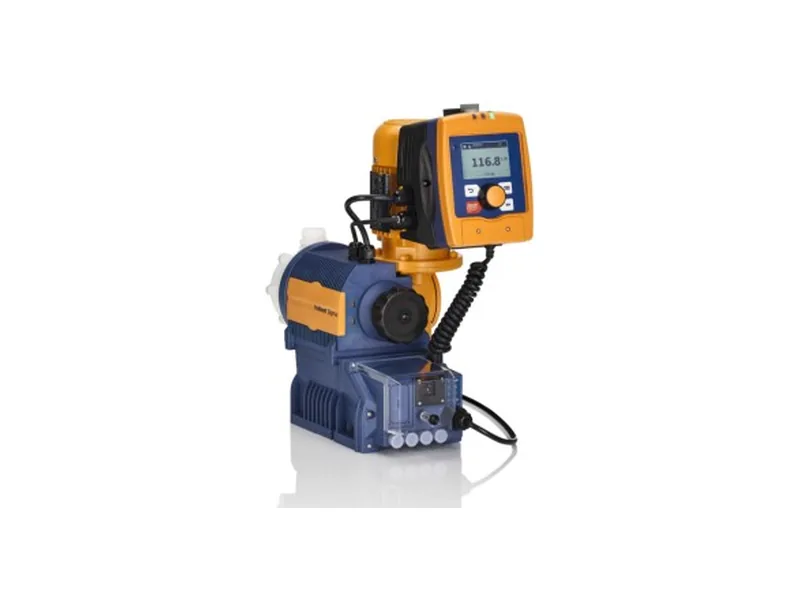
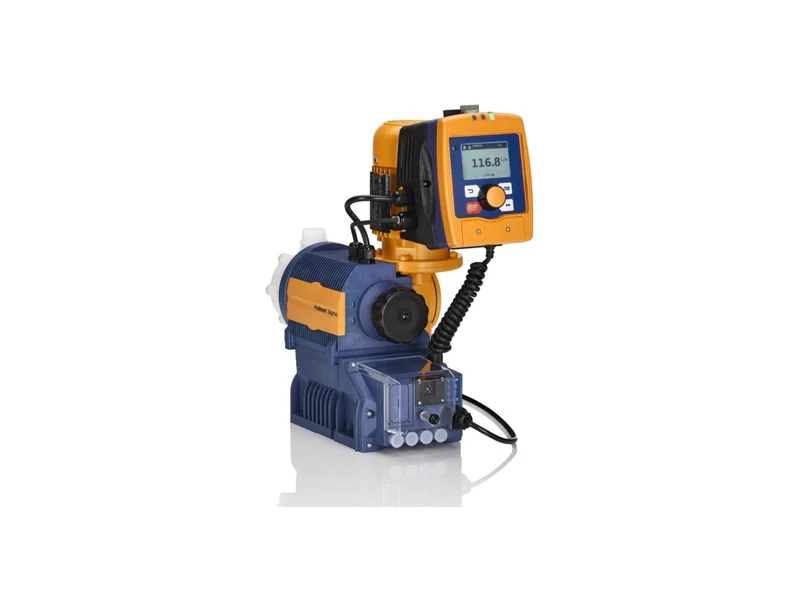
Figure 1: ProMinent Sigma X control-type metering pump (S1Cb). Image source: ProMinent official website
- Fit it after the pump, the pulsation dampener and the back-pressure valve, so the stream is already fairly steady.
- The range must cover the normal flow, especially the low end; a large process-water meter is a poor fit on a dosing line.
- In open loop, raise the stroke by hand and confirm the reading rises, then enable automatic correction.
Where the flow meter goes, and which type to use
On a closed loop metering pump skid the meter should sit after the pump, after the pulsation dampener and after the back-pressure valve, so the liquid arriving at the meter is already reasonably steady and the pulses do not smash the reading. The location must also be easy to vent and to calibrate. Do not hide the meter behind a high point that traps air. Corrosive media, gas bubbles and a very small flow will all expose a wrong meter type as drift.
ProMinent instruments in the DULCOFLOW class are built for this kind of small, pulsating discharge line, and they are often paired with a gamma or Sigma control pump to make a closed loop metering pump package. Oval-gear and Coriolis meters are also used when the chemical is viscous or when mass flow is what you need, provided the minimum measurable flow still covers your normal operating point. Ask about the fluid, temperature, pipe size and lowest flow before you buy. A process-water meter taken from a large line is a poor fit on a dosing pipe.
Write down the calibration and the failed-signal plan first
The loop is only as good as the meter and the pump. Calibrate the meter in open loop, then enable the closed loop metering pump correction. After a closed loop metering pump is in service, check it regularly with a calibration column so fouling or a shifting zero cannot walk the stroke away from the truth. If the reading jumps, inspect the dampener before you blame the meter.
What happens when the signal dies should be decided during commissioning and written into the procedure. Two common choices are: hold the last stroke or frequency, or stop the pump and raise an alarm. For a hazardous chemical, where an overdose is dangerous, most plants stop the pump. For a nutrient where a short gap is tolerable, holding the last output and alarming is often enough, so someone can attend. Do not leave the controller to invent an output on a broken wire. Test a 4-20 mA break, an empty-pipe condition and a high-limit alarm as separate events.
We have seen a meter installed backwards. The closed loop metering pump then drove the stroke the wrong way, and the dose kept falling while the team thought the loop was "optimising." Before you enable automatic mode, raise the stroke by hand and confirm that the meter reading rises with it. If the fluid, the flow range or the existing pump type is unclear, send those details and contact our engineers. Meters are listed under flow meters, and control pumps under digital metering pumps and the ProMinent brand page.
Conclusion
A closed loop metering pump trims stroke or frequency from the flow that actually left the discharge. It fixes a mismatch between setting and delivery; it is not a water-quality controller. Place the meter after the dampener and the back-pressure valve, choose a type that can see a small flow in that fluid, and prove the open-loop calibration first. Decide, and test, whether a lost signal stops the pump or holds the last output. Recheck with a column so the loop cannot drift in silence. If the numbers no longer agree, leave automatic mode, go back to manual, inspect the meter and the valves, and only then decide whether to enable the closed loop metering pump again. Record the meter model, the mounting point and the fail-safe plan, so the next adjustment starts from facts.
FAQ
If I only have the stroke scale, is that a closed loop metering pump?
No. Without a measurement of the delivered flow you are in open loop, or simply running to a setting. The scale is a useful aid. It does not replace the meter.
The meter reading jumps. Does that rule the loop out?
Steady the discharge pulsation first, and check that you are not sitting on the very bottom of the meter range. Do not enable automatic mode until the reading is stable, or a closed loop metering pump will chase the noise and move the stroke back and forth.
Once the loop is on, can we stop watching the tank level?
No. Even a good meter will not tell you that the wrong chemical was loaded, that the suction ran dry, or that the line was diverted. The rate at which the level falls is still an independent check.
Can one meter serve both a totaliser and an instantaneous loop?
Often yes, but the span and the damping for the total and for the rate should be reviewed separately. If you also use the total for a batch, confirm that the count survives a power cut. Do not treat both functions as one menu that anyone can edit on a closed loop metering pump.
Does the loop stay accurate when viscosity changes?
A volumetric meter is affected by viscosity. A mass meter is usually more stable, but you still have to check the manufacturer's limits. If viscosity changes with the season, calibrate again. One set of factors will not cover the whole year.