
How to Use a Batch Dosing Pump for a Fixed Volume
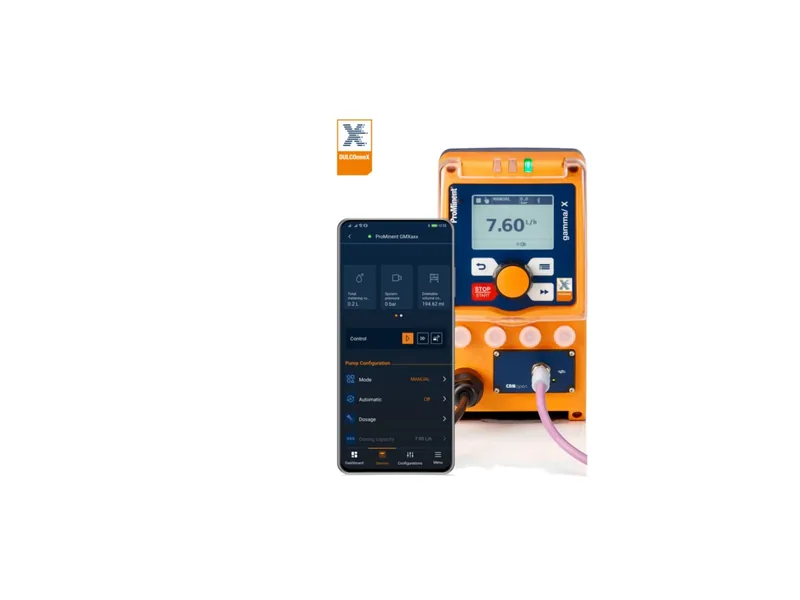
A batch dosing pump delivers a set volume and then stops until the next command, instead of running a continuous, proportional rate all day. Reactor makeup, a shock biocide dose in a cooling tower, and laboratory batching all use this idea. It is not the same setup as flow-paced continuous dosing. If you mix the two modes in one controller, the log will not add up.
Where a batch dosing pump is the right tool
A batch dosing pump fits a job that says "add this much now, then wait for the next batch." The volume comes from the process: litres per reactor batch, or litres per shock dose. Continuous production, where the dose must follow inlet flow, is better served by proportional or water-quality control; batch mode will lag those changes.
ProMinent gamma/X and Sigma X control pumps, solenoid or motor driven, often include a batch or stroke-count function that turns a target volume into a number of strokes. A pump without that menu can still be a batch dosing pump if an external controller counts pulses and stops the unit at the target. In either case, measure the volume per stroke on the machine or a calibration column before you multiply by the stroke count. Do not use the catalogue figure alone.
For stroke and frequency on continuous duty, see how to adjust metering pump flow. Manual, proportional and quality-loop control are compared in dosing system control principles. Neither page is about a fixed batch volume.
Set a batch dosing pump to a real volume only after these three steps:
Figure 1: ProMinent gamma/X solenoid diaphragm metering pump. Image source: ProMinent official website
- Measure the volume per stroke at the current stroke length on a column or a scale; do not use the catalogue figure alone.
- Convert the target volume into a stroke count, then lock the stroke setting.
- Run several batches and check repeatability before you trust the count in production.
Calibrate the volume, then lock the stroke
The volume from a batch dosing pump is the stroke volume times the stroke count, corrected by a real calibration. If someone changes the stroke length halfway through a campaign, the old count is wrong. Once you are in batch service, lock the stroke knob or the stroke setting and change volume only with the count or the batch menu. Frequency can change how long a batch takes, but a very high frequency with a poor suction condition will drop the real stroke volume, and the batch will come up short.
If the make-up strength changes, the same volume is no longer the same dose, so both have to be revised together. A low tank level or air in the suction can make the last few litres run light, so do not design a batch that empties the tank. Checking the level before each batch is a small step that is often skipped.
Keep a simple log: target volume, stroke setting, volume actually delivered, start and end time, and the operator. "Batch complete" on its own will not help the next shift. If a PLC starts the batch, show this batch's setpoint on the screen so the last shift's volume is not reused by mistake. After a chemical or concentration change, retire the old recipe and calibrate again before you put the batch dosing pump back in service. Use a dedicated cylinder or scale, and let foam collapse before you read the volume, or you will record a batch that looks larger than it was.
Decide what a power cut, a pause and a completed batch should do
The painful case for a batch dosing pump is a power cut halfway through. Some controllers remember the stroke count and finish the batch when power returns. Some reset and run the full volume again, so the batch is doubled. Some sit and wait for an operator to confirm. You must test a power cut during commissioning and write the behaviour into the procedure. Do not assume it.
A finished batch needs a clear signal: the pump stops, a lamp, or a "complete" bit to the PLC. Do not ask the operator to judge by whether the pump still ticks. Before the next start, confirm the last batch has ended, so two commands do not overlap. If a shock dose is interlocked with a circulating pump, start the batch only while that pump is running and there is enough water in the system, or the local concentration will spike.
At commissioning, check three to five batches in a row on a column or a scale and look at the repeatability. If the results scatter, inspect the valves and the suction first, then ask whether the controller is missing or double-counting pulses. If the numbers will not settle, send the pump type, the control method and the target volume and contact our engineers. Control pumps are listed under digital metering pumps, and the brand page is ProMinent.
Conclusion
A batch dosing pump delivers a fixed volume per cycle. It suits intermittent and shock duties, and it does not use the same parameters as continuous proportional control. Calibrate the stroke volume, lock the stroke, and set the volume with a count or a batch function. Test what a power cut does, give the batch an end signal, and check the tank level before you start. Write those steps down, and the shift log will add up.
FAQ
Is a batch dosing pump a different kind of pump?
People use the names loosely. Here it is an ordinary metering pump running in batch mode or on a stroke count to deliver a fixed volume, not a separate machine. Reliable calibration and counting matter more than the name.
Can I use a timer instead of a volume count?
You can improvise, but it is not accurate. Voltage, back-pressure and tank level all change how much a timer delivers in the same interval. If a count or batch function is available, let the batch dosing pump work to volume, not to time.
Can I change the remaining volume while a batch is running?
Only if the controller says you may. On some units a mid-batch edit will scramble the count. The safer path is to stop, record what has already been delivered, start a new batch, and note the change in the log.
Can two pumps deliver one batch together?
Yes, but you must say whether each delivers half, or one leads and one stands by. Spell out who counts and how the volume is split. If both run the full volume, the batch doubles.
Does batch mode still need a back-pressure valve?
Yes. Without enough back-pressure the stroke volume wanders, and a perfect count still gives the wrong volume. Keep the back-pressure and the valve condition the same as they were during calibration of the batch dosing pump.