
Metering Pump Connections: Flanged, Threaded or Compression?
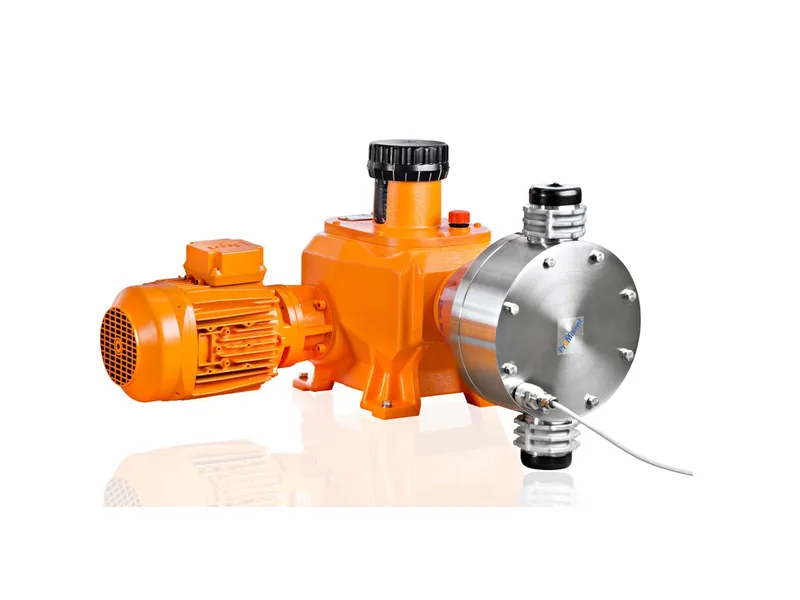
Metering pump connections come in three main styles: threaded unions, flanges and compression fittings. Small plastic pump heads usually use a threaded union, larger process pumps use flanges, and small-bore high-pressure plunger pumps often use stainless compression fittings. The right choice depends on flow, pressure, chemical and pipe material, and it should be fixed at the ordering stage, not on site.
Reading metering pump connections on a datasheet
Most buyers check flow and pressure and skip the connection column, then find on site that pump and pipe do not match. ProMinent motor-driven diaphragm pumps are a good example. The technical data lists the connector as "G-DN", which pairs the G thread on the pump valve with the nominal pipe size it serves:
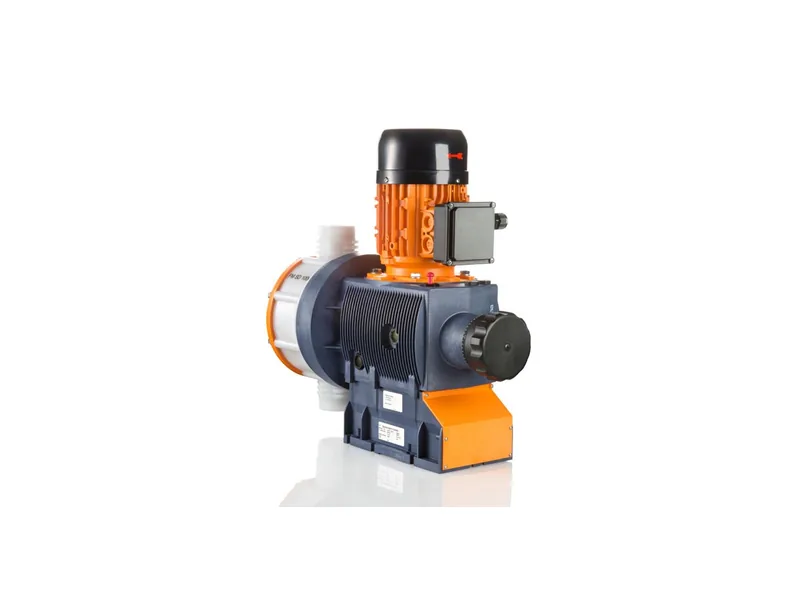
Figure 1: ProMinent Sigma/2 basic motor-driven diaphragm unit. Image source: ProMinent official website
- Most Sigma/1 basic types are G 3/4–DN10, and the larger ones are G 1–DN15.
- Sigma/2 basic types are typically G 1–DN15. Types 07120, 07220 and 04350 carry DN25 (G 1 1/2) valves, but ProMinent notes that DN20 pipework is generally enough, so the inserts ordered through the identity code are already reduced to DN20.
- Makro TZ types are G 1 1/2–DN25, G 2–DN32 or G 2 1/4–DN40. DN25 heads use ball valves, while DN32 and DN40 use plate valves.
So read the connection column together with the capacity column. Within one series, metering pump connections can change by one or two sizes between flow ranges.
A quick habit helps here. Before a design review, write the metering pump connections for every pump on the P&ID next to the line size. Mismatches show up on paper, where fixing them costs a revision rather than a site visit and a box of adapters.
Threaded union connections
A threaded union has a male thread on the pump valve, a union nut and an insert. The insert can be a solvent-weld socket, a threaded end or a hose barb, so changing pipe material often means changing only the insert.
These metering pump connections are quick to open, which helps when you replace valves or a diaphragm. The limit is the material. ProMinent states that Makro TZ heads in plastic are rated for a maximum of 10 bar back pressure, and the permissible priming pressure on the suction side is about 50% of the maximum back pressure.
Two site points:
- G is a parallel pipe thread that seals on a gasket face. Piling PTFE tape on it, as you would on a tapered thread, does not help.
- Keep the insert material the same as the pipe: PVC with PVC, PVDF with PVDF.
Flanged metering pump connections
Once flow reaches a few hundred L/h and connections go to DN25, DN32 or larger, flanges become common. The idea is the same for diaphragm and plunger pumps, but the pressure class differs. Mechanical diaphragm pumps sit at the lower end, with most Sigma types between 4 and 16 bar, while plunger and hydraulic diaphragm pumps typically run much higher, so the flange rating must follow.
The usual mistake with flanged metering pump connections is the standard. EN, ASME and Chinese HG/T flanges can look similar but differ in bolt circle and hole count. Confirm three items with the designer: flange standard, pressure class and facing type. When plastic pipe meets a metal flange, a backed loose flange is the typical choice, with bolts tightened in a cross pattern over several passes so the plastic face does not warp.
Support the pipe close to the pump so the head does not carry its weight, and leave a short adjustable spool for alignment. Layout ideas are in our mechanical diaphragm pump installation plan.
Compression fittings for high pressure
Compression fittings seal by squeezing a ferrule onto hard stainless tube, commonly 6, 8, 10 or 12 mm OD. For low-flow, high-pressure plunger duty, such as injecting into a boiler feed line or a reactor, they are far more dependable than a threaded joint, and these metering pump connections tolerate pulsation well.
The tube must be hard stainless, cut square and deburred, and pushed fully home before tightening. The first make-up is usually finger tight plus around one and a quarter turns, but it depends on the fitting maker. When remaking a joint, go back to the original position plus a little, not a full new make-up.
What to confirm before ordering
Most problems with metering pump connections trace back to a vague order. Metering pump connections belong in the purchase specification. List these items:
- Inlet and outlet size, written as G thread plus DN, or flange standard plus pressure class.
- Insert or mating flange material, and whether it ships with the pump.
- Connections on relief valves, back-pressure valves and pulsation dampeners, ideally matched to the main line.
- No heavy reduction of suction or discharge size just to suit available pipe. Pressure drop guidance is in chemical dosing skid piping design.
Compare more models on our diaphragm metering pump page and the ProMinent brand page, and see full Sigma/1 data on the ProMinent Sigma/1 page.
Conclusion
Metering pump connections deserve attention before the pump ships. Threaded unions suit small plastic heads and let you swap inserts for different pipe materials. Flanges suit larger flows and higher pressures, provided the standard, class and facing match. Compression fittings suit small-bore high-pressure lines. Read the datasheet connector column alongside capacity and write the details into the order. If you are unsure, send your duty and piping drawing through our contact page.
FAQ
Can a G thread go straight into a standard tapered fitting?
Not reliably. The thread forms are close but the sealing method differs, so use the matching insert or a gasketed adapter.
Can a threaded pump be converted to flanges later?
Often yes. Many valve connections accept flanged inserts, but check that the maker offers the part rather than modifying it yourself.
Can a plastic head connect to metal flanged pipe?
Yes, with a transition piece. A backed loose flange or a short spool works, and pipe supports should carry the load.
My compression fitting leaks. Is it too loose?
Usually the tube end is the problem. Check for a square cut and full insertion before adding torque, which can crush the ferrule.
Is it normal for suction and discharge sizes to differ?
Yes. Some pumps have a slightly larger suction port to cut inlet losses, so pipe each side to its own size.