
How to Read Metering Pump Accuracy: Steady State and Repeatability
Metering pump accuracy on a datasheet is usually given as steady-state error and repeatability. Those numbers describe how close the flow stays to the set value, and how tightly repeated measurements sit, under stated conditions. They are not a promise that the pump will never drift in every plant condition. Stroke length, discharge back pressure, fluid viscosity and the calibration method all move the real result. This page is for people who read a datasheet or write a technical requirement. How to read a hydraulic diaphragm series sheet is covered in hydraulic diaphragm pump flow accuracy. That series-specific reading is not repeated here.
Steady-state error and repeatability in metering pump accuracy
Steady-state error is the band between delivered flow and the set value, once the pump is running steadily at a stated stroke and pressure. Repeatability is how close several measurements sit at the same setting. Good repeatability with a poor steady-state figure usually means the pump is consistent, but the scale or the set point is offset, and calibration can take out part of that offset. If both are poor, look at the check valves, the stroke mechanism and the pipe conditions.
Read the test conditions with the numbers: water or a named fluid, discharge pressure, the stroke band, and temperature. If those conditions are missing, the published metering pump accuracy is only a hint, not an inspection rule. ProMinent gamma/XL solenoid pumps typically publish a figure at a relatively low flow. You still need to write the stroke and back pressure at which you will accept the unit.
How stroke, back pressure and viscosity change the result
To use a datasheet number on site, check the following:
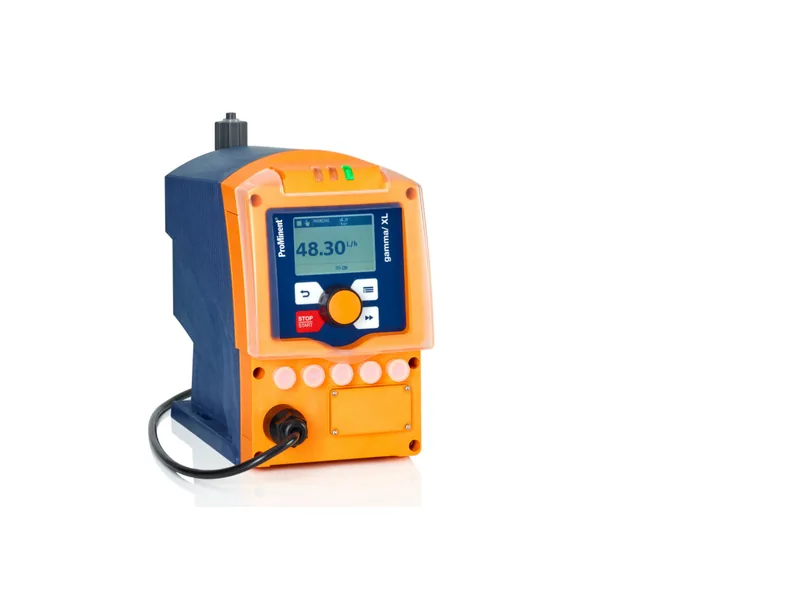
Figure 1: ProMinent gamma/XL solenoid-driven metering pump. Image source: ProMinent official website
- Do not leave the pump at a very short stroke for long periods; the valves may not work fully, and the error is often worse than the sheet;
- Keep a stable discharge back pressure, because a weak or highly pulsed line will usually shake the flow and hurt repeatability;
- If viscosity or density differs clearly from the test fluid, follow the maker's derating or recheck with the real fluid. Do not copy a water number as it stands.
Stroke and frequency are discussed in metering pump flow adjustment. Column or scale checks are in metering pump calibration. Metering pump accuracy on the sheet is a condition-based number; calibration is the number for this one pump. Keep those two ideas apart.
High viscosity, gas bubbles or a little air in the fluid will cut volumetric efficiency. It can look like a loss of metering pump accuracy when the real issue is suction or fluid condition. Clear the line and the valves first, then judge the pump.
How to write an accuracy requirement
Do not write "high accuracy" or copy a lone percentage. State the fluid, temperature, discharge pressure and stroke band, the allowed steady-state band, the repeatability band, and the method. If batch duty uses a different method from continuous running, say so.
If the process only cares about a quantity over a period, you can write a cumulative error instead of a tight instantaneous band. A requirement harsher than the datasheet conditions generally cannot be met, or it forces a higher class of pump. Agree the real limit with operations before you lock metering pump accuracy into the file.
If the wording is hard to settle, send the fluid, flow, pressure and the allowed error, and contact us so the clause can be written in a form you can inspect. Pump types are listed under metering pumps and ProMinent gamma/XL. Read the test conditions first, then compare the class numbers. A later metering pump accuracy dispute is usually about the missing conditions, not about the percentage itself.
Around several identical pumps, keep the same requirement, but still record each unit. One pump's result should not stand in for the lot. Typically the acceptance test can use the same column as routine calibration, so two sets of numbers do not fight.
Conclusion
Metering pump accuracy should be read as steady-state error plus repeatability, always with the test conditions. A very short stroke, unstable back pressure, or a fluid far from the test basis will usually widen the field error. Write the conditions, the method and the allowed band into the file, then confirm this pump by calibration. Do not paste a hydraulic-diaphragm series reading into a general requirement. Used that way, metering pump accuracy becomes a clause you can inspect rather than a figure you hope will hold. If several pumps share one duty, keep the written metering pump accuracy the same, but still test each unit and file the result. Around a later dispute, those records usually settle the argument faster than a catalogue page. After start-up, a short check against the same method used in the file will show whether the field still sits inside the band.
FAQ
Is the percentage in metering pump accuracy relative to the set flow or to full scale?
It depends on how the datasheet defines it. Some makers use set flow, some use rated flow. Read the basis, and write the same basis into your file, or acceptance will argue both ways.
Repeatability is fine, but the flow is still off. What next?
That is usually a systematic offset. Recalibrate as in metering pump calibration, then check that the stroke scale matches the real stroke. Do not replace the pump first.
If the pump runs at thirty percent stroke, can I still demand the datasheet figure?
Usually not. If the sheet was measured in a higher stroke band, metering pump accuracy at a short stroke often gets worse. Inspect in the band you will actually use.
If the fluid is much thicker than water, can I still use the published number?
Only as a starting point. You generally need the maker's adjustment or a check with the real fluid. High viscosity can also affect suction, so prepare the line first.
Is a tighter accuracy class always better?
No. The requirement should match the process tolerance. A very tight band with no matching test condition is hard to enforce, and it does not by itself make the plant more stable.