
Acceleration Loss in a Metering Pump on Long Suction Lines
Acceleration loss is the extra pressure drop you get when a reciprocating pump has to speed up the liquid in the suction line on every intake stroke. The longer and thinner the pipe, and the higher the stroke frequency, the larger that drop becomes. It is related to static lift and to NPSH, but it is not the same term. On a long, small-bore suction run, the pump can starve or deliver an unsteady flow even when the tank level does not look low.
How acceleration loss differs from a steady NPSH term
In a normal NPSH check, friction is treated as a steady flow: pipe length, elbows, a dirty strainer. Acceleration loss adds the reciprocating motion itself. Liquid in the suction line must accelerate and slow down with the diaphragm or the plunger. That term is large on a long, thin line and almost negligible on a short, fat one.
So you can see a contradiction on site. The steady calculation says NPSHa is enough, yet the pump is noisy on the suction side and the flow will not come up. Do not stop at the textbook definition of cavitation. Measure the suction length and bore, and ask whether acceleration loss is sitting on top of the static terms. For lift and flooded suction, start with diaphragm pump installation height. Do not fold both ideas into one number.
Layouts that make acceleration loss worse
Acceleration loss shows up in a few typical plants: the tank is in the next room and the suction hose runs fifteen metres around beams; the whole skid was tubed in one small hose size, including the suction; several pumps share one thin suction header; the operator is running a high frequency and a short stroke to trim the flow. Solenoid pumps, with their high stroke rates, are especially sensitive to a long, thin suction line.
You do not need a complicated calculation to start. Ask three questions. Is the suction line thinner than the discharge? Is it clearly several metres long, with many bends? Is the pump making its flow with a high frequency and a short stroke? If two of those answers are yes, treat acceleration loss seriously. Still check the foot valve and the strainer; their friction is a separate stack, added on top.
Changing the pipe usually beats changing the pump
To cut acceleration loss, change the suction line before you buy a larger pump:
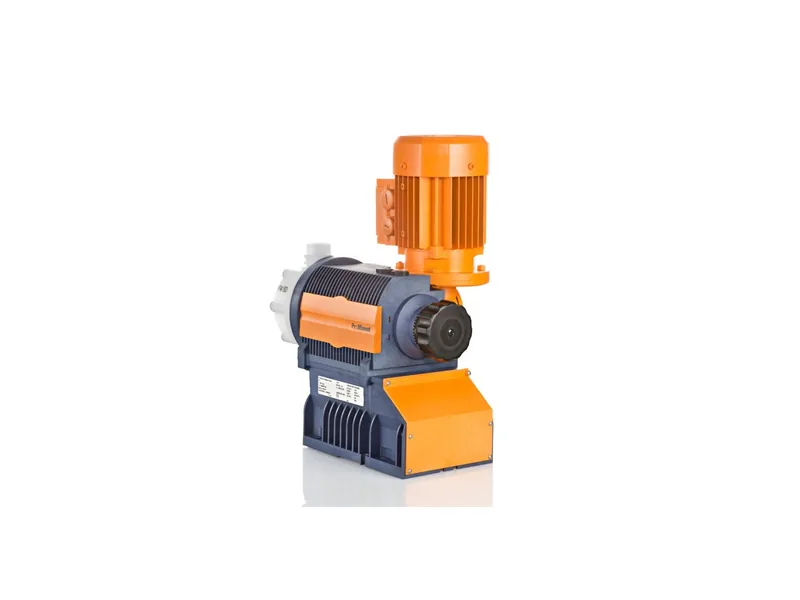
Figure 1: ProMinent Sigma/1 motor-driven diaphragm metering pump. Image source: ProMinent official website
- Shorten the suction run. Keep the tank close and avoid climbing around steelwork.
- The suction bore is often one size larger than the discharge. Do not tube the whole skid in a single size.
- Cut elbows and unions. Keep the strainer near the pump without turning it into a neck.
- If you can flood the suction, do so. A level above the pump offsets part of the inertial drop.
- If needed, fit a pulsation damper or a suction stabilizer close to the pump, so the long line does not have to be accelerated from rest on every stroke.
ProMinent Sigma mechanical diaphragm pumps are usually fine when the tank sits nearby. Once the tank is moved to another room, acceleration loss appears. Change the pipe first, then consider a lower frequency and a longer stroke for the same flow, which eases the acceleration on each stroke. Keep the foot valve submerged as in metering pump foot valves and strainers. If gas and cavitation are mixed into the same complaint, do not confuse them with this inertial term; see gas-entrained liquid on plunger pumps.
A crude commissioning check
A simple comparison helps. Temporarily suction from a drum through a short, large-bore hose. If the noise and the flow improve at once, acceleration loss is a strong suspect, and you can correct the permanent pipe. Do not keep raising the stroke on the official line to "push through" it; you will wear the valves and the diaphragm first.
After the pipe is changed, recalibrate the flow. Suction conditions have changed, so the old stroke setting may be wrong. If you are unsure how to reroute the line, send the bore, length, elbow count and stroke frequency and contact our engineers. Accessories are on the dosing accessory range, and pump series on the ProMinent brand page.
Conclusion
Acceleration loss is the extra inertial drop a reciprocating pump pays on a long, thin suction line. Treat it separately from the steady NPSH terms. Shorten and enlarge the suction pipe, cut elbows, and add a suction-side stabilizer if needed; that usually beats replacing the pump. A short-hose comparison at commissioning will confirm the diagnosis. Put the suction length and bore on the layout drawing, and you will spend less time cutting the floor later.
FAQ
Can I fix acceleration loss by enlarging the discharge pipe?
No. The term lives on the suction side. A larger discharge helps almost not at all. Change the suction bore and length, and add a stabilizer close to the pump if you need one.
Will a suction-side damper always solve it?
It often helps a lot, but a ridiculously thin line with many elbows will still leave a remainder. Mount the damper close to the pump, with the pre-charge and orientation in the instructions. A damper ten metres away does little.
How do I tell this apart from a blinded strainer?
A blinded screen is a sudden rise in friction; cleaning it usually helps at once. Acceleration loss is there as soon as the pipe is long, and cleaning the screen will not remove it. Both can exist together and need separate fixes.
If I lower the frequency and open the stroke, will accuracy suffer?
Within the allowed stroke range, a longer stroke and a lower frequency for the same flow usually eases acceleration loss. Accuracy still depends on back-pressure and the valve condition. Recalibrate after the change; do not trust a feel.
Can several pumps share one thin suction header?
We do not recommend it. When several pumps inhale together, acceleration loss and interference in the header get worse. Give each pump its own short suction line, with a short manifold or its own foot valve at the tank.