
Lime Slurry Dosing System Design: Loops, Pumps and Flushing
A lime slurry dosing system stays clear when three things are true: the make-up tank is agitated all the time so particles never settle, the slurry keeps moving through a recirculation loop instead of sitting in dead lines, and every branch can be flushed with clean water the moment it stops. Pump and pipe choices all follow from those three rules. This article covers the engineering details of milk of lime feed for designers and for operators who spend too many mornings rodding out blocked lines. What lime does in sludge conditioning or acid neutralization is outside the scope here.
Why a lime slurry dosing system clogs so easily
Milk of lime is a suspension of calcium hydroxide particles in water, not a solution. As soon as velocity drops or the mixer stops, particles fall out in pipe inverts, valve cavities and elbows, and the deposit compacts over time.
The second problem is scale. Slurry absorbs carbon dioxide from air and forms calcium carbonate, which builds a hard crust on tank walls, pipe walls and check valve balls, slowly shrinking the bore. Poor-quality quicklime adds grit and unslaked lumps that jam valves directly. Settling, scaling and grit are the three sources of almost every blockage.
Lime slurry dosing system make-up tank and agitation
The tank needs a mixer sized to keep solids in suspension, with more power and a more aggressive impeller than a solution tank would get. A conical or sloped bottom helps, and the outlet should not sit in a dead corner at the lowest point. Put a screen or grit trap ahead of the outlet so sand stays in the tank.
Interlock the mixer with the lime slurry dosing system and alarm on mixer trip. A tripped agitator at night that nobody notices often means draining and digging out the tank the next morning. General mixer sizing is covered in chemical dosing tank mixers; slurry needs a step more.
Why a lime slurry dosing system needs a recirculation loop
Run a single line from the tank to the injection point and the whole line sits still every time the pump stops. The next start is usually a blocked line.
Loop with short take-offs
The standard layout uses a circulation pump that draws slurry from the tank, sends it around a loop that passes close to each dosing point, and returns it to the tank continuously. Each point takes a short branch off the loop, fitted with a metering pump or a control valve. The loop never stops moving, and the branches are kept as short as possible and flushed when idle.
Line sizing and velocity
Do not size the loop of a lime slurry dosing system like a clean water line. Oversize it and velocity falls, letting particles settle; undersize it and a thin layer of scale closes it off. Loop velocity has to stay above the settling point for your slurry concentration and particle size, and the designer should check this for each case. Use long-radius bends, avoid square tees and dead legs, slope lines so they drain, and add flanges or quick couplings where blockages are likely so lines can be opened without cutting pipe.
Pump selection for milk of lime feed
The metering pump in a lime slurry dosing system must tolerate abrasion and resist jamming.
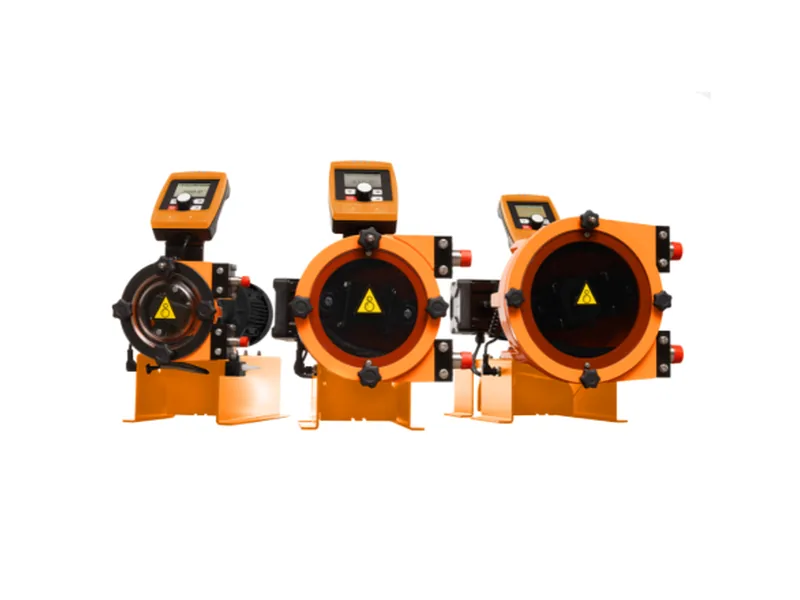
Figure 1: ProMinent DULCOFLEX DFYa peristaltic metering pump. Image source: ProMinent official website
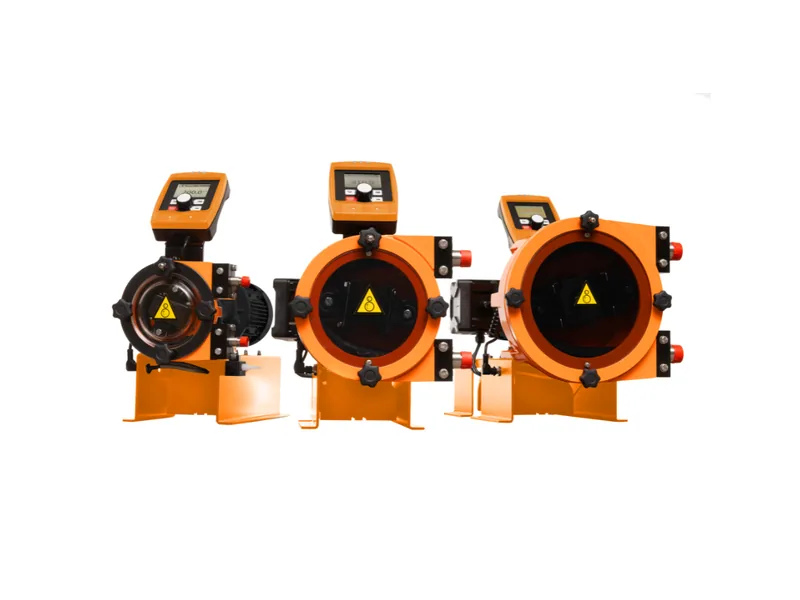
- Peristaltic (hose) pumps. No check valves, the slurry only touches the hose bore, and a worn hose is a quick swap. The ProMinent DULCOFLEX DFYa is an electronically controlled peristaltic metering pump that the manufacturer lists for media containing particles, abrasive fluids and outgassing chemicals.
- Diaphragm metering pumps. Used where pressure or flow is higher; choose large-bore valves designed for slurries. Small solenoid pumps with light valve balls jam quickly.
- Circulation pump. Usually an abrasion-resistant centrifugal or progressive cavity pump; it does not meter.
For more on diaphragm pumps handling solids, see diaphragm metering pumps for slurry, and for a structural comparison read diaphragm vs peristaltic pumps.
Flushing water design for the lime slurry dosing system
Flushing is the part most often value-engineered out of a lime slurry dosing system, and the part you will miss most. Give every branch a flushing connection before and after the pump, fed from a clean water line with a solenoid valve that opens automatically for a set time after the pump stops. Flush the entire loop before the circulation pump is shut down for maintenance. Flushing water pressure has to be a bit higher than slurry line pressure or it will not get in.
Scaled pipe spools and valves can be removed and soaked in dilute hydrochloric acid. Wear acid-resistant gloves and goggles and work in a ventilated area, then rinse thoroughly before reinstalling. Lime slurry itself is strongly alkaline, so flush skin or eyes with plenty of water immediately after any splash.
Conclusion
Good lime slurry dosing system design comes down to stopping settling, limiting scale and making every line flushable. Keep the tank agitated and interlocked, run a recirculation loop with short take-offs, size lines for non-settling velocity, prefer peristaltic pumps or large-bore diaphragm pumps, and fit flushing water to each branch. The whole package can also be supplied as a packaged dosing skid. Send us your dose rate, slurry concentration, number of dosing points and distances, and contact our engineers to check pump type and loop layout.
FAQ
Can a solenoid dosing pump handle milk of lime?
Not reliably. Small valve ports and light check balls let lime particles lodge on the seats, so output drifts or stops. Even at low flow, a peristaltic pump is the safer choice.
Is a stronger slurry easier on a lime slurry dosing system?
No. Higher concentration settles faster, blocks more easily and is thicker. A weaker slurry at a higher pump rate usually runs more smoothly.
Can I stop the recirculation loop at night?
Better not to. If the loop must stop for a long period, flush it with clean water and drain it rather than leaving slurry standing in the pipes.
How often should the peristaltic hose be replaced?
It depends on abrasiveness, speed and pressure. Inspect at the manufacturer's recommended interval and replace when the hose deforms, shows surface wear or output drops. Keep a spare on site.
Is a lime slurry dosing system better than dry lime feed?
Dry feeders are simpler but less accurate and mix less well. Slurry feed gives tighter dosing and faster reaction, so larger plants that need good control usually choose wet feed.