
Phosphorus Removal Dosing System: Chemicals, Pumps and Control
A phosphorus removal dosing system is designed in a fixed order: pick the chemical, pick the dosing point, size the metering pump from the peak chemical demand, then choose the control strategy. Chemical phosphorus removal works because aluminium or iron salts react with dissolved phosphate to form insoluble precipitates that settle out with the sludge. This article is for plant process engineers, consultants and skid builders, and it focuses on the equipment side. For background on the chemicals themselves, see our overview of wastewater treatment chemicals.
Alum or iron salts for a phosphorus removal dosing system?
The common choices are aluminium salts such as PAC and aluminium sulfate, and iron salts such as ferric chloride and ferric sulfate. The decision usually rests on effluent color and iron limits, the needs of downstream processes, and what you can buy reliably in your region.
For the hardware, the big difference is corrosion. Iron salt solutions are acidic, and ferric chloride carries chloride, which attacks ordinary stainless steel. Pump heads, pipework and valves are normally PVC or PVDF. Aluminium products are milder, but PAC can crystallize in idle lines, so flush before a long shutdown. Choose the chemical first and the materials of the phosphorus removal dosing system follow.
Where to dose: pre, simultaneous or post precipitation
The dosing point decides which sludge the chemical ends up in and how far the line has to run.
- Pre-precipitation: dosed ahead of the primary clarifier. Phosphorus leaves with primary sludge, but some carbon goes with it, which can hurt denitrification.
- Simultaneous precipitation: dosed at the end of the aeration tank or ahead of the secondary clarifier. This is the most common arrangement.
- Post-precipitation: dosed in tertiary treatment, ahead of high-rate clarification or filtration, where tight phosphorus limits apply.
Many plants keep two points, simultaneous as the main feed and tertiary as a trim. That gives one phosphorus removal dosing system two pump trains, and each needs its own flow range and control.
How to work out chemical demand for a phosphorus removal dosing system
Do not guess the dose. At design stage, take influent total phosphorus and the effluent target to find the phosphorus to remove, convert it to pure chemical using a metal-to-phosphorus molar ratio, then divide by the solution strength to get liters of product per hour. The molar ratio is normally confirmed by jar testing, and in practice it is higher than the theoretical value; how much higher depends on the water and the dosing point.
To get pump flow, use peak plant flow and worst-case influent to find peak solution demand, then add margin. Our PAC dosage calculation guide walks through the method, and iron salts follow the same steps with different molar mass and solution strength.
Sizing the metering pumps in a phosphorus removal dosing system
Small branches and compact package plants can run on solenoid diaphragm pumps. Continuous, higher-flow feeds for simultaneous or tertiary dosing usually call for mechanical diaphragm metering pumps, which offer adjustable stroke length and speed and handle round-the-clock duty.
A sound phosphorus removal dosing system follows a few rules:
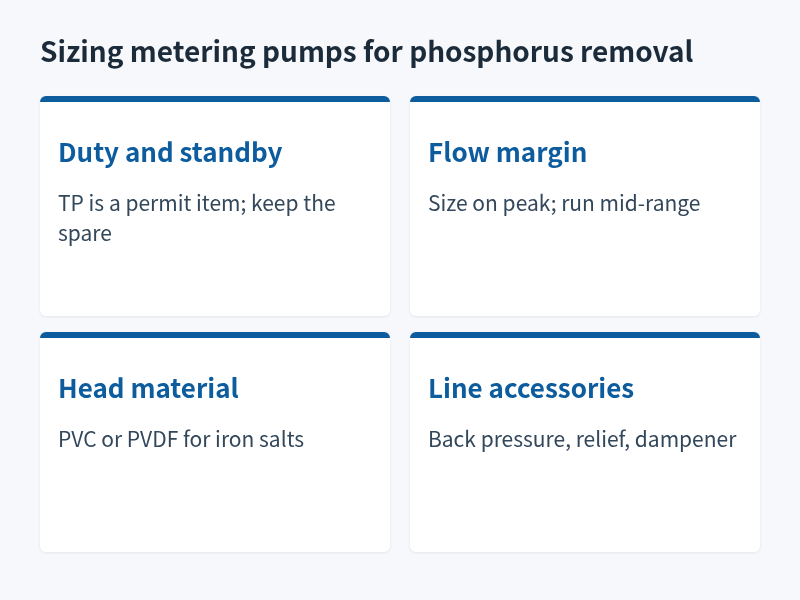
Figure 1: Iron salt solutions are acidic and carry chloride, so heads and lines are usually PVC or PVDF.
- Duty and standby. Phosphorus is a compliance parameter. If the pump stops, effluent goes out of limit quickly.
- Flow margin. Size on peak demand so normal flow sits mid-range, where adjustment is easiest.
- Head material. PVC or PVDF for iron salts; stainless steel is a false economy.
- Line accessories. Back pressure valve and relief valve on the discharge, a pulsation dampener on long runs, and anti-siphon protection when the injection point sits below the pump.
For redundancy options in more detail, read wastewater dosing pump redundancy, and compare models on our mechanical diaphragm metering pumps page.
Phosphorus removal dosing system control: flow pacing plus feedback
Constant-rate dosing is the simplest. Set the stroke rate and leave it. It suits small sites with steady inflow, but it wastes chemical.
The next step is flow-paced dosing, where a flow meter sends 4-20mA and the pump follows plant flow. Above that, an online total phosphorus analyzer trims the dose. Analyzers take time per measurement, so the result lags. Use it to adjust the flow-pacing ratio slowly, not to switch pumps on and off, or the dose will oscillate.
A common site problem is two signals fighting: flow tells the pump to speed up while the phosphorus reading tells it to slow down, and nobody has defined priority in the PLC. The usual answer is to let flow set the base rate and allow the phosphorus feedback to correct only within a limited band. That keeps the phosphorus removal dosing system stable during storms.
Tanks, lines and the details people miss
In any phosphorus removal dosing system, bulk tanks are typically PE or FRP with a level transmitter and a low-level alarm interlocked to stop the pumps. Iron salts stain pipework and floors, so every small leak shows. Keep joints to a minimum. Insulate outdoor lines in winter, because cold product gets more viscous, PAC precipitates more easily, suction losses rise, and pump output drops.
Release pressure and wear eye and hand protection before opening any line. Both iron salts and PAC are acidic.
Conclusion
The logic of a phosphorus removal dosing system is simple: the chemical decides the materials, the dosing point decides the number of pump trains and the line routing, peak demand decides pump size, and control is flow pacing with phosphorus feedback as a trim. Always fit duty and standby pumps, and keep stainless steel away from ferric chloride. Packaged options are on our chemical dosing skids page. Send us plant flow, influent and effluent phosphorus, chemical and dosing point, and contact our engineers for a pump and control proposal.
FAQ
Is PAC or ferric better for phosphorus removal?
Neither wins everywhere. Run jar tests and compare removal and sludge volume. If effluent color matters, aluminium is the safer choice.
What happens if we overdose?
Effluent pH can drop, sludge volume rises and chemical cost goes up. Adjust the dose step by step based on tests and online data.
Does simultaneous precipitation affect biology?
At a sensible dose, usually not much. Overdosing can depress pH and slow nitrification, so watch aeration tank pH.
Can a phosphorus analyzer control the pump directly?
It is not recommended. The reading lags, so use it to correct the flow-pacing ratio rather than as the main signal.
How can a small plant simplify its phosphorus removal dosing system?
Use a packaged skid with solenoid metering pumps on constant or flow-paced control, and still keep a standby pump.