
How to Read a Chemical SDS Before You Start a Dosing Task
A chemical SDS is the safety document that should arrive with the product. Many sites still use the older name MSDS. You read it before dosing so you know the hazards, the required PPE, what the product must not mix with, and what to do on a spill or after contact. The document belongs to a named product. This page only explains how to read it and how to use it in a dosing room. It does not invent hazard figures for any product, and it does not offer a sample table as a substitute for the file in your hand.
What to read first in a chemical SDS
Start with identification and hazard statements, exposure controls and PPE, incompatible materials, spill response, first aid and fire-fighting. Check the document against the pack and the label on site. If the name or the assay does not match, ask the supplier before you go further, and do not borrow a sheet from another grade. PPE has to land on the actual job: what dosing, make-up and unloading each require, and where the rinse and first-aid points are, not only a tick on a form.
Incompatibles and spill steps should be read with site storage and the bund, as in chemical room spill containment and sodium hypochlorite dosing room safety. Operating rules are in hypochlorite dosing room operating rules. The chemical SDS is the source file; room procedures should agree with it, not wander off into a second story.
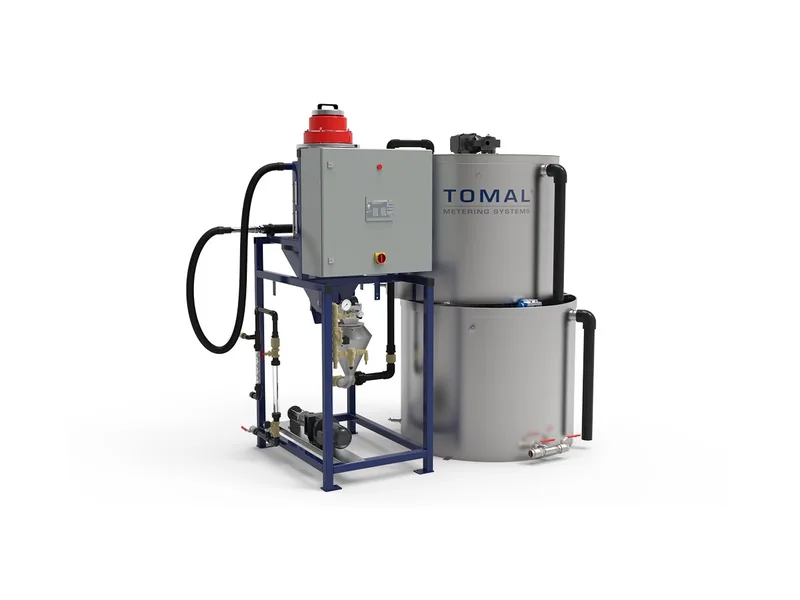
A ProMinent POLYREX polymer unit appears in the accompanying official photograph only as a common make-up machine in a dosing room. It is not the safety document, and you cannot read any product's hazards from a photograph. Hazard data can only come from that product's chemical SDS and its label.
How a shift should use the file, not file it and forget it
Put the document to work with a short list like this:
Figure 1: ProMinent POLYREX polymer preparation unit, shown as typical make-up plant, not as a safety data sheet. Image source: ProMinent official website
- Every chemical in use has a matching current version, and a new lot or a new supplier is a reason to check whether the chemical SDS must be updated;
- A shift should be able to point to the PPE, the keep-apart list and the first spill action for this post, and new staff should be tested on those items;
- Before make-up, unloading or a spill clean-up, look again at incompatibles and first aid, rather than relying on memory for a product you rarely handle.
Whether pump-head and pipe materials resist the chemical can be checked in head and valve-ball materials, but a material table does not replace the incompatibles and PPE in the chemical SDS. Read both, so you choose the wetted parts and the PPE on the same basis.
Keep a copy where the shift can reach it, plus an electronic backup. Withdraw expired versions so nobody works from an old PPE list. After a chemical SDS is updated, the shift should walk any change in PPE or incompatibles and remove the old print. The emergency card in the room should match the current version, including rinse, first aid and call numbers. Temporary or visiting staff should at least hear the key PPE and keep-apart points for this post; do not assume they have read the cabinet file. If the document and the label disagree, stop and check rather than picking the version that looks more familiar. A printed chemical SDS that has been soaked should be replaced with the current version, not left as the only copy.
If you cannot read it, or the version does not match
If a term or a classification is unclear, ask the supplier or the safety lead before you work. Do not "treat it like a common chemical". If pages are missing, if the only copy is in a language nobody on shift can accurately read, or if it clearly disagrees with the label, stop using that lot until a matching chemical SDS is in hand.
If you want the must-read items for one dosing room turned into a checklist, send the product list and contact us. The list will be built from the documents you provide; hazard data will not be filled in on your behalf. Equipment types are listed under ProMinent. Safety data still comes only from the product file. Reading a chemical SDS should become a start-of-job habit, not a once-a-year classroom event.
Conclusion
A chemical SDS should be read before dosing, with the focus on hazards, PPE, incompatibles, spills and first aid, and it should match the site label and the room procedure. This page only teaches the method and the site use; it does not give hazard figures for any product. Keep the file in use on the post, update it when the supplier changes, and ask when a line is unclear. Do not infer data from another product or from a photograph. Once a chemical SDS is read into the job, PPE and keep-apart rules are less likely to stay in a folder.
FAQ
People on site still say MSDS. Is that the same document as a chemical SDS?
It usually names the same kind of file. The current name is SDS. What matters is a valid version that matches this lot, not the label on the folder.
May I dose from experience and skip the file?
That is unwise. A familiar chemical can still arrive at a different assay or with a different additive, and the PPE and keep-apart list may change. Before dosing, at least confirm that the current chemical SDS still applies.
Why does this page not list the hazards of hypochlorite?
Those figures have to come from that product's own file. A set of numbers written here would be used as a general result in the wrong place. Read the chemical SDS you actually hold.
What if the only document is in a foreign language?
Obtain an accurate local-language version, or have it translated by someone competent, before the job starts. Working when nobody can read the file is the same as not reading it.
If spill advice in the chemical SDS differs from the room procedure, which one do I follow?
They should agree. If they do not, follow the stricter method confirmed by the safety lead, and get the documents aligned. Do not leave two conflicting instructions in the room.