
External vs Internal Boiler Water Treatment: Who Does What
The short answer on external vs internal boiler water treatment: external treatment removes impurities before water enters the boiler, while internal treatment uses chemicals inside the boiler system to control whatever gets through. Pretreatment does the heavy lifting on hardness, dissolved solids and oxygen. Chemical feed handles the residue and keeps the water chemistry stable. One does not replace the other.
This article is for boiler house operators, consulting engineers and anyone upgrading an existing water treatment setup. It deliberately skips chemical recipes and dose calculations and focuses on where the line between the two approaches sits. If you only remember one thing about external vs internal boiler water treatment, make it this: pretreatment sets the baseline, and chemical feed corrects whatever slips past it.
What external treatment does
External treatment, often just called pretreatment, covers everything that happens to makeup water before it reaches the boiler:
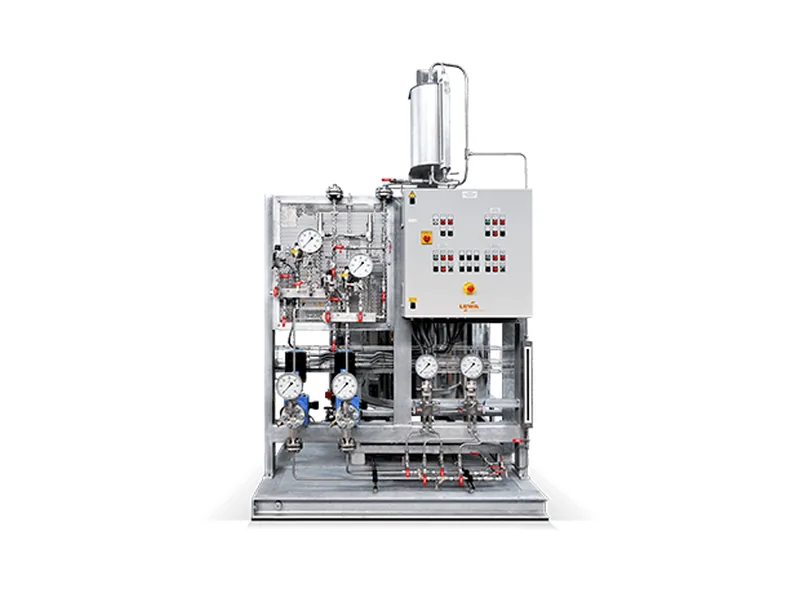
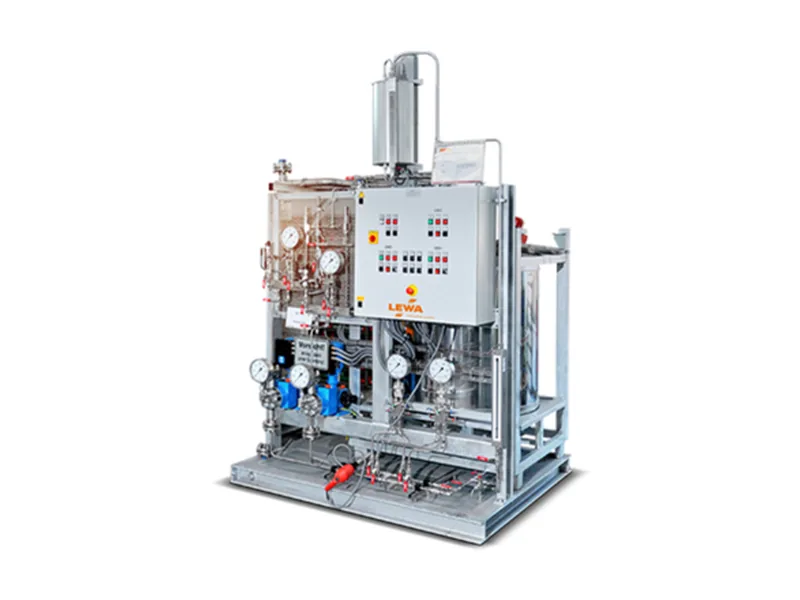
Figure 1: LEWA customer-specific metering skid. Image source: LEWA official website
- Filtration to remove suspended solids and protect downstream equipment.
- Softening with sodium-cycle ion exchange to take out calcium and magnesium.
- Demineralization by reverse osmosis or mixed-bed ion exchange, which removes most dissolved salts and silica and is typical for higher-pressure boilers.
- Deaeration in a thermal deaerator or vacuum unit to strip dissolved oxygen.
Pretreatment handles large volumes and removes a lot, but it is upstream equipment that drifts. A softener that misses a regeneration, a fouled RO membrane, or a deaerator running below temperature lets impurities through, and the boiler keeps firing regardless. If you are weighing a softener against a dosing package, our comparison of chemical dosing vs water softener goes into the detail.
What internal treatment does
Internal treatment means adding chemicals to feedwater or boiler water to hold a safe chemistry. It is not designed to remove large amounts of anything. Its job is the leftovers:
- Residual hardness: phosphate turns small amounts of calcium and magnesium into a soft sludge that leaves with blowdown instead of forming hard scale.
- Residual oxygen: an oxygen scavenger removes the trace left after the deaerator.
- pH: an alkalizing agent keeps feedwater and boiler water in a less corrosive range.
Doses are small and delivered by a metering pump, continuously or in batches. Internal treatment has a capacity limit. Feed it hard water and you get heavy sludge, high blowdown and scale anyway.
External vs internal boiler water treatment side by side
Looking at external vs internal boiler water treatment together, the differences fall into four areas:
- Location: external works on makeup water upstream; internal works in the feed line, steam drum or boiler water.
- Target: external removes bulk impurities; internal controls residual ones.
- Hardware: external uses softeners, RO and deaerators; internal uses chemical tanks, metering pumps and injection points.
- Monitoring: external is judged by outlet hardness, conductivity and oxygen; internal by boiler water pH, phosphate residual and blowdown.
Choosing between feedwater, drum and condensate injection is covered in our boiler chemical injection point guide.
External vs internal boiler water treatment: when you need both
Most steam boilers need both, for practical reasons. Pretreatment fluctuates. Hardness leaks as resin nears exhaustion, returned condensate can carry iron and contamination from leaks, and deaerators perform poorly during startup and shutdown. Internal treatment is the safety net for those moments.
Higher-pressure boilers are the other case. Demineralized water is very pure but poorly buffered, so pH swings easily and an alkalizer is needed, sometimes with a low phosphate residual for added protection. On these plants the chemical feed is often built as a skid. Customer-specific metering systems from manufacturers such as LEWA put tanks, metering pumps, valves and instruments on one frame for power plant service.
When external treatment should lead
For small low-pressure steam boilers and hot water boilers with little makeup, good softening plus a simple pH program is usually enough, and the real work is running the softener well.
When makeup water is very hard or makeup volume is high, pretreatment must lead. Trying to carry high hardness on chemical feed alone typically means sludge, frequent blowdown, wasted fuel and, in bad cases, blocked tubes. For the broader reasons boilers are dosed at all, see purpose of boiler chemical dosing.
Common external vs internal boiler water treatment mistakes
- Switching off the dosing pump after a softener is installed, then finding hard scale in the drum months later.
- Covering for an underperforming softener by raising the phosphate dose, which pushes dissolved solids up.
- Separate teams running pretreatment and chemical feed without sharing data.
- Returning condensate to the boiler without ever testing it.
The fix for most of these is to log pretreatment outlet data and boiler water data on the same sheet and read the trends together. That habit makes the external vs internal boiler water treatment split visible to everyone on shift. Safety note: before working on a dosing pump or high-pressure injection line, stop the pump, isolate it and release the pressure.
Conclusion
External vs internal boiler water treatment differs in location, target and equipment. External treatment keeps most impurities out of the boiler. Internal treatment controls the residue and holds the chemistry steady. Most steam boilers generally need both, with pretreatment leading and chemical feed filling the gaps, and hard makeup water makes good pretreatment non-negotiable. For a boiler chemical dosing skid, send us the boiler pressure, steam output and makeup water analysis and contact our engineers for a configuration.
FAQ
With RO water, do I still need internal treatment?
Usually yes. RO permeate is pure but poorly buffered, so an alkalizer is typically needed, and phosphate depends on boiler pressure.
Can internal treatment replace a softener?
No. Chemicals can handle only small amounts of residual hardness, and hard makeup produces sludge and scale. In any external vs internal boiler water treatment plan, the softener or RO unit comes first.
How does external vs internal boiler water treatment change daily checks?
You watch two data sets: softener or RO outlet hardness and conductivity, and boiler water pH, phosphate and blowdown.
Is an oxygen scavenger needed after a deaerator?
Generally yes. A trace of oxygen remains after deaeration, and more during startups, so a scavenger covers it.
Does external vs internal boiler water treatment apply to hot water boilers?
The logic is the same with lower demands. Softening usually leads, with a simple pH or corrosion inhibitor program.