
Cooling Tower Cycles of Concentration: Conductivity and Dosing Control
Controlling cooling tower cycles of concentration takes two loops. One uses a conductivity setpoint to open and close the blowdown valve, which holds the cycles steady. The other paces the metering pump to makeup flow, or to blowdown, so the inhibitor concentration follows the water balance. Once the cycles are stable, makeup and blowdown are stable, and the chemical feed becomes predictable. This article is for cooling water operators and the engineers who design the control scheme. It covers control logic, not how a conductivity sensor measures.
How cooling tower cycles of concentration relate to dosing
Cycles of concentration describe how many times more concentrated the circulating water is than the makeup. In practice, most sites estimate cooling tower cycles of concentration as tower conductivity divided by makeup conductivity. Evaporation removes water but leaves the dissolved solids behind, so blowdown removes concentrated water and fresh makeup dilutes the rest.
The water balance behind cooling tower cycles of concentration also drives chemical demand. Scale and corrosion inhibitors need to stay at a target residual, and they leave the system with blowdown and drift. More blowdown means more chemical to replace. If the cycles swing, blowdown swings, and a pump running at a fixed rate overfeeds one day and underfeeds the next. For the measurement side, see conductivity monitoring for cooling water.
Setting the conductivity setpoint
The setpoint is a calculation, not a guess:
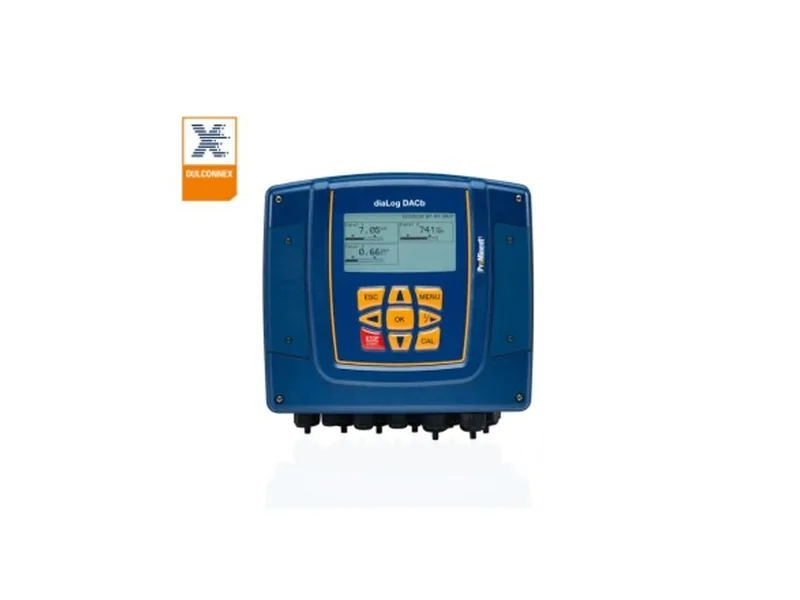
Figure 1: ProMinent DULCOMETER diaLog DACb multi-parameter controller. Image source: ProMinent official website
- Set the target cooling tower cycles of concentration from the water analysis and the treatment program, usually supplied by the chemical vendor or the designer.
- Measure makeup conductivity, ideally averaged over time, and per season if the source varies.
- Blowdown setpoint ≈ target cycles × makeup conductivity.
- Add a deadband: open the blowdown valve at the upper limit and close it at the lower limit.
Do not make the deadband too tight. A narrow band makes the valve cycle constantly, wears out solenoid valves and gives a saw-tooth trend. A wide band lets the cycles drift too far. Tune it on site against how often the valve actually operates.
If the makeup source changes, for example from potable water to reclaimed water, recalculate the setpoint, or the real cooling tower cycles of concentration will be off target.
Conductivity blowdown control details
Sensor location matters. A return line or a side-stream sample loop with steady flow works well. Avoid dead legs, and keep the probe away from the chemical injection point, or it reads freshly dosed chemical instead of tower water.
Use a motorized or solenoid blowdown valve with a manual isolation valve upstream for maintenance. Route the blowdown line so it cannot air-lock. If the valve opens but water does not leave, conductivity never falls and the controller keeps alarming.
Many sites also add a timed forced blowdown. Accurate conductivity control does not remove suspended solids and sludge on its own.
Inhibitor dosing control options
Paced to makeup water
A pulse-output water meter on the makeup line sends a pulse every fixed volume, and the metering pump strokes in response. More makeup, more chemical. This matches how inhibitor is actually lost, which is why it is the first choice on many systems that hold cooling tower cycles of concentration with conductivity.
Paced to blowdown
The pump starts with the blowdown valve, or after a delay. No water meter is needed, but chemical can be dumped straight down the drain, so consumption runs high. If you use it, feed after blowdown closes rather than during it.
Timer or continuous feed
Fixed run time or fixed stroke rate is the simplest option and only works when heat load and makeup are steady. Systems with big summer and winter differences need seasonal adjustment.
Direct residual feedback
Some systems measure inhibitor residual directly, for example with a fluorescent tracer, and trim the pump from that signal. It is more precise but costs more to run and maintain.
Common mistakes with cooling tower cycles of concentration
- Measuring makeup conductivity once and never again. When the source changes, the real cycles drift.
- Leaving the probe dirty. A fouled probe can read low, the blowdown stays shut and the system concentrates.
- Pacing the pump to meter pulses with no maximum stroke rate. A faulty meter can drive the pump at full speed.
- Pacing biocide to makeup as well. Biocide normally needs a separate timed slug feed.
Injection point location also affects results, see supply line or return side dosing, and for what each chemical does, see cooling tower chemical treatment.
Choosing a controller for cooling tower cycles of concentration
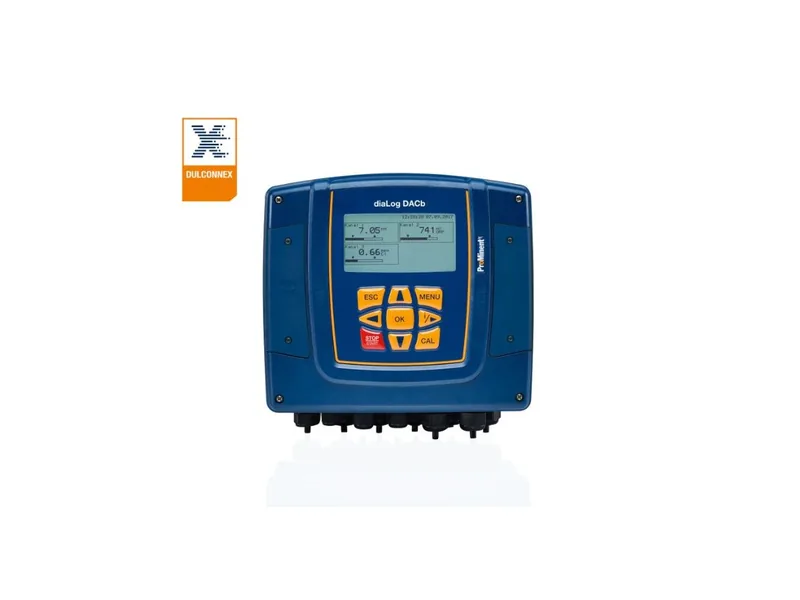
A controller that handles conductivity blowdown control and water meter pacing in one box keeps things simple. A multi-parameter unit such as the ProMinent DULCOMETER diaLog DACb accepts a conductivity sensor and can drive both the blowdown valve and the metering pump. Check inputs and outputs against the manufacturer documentation. Browse our controller range and solenoid metering pumps.
Conclusion
To control cooling tower cycles of concentration, calculate the setpoint as target cycles times makeup conductivity and give the blowdown valve a sensible deadband. Pace inhibitor to makeup where heat load varies, offset any blowdown-paced feed from the blowdown itself, and feed biocide separately as a slug. Put probe cleaning and makeup conductivity checks into routine maintenance. Send us your makeup water analysis, target cycles and current controls, and contact our engineers to put together a control scheme.
FAQ
Are higher cooling tower cycles of concentration always better?
No. Higher cycles save water but raise scaling and corrosion risk. The upper limit comes from the water chemistry and the treatment program.
How often should the conductivity setpoint be reviewed?
Whenever the makeup source or season changes, and on a routine basis by checking makeup conductivity.
Can I pace dosing without a makeup water meter?
Yes, with blowdown pacing or a timer, but accuracy is lower. A pulse water meter on the makeup line is usually worth adding.
Why will conductivity not come down?
Check that the blowdown valve really opens and the line is not blocked or air-locked, then check the probe for fouling or a location too close to the injection point.
Can one pump feed both inhibitor and biocide?
It is not recommended. Inhibitor needs steady feed while biocide is usually a timed slug, so separate pumps are easier to control.