
Chemical Dosing Tank Material: PE vs PP vs Stainless Steel
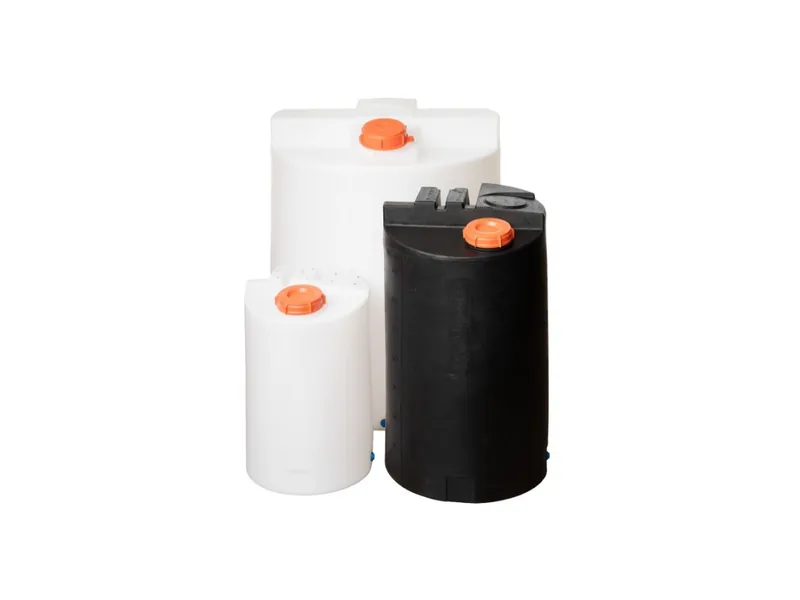
Picking a chemical dosing tank material starts with the chemical, then its strength, temperature and the volume you need. In practice there are four options: polyethylene (PE), polypropylene (PP), stainless steel and FRP. For most water treatment chemicals a PE tank does the job. PP suits warmer liquids or square tanks, stainless steel covers heat, fire and solvent duties, and FRP is usually for large bulk storage. Below we go chemical by chemical, then cover the details buyers tend to miss.
The Four Common Chemical Dosing Tank Material Options
Polyethylene (PE) tanks
PE is the most common chemical dosing tank material. Round PE tanks are usually rotationally molded in one piece, so there are no weld seams to weep. ProMinent's dosing tanks are a good reference: the company describes them as rotation-molded from UV-stabilised PE, in capacities from 35 to 1,000 liters, with a scale in liters and US gallons, threaded sockets for mounting metering pumps and stirrers, and matching stackable PE collecting pans.
As a chemical dosing tank material, PE resists a wide range of chemicals and is light and economical. Its limits are temperature, since it is typically used at ambient conditions, and long-term sun exposure. Outdoors, specify UV-stabilised resin or keep the tank under cover. In North America you will also see crosslinked PE (XLPE) offered for tougher duties; ask the supplier for its compatibility data.
Polypropylene (PP) tanks
PP is the second chemical dosing tank material most plants consider. PP tanks are normally fabricated from welded sheet, so they can be square, which packs well on a skid and makes nozzles easy to add. PP usually handles somewhat higher temperatures than PE. Weld quality decides service life. A poorly welded tank can start weeping at the seams within a year or two.
Stainless steel tanks
As a chemical dosing tank material, 304 or 316L stainless is strong, tolerates heat and does not age in sunlight. It is common for power plant boiler chemicals, solvents and fire-sensitive areas. Its weak point is chloride. Do not put sodium hypochlorite, hydrochloric acid or ferric chloride in a stainless tank.
FRP tanks
FRP as a chemical dosing tank material is mostly used for bulk tanks in the tens of cubic meters. It handles many acids and alkalis, but the resin liner must suit the chemical, and liner resins differ a lot. Have the vendor state the liner on the drawing.
Choosing Chemical Dosing Tank Material by Chemical
These are the usual directions for chemicals we meet most often on site. Always confirm the chemical dosing tank material against the chemical supplier's compatibility data.
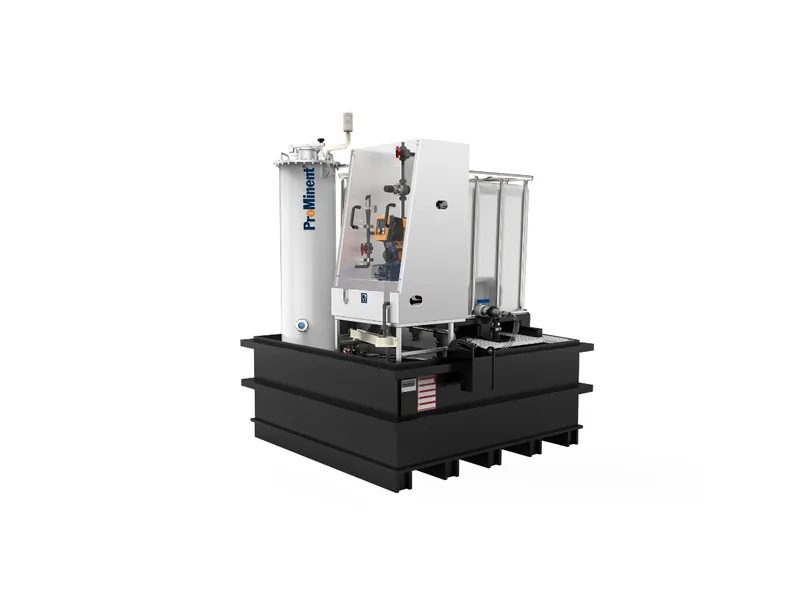
Figure 1: ProMinent DULCODOS SAFE-IBC metering and emptying station. Image source: ProMinent official website
- Sodium hypochlorite: PE or FRP, away from sunlight, with the vent routed safely. See dosing tank vent piping.
- Hydrochloric acid: PE, PP or FRP. It fumes heavily, so seal the lid and route the vent to a fume scrubber.
- Sulfuric acid: dilute acid works in PE or PP. Concentrated acid generally goes in carbon steel or stainless storage depending on strength. Dilution releases heat, so never dilute it in a plastic tank on site.
- Caustic soda: PE, PP or stainless. Strong caustic can crystallize in cold weather, so outdoor tanks may need heat tracing and insulation.
- PAC and polymer: PE is the norm. Polymer make-up tanks need a mixer, and the lid must carry its weight and vibration.
- Phosphate and ammonia: power plants often use stainless steel; keep ammonia away from copper parts.
- Ferric chloride and ferric sulfate: aggressive iron salts. Avoid stainless with chloride salts and choose PE, PP or FRP.
- Hydrogen peroxide: typically PE or passivated 316L. Venting matters, because peroxide decomposes and releases gas; a sealed tank can build pressure.
Pump heads and piping must match the same chemical. Compare with our guides to corrosion-resistant pump head materials and dosing pipe materials.
Mistakes When Selecting Chemical Dosing Tank Material
Checking corrosion but not temperature. A chemical that is fine in PE at ambient can soften the tank when hot. Tell the vendor if the liquid is warm or the tank sits near a heat source.
Poor nozzles. Holes drilled after molding and glued fittings are a common leak path. Outlet, overflow and drain connections are better molded in or welded.
The wrong level indication. Translucent PE lets you see the level. Dark tanks and stainless tanks need a gauge; see dosing tank level gauge selection.
No secondary containment. Even the best chemical dosing tank material cannot stop a fitting from failing one day. Put toxic and highly corrosive chemicals on a collecting pan or inside a bund.
Matching Chemical Dosing Tank Material and Metering Pump
On small PE tanks, a solenoid metering pump often sits on a mounting plate on the lid, with the suction lance dropped through the top. It saves floor space and piping, but the lid has to be stiff. A soft lid flexes with every stroke, and fittings crack over time.
Larger tanks usually feed a pump on a stand beside the tank, drawing from a side outlet near the bottom. Suction conditions are better and maintenance is easier, but the outlet height must be fixed early. Molded-in outlets are more reliable than ones added later.
Stainless and square PP tanks offer flexible nozzle layouts, which suits skids with several pumps side by side. Once the chemical dosing tank material is fixed, issue the nozzle drawing together with the pump layout.
Buyer Checklist
- Material detail: UV-stabilised PE or not, PP sheet thickness, 304 or 316L;
- Nominal or usable volume, and the units on the scale;
- Position and size of inlet, outlet, overflow, drain and vent;
- Whether pumps and mixers mount directly, and if the plate needs reinforcing;
- Transport and lifting, and whether a large tank fits through the dosing room door.
Agreeing on these before ordering saves rework later. ProMinent tanks and accessories are listed under ProMinent products.
Conclusion
The order of decisions for chemical dosing tank material is chemical and strength first, temperature second, volume and installation third. Most routine water treatment chemicals go in PE. Choose PP for square tanks or warmer liquids, keep chlorine-based chemicals out of stainless, use stainless for power plant and solvent duties, and look at FRP for very large volumes. Send us the chemical, strength, temperature and volume, and we will help you confirm the tank and pump.
FAQ
Which is more chemical resistant, PE or PP?
For common water treatment chemicals both work and the gap is small. PP handles heat a little better, while molded PE has no seams.
Can sodium hypochlorite go in a stainless steel tank?
No. The chloride causes pitting in stainless, so PE or FRP is the usual choice.
Can a PE dosing tank stand outdoors?
Yes, with UV-stabilised resin and ideally a sunshade. Standard PE turns brittle after long sun exposure.
How big should the dosing tank be?
A common rule is enough solution for one to three days per batch, adjusted for how stable the chemical is once diluted.
Does every dosing tank need a mixer?
No. Polymer and lime slurry need mixing; liquid chemicals like hypochlorite or hydrochloric acid usually do not.