
Dosing Skid Inspection: Factory and Site Acceptance Checklist
A dosing skid inspection should happen twice: once at the factory before shipment, and again on site after the skid is installed. Many projects only do the second one. Then they discover on site that a pump model is wrong or a pipe material does not match the spec, and the return trip costs a month or more. This guide is written for owners, consultants and buyers, and it walks through what to check at each stage, in the order you would actually check it.
Factory Acceptance Starts With Paperwork
At the factory, resist the urge to look at the hardware first. Ask for the documents. A typical dosing skid inspection pack includes a packing list, certificates of conformity, pump and mixer manuals, material certificates for wetted parts, electrical schematics and wiring diagrams, and the factory test records. Each missing document is one less piece of evidence later.
The technical agreement in the contract is the only yardstick. Go through it line by line: pump model and quantity, tank volume, pipe material, control method and enclosure rating. If the supplier says a part was swapped for something better, get that in writing before you accept it.
Check Materials and Nameplates One by One
Much of the difference between two similar-looking skids comes down to materials. Wetted parts must suit the chemical. Sodium hypochlorite lines are often PVC or PVDF, while concentrated sulfuric acid often runs in carbon steel or specific stainless grades. Follow the design and the chemical supplier's requirements. Read the markings on pipes and fittings, and ask for material certificates whenever something looks uncertain.
Each metering pump nameplate should match the agreement for model, flow, pressure and voltage. Check pump head and diaphragm materials too. One pump series often offers several head materials that look alike but differ a lot in chemical resistance. This part of the dosing skid inspection is quick, and it catches expensive mistakes.
Welds, Piping and Labels
During the visual dosing skid inspection, look at a few specific things:
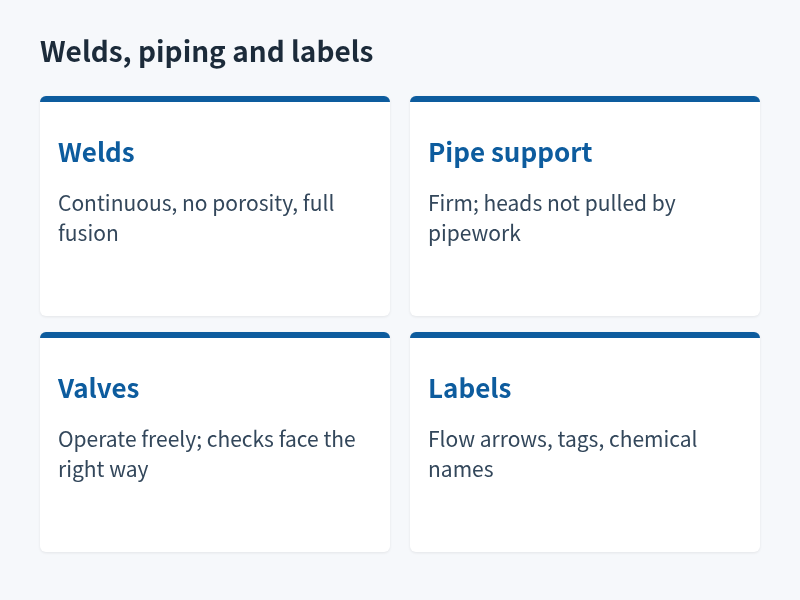
Figure 1: Factory acceptance starts with paperwork, then materials and nameplates, then a water test.
- Are welds continuous, with no porosity or slag, and are plastic welds fully fused?
- Is the piping properly supported, or is a pipe pulling on the pump head?
- Do valves operate smoothly, and do the check valves point the right way?
- Are flow arrows, tag numbers and chemical names all labeled?
Check the base frame for flatness and coating damage as well. One small miss here usually becomes rework on site.
Electrical and Interlock Checks
Open the control panel. Are wire numbers clear? Is earthing secure? Does the incoming supply match the site? Press the emergency stop and confirm the pumps actually stop. Test the low-level alarm for real by dropping the level, and make sure the pump stops or alarms as designed. Our low level alarm setup guide explains the usual arrangements.
If the skid will run on remote control, simulate a 4-20mA or pulse signal at the factory and watch the pump respond. The wiring logic is covered in our 4-20mA and pulse control guide.
Water Test and Flow Calibration
The most convincing part of a factory dosing skid inspection is the water run. Fill the tank with clean water and run the pumps and mixer. Listen for noise, look for leaks, and feel for heat. Calibrate each pump at several stroke settings and compare against the nameplate. The deviation should typically stay within what the manual allows. See our metering pump calibration method for how to do it properly.
Drain the water afterward. For skids that will handle concentrated sulfuric acid, residual water must be dried out before shipping.
Items People Often Miss
Bump the mixer and confirm its rotation. A reversed mixer blends poorly and can stir up sediment from the tank floor. Count the spare parts against the agreement. Diaphragms, valve balls and seals are easy to forget until the day you need one. Check the factory settings recorded for relief and back pressure valves rather than assuming they are set.
Operator training also belongs in a complete dosing skid inspection plan. Operators should be able to start, stop, calibrate and prime the pumps on their own, and the training record should be signed and filed.
Site Acceptance: Unpacking and Placement
When the skid arrives, unpack it with the supplier present. Look for damaged crates and dents on the frame, then count parts and tools against the packing list. Photograph any missing or damaged items and have both parties sign the record.
After placement, check the location again. Distance and height to the injection point should match the design. Our article on dosing skid location covers what to look for. File the pipe flushing and pressure test records with the site dosing skid inspection documents.
Commissioning and the Punch List
During site commissioning, connect the skid to the plant control system and test remote start and stop, flow signals and alarm feedback one by one. Run it on chemical for a period agreed in the contract and see whether the dose stays stable.
Every problem found goes on a punch list with an owner and a due date. If the punch list is unclear, do not sign the acceptance certificate. Finishing the dosing skid inspection this way also makes the warranty start date clear.
Conclusion
A complete dosing skid inspection has two parts. Factory acceptance covers documents, materials, welds, electrics and the water test. Site acceptance covers unpacking, placement, commissioning and the punch list. Use the contract's technical agreement as the standard and keep a record for every item. Browse complete systems on our dosing skid page, or contact us for an acceptance checklist template.
FAQ
Do I need to attend the factory dosing skid inspection in person?
It is usually worth it. If you cannot, ask for a water test video and the full test records.
What separates a good skid from a poor one during inspection?
Mainly materials, pump brand and model, and weld quality. Checking each item against the agreement makes the gap obvious.
How much flow deviation is acceptable?
It depends on the pump manual and the contract. Test at several stroke settings, not just full stroke.
What if parts are missing on delivery?
Photograph them on the spot, note them on the unpacking record, and get both sides to sign.
What happens after the dosing skid inspection is signed off?
File the records and hand over operator training. Warranty generally starts from the acceptance date, per the contract.