
Dosing System Energy Saving With VFD and Intermittent Duty
Dosing system energy saving is about how much electricity the pumps and mixers use, and how the equipment is run. It is not about cutting the chemical dose. A motor-driven diaphragm pump that sits at a very short stroke while the motor turns at full line speed is doing little useful work and still drawing nearly a motor's worth of power. This article is for equipment and operations staff at a water or wastewater plant. It stays on variable-frequency drives and intermittent duty as ways to cut power, not on moving injection points to use less chemical.
Separate solenoid pumps from motor pumps in dosing system energy saving
A solenoid metering pump already uses little power. Start-stop pulsing is its normal mode, and there is rarely much electricity left to squeeze out. The loads that actually show up on the bill are motor-driven mechanical diaphragm pumps, plunger pumps, and the mixer on the day tank. Motor diaphragm units such as the NEWDOSE NDJ and ND2000 should be the first places you look when you want dosing system energy saving.
A mixer that runs all day on a short make-down cycle can use more electricity than the pump. Once the chemical is dissolved, run the mixer for a set period and stop it. On the pump side, ask whether the duty must be continuous, or whether the pump may start and stop on level, time or a water-quality signal. If intermittent duty is allowed, stopping needless continuous running often saves more than fitting a drive at once.
A practical order is:
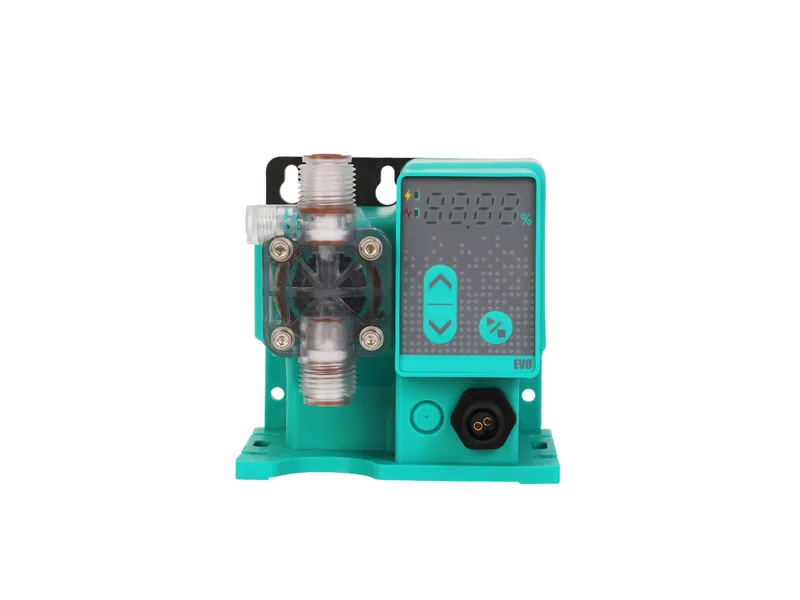
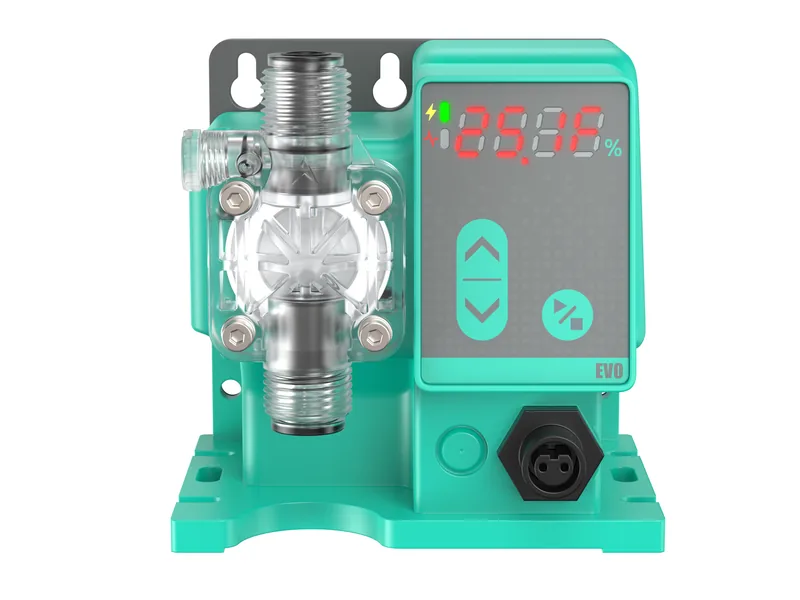
Figure 1: NEWDOSE EVO stepper motor metering pump. Image source: NEWDOSE official website
- Separate solenoid pumps from motor pumps; do not treat the solenoid as the energy target
- Check whether the motor is running for long periods at low stroke and line frequency
- If the process allows intermittent duty, fix the start-stop logic before you add a drive
- Run the mixer only during make-down and any period needed to prevent settling
The NEWDOSE range is on the NEWDOSE product page. This article stays with series that exist: NDJ, NDWS, NDWL, ND1000, ND2000 and HND, plus the stepper-motor pumps sold on the official site.
How stroke and frequency should work together
In dosing system energy saving, a VFD is not an invitation to drop frequency without a plan. A more stable approach is to set the stroke in a sensible range, then let frequency follow the required flow. A very short stroke at a high frequency is inefficient, and the motor may still be turning fairly fast, so the electricity does not actually fall. How stroke and frequency should be combined on a plunger pump is in plunger metering pump flow adjustment. The general method is in metering pump flow adjustment.
Frequency also has a floor. Too low, and motor cooling suffers, torque falls, and the motor may trip on temperature. The lower limit has to be set for this motor and this pump. A stepper-motor pump such as the NEWDOSE EVO can already vary its output over a wide range, so a small-flow point does not need a large motor plus a drive.
Flow pacing and energy saving are not the same job. Using a water-meter pulse to change frequency is mainly about keeping the dose in step with flow. Power may fall as a side effect, but the aim is an accurate dose. Wiring is in pulse water meter proportional dosing. Do not treat flow pacing as the whole of dosing system energy saving.
When intermittent duty actually cuts power
Intermittent duty helps dosing system energy saving only if the process can tolerate a stopped pump. A biocide, or some boiler chemicals, can already be fed on a timer or a residual signal. Running continuously just so the pump "looks busy" keeps the motor and its fan drawing power. The process choice on a boiler is in continuous versus intermittent boiler dosing. Stop the pump when you can, but do not start and stop in a way that hurts the motor.
Motor pumps should not be inched every few seconds. Inrush is high, and a dense string of starts wastes energy and can stress windings and couplings. A longer on/off cycle is safer. A solenoid pump already pulses; there is little energy to gain by adding a further intermittent scheme.
There is also a false saving: the pump is stopped, but the mixer, heat tracing, instruments and room lighting stay on. Dosing system energy saving has to include those auxiliary circuits. Counting only the pump's kilowatts will miss a large share of the load.
Common misses in dosing system energy saving
An oversized pump is hard to bring back into a sensible operating band, even with a drive. A motor that loafs at a very low load can have a VFD and still use too much electricity. Size the flow margin modestly at selection, rather than buying large and cutting back later with a drive.
A drive can also be fitted while the stroke stays very short and the frequency barely changes. That is idle running plus an idle inverter. If a cooling fan or a control-room air conditioner has to run harder because the drive cabinet dumps heat, that load belongs on the same sheet. Isolate power before any work in the panel. Do not change terminations live.
In winter, a more viscous liquid can raise motor current at the same flow. Write the condition into the operating notes so it is not treated as a drive fault.
Conclusion
Dosing system energy saving means stopping motor pumps from spending hours at line speed and a tiny stroke. Where the process allows it, intermittent duty shortens run time. Where the duty must be continuous, set a sensible stroke and let a VFD follow the flow. Solenoid pumps and chemical use are not the main line of this work. Send us the pump series, motor rating, current stroke and frequency, and the daily start-stop pattern, and we can look at where a cut in power is most likely when you contact us for selection.
FAQ
Is there much left to gain from a solenoid pump in dosing system energy saving?
Very little. The power is already low, and further control changes will not move the bill much. Put the effort into motor pumps, mixers and auxiliary circuits if you want dosing system energy saving.
If we add a VFD but leave the stroke short, will the power bill fall?
Often only a little. A short stroke at a still-high frequency keeps the motor turning fairly fast, so dosing system energy saving stays dull. Set the stroke in a sensible range first, then let frequency follow the flow.
Will intermittent duty upset the dose and cost more than it saves?
It can, if the process needs a steady residual and you force an on/off cycle anyway. Dosing system energy saving must not come at the expense of the process. Use intermittent duty only on chemicals and points that can tolerate a pause, and set a minimum on and off time so the motor is not started too often.
Should the mixer be included in dosing system energy saving?
Yes. On many sites the mixer runs longer than the pump. After the chemical is dissolved it can stop, and start again only when settling has to be prevented. Writing that into the make-down program often does more than adding a drive to a small pump.
Is a stepper-motor pump always more efficient than a standard motor pump?
At low flow, where a wide turndown is needed, a stepper-motor pump is often the better fit, and you can skip a large motor and a drive. At higher flow and pressure, a motor diaphragm unit such as an NDJ or ND2000 is still the usual choice, and then you talk about a VFD and intermittent duty. Choose by flow and pressure. Do not assume a stepper saves electricity in every duty.