
Dissolved Ozone Analyzer vs Ambient Ozone Gas Monitor: What You Need
Most ozone projects need two kinds of instrument. A dissolved ozone analyzer sits in the water and tells you whether the dose is enough and how much ozone is left downstream. An ambient ozone gas monitor sits in the air of the plant room and triggers alarms, shutdown and ventilation if there is a leak. One protects the process and the other protects people, and neither can replace the other, and a missing gas detector in the generator room is the most common gap we see.
Why Water and Air Need Separate Instruments
Ozone in water decays quickly, often within minutes, so a dissolved ozone analyzer has to measure online and continuously. Grab samples sent to a lab are useless. In air, ozone is a strong respiratory irritant even at low levels, and leaks can occur at the generator, at pipe joints over the contact tank and around the off-gas destructor.
The short version: the dissolved ozone analyzer watches the process, the ambient monitor watches the people.
Choosing an Ozone Sensor in Water
The usual ozone sensor in water is a membrane-covered amperometric electrode. Ozone diffuses through the membrane and reacts at the electrode, producing a current proportional to concentration. The membrane reduces sensitivity to flow, dissolved substances and film-forming media, and turbidity and color barely affect the reading. Temperature compensation handles the rest.
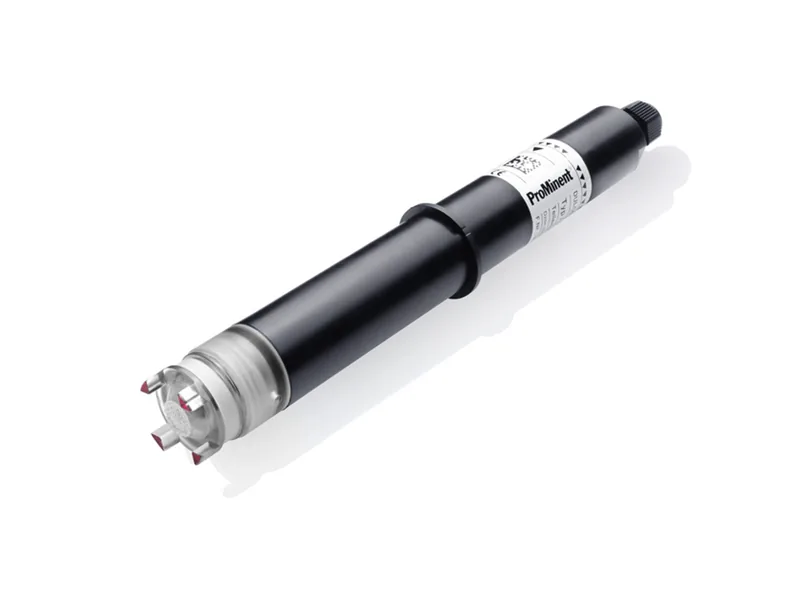
ProMinent DULCOTEST ozone sensors work this way, with a measuring range of 0.02 to 2 mg/l and two types. OZE3 is for clear water such as swimming pools and potable water. OZR1 is for dirtier water, including raw water, cooling water, process water and wastewater, and can also monitor ozone breakthrough.
Water quality decides the sensor type, and the sample point decides the range. Near the injection point concentrations are high; at the outlet they are low.
Plan calibration too. A dissolved ozone analyzer cannot be calibrated with a buffer like pH. Take a grab sample at the sensor, measure it immediately with a portable photometer, and adjust the online value. Wait a few minutes and the ozone is gone, so the comparison will read low.
Where to Install a Dissolved Ozone Analyzer
Three locations come up most often:
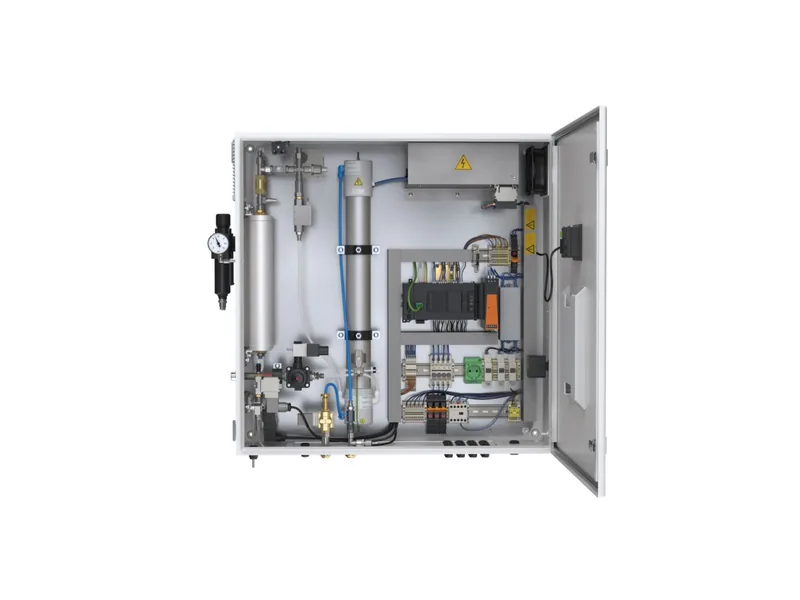
Figure 1: ProMinent OZONFILT OZVb ozone system. Image source: ProMinent official website
- Contact tank outlet. Confirms that residual ozone remains after the required contact time. This is the usual feedback point for dose control.
- After the activated carbon filter. Pools and some drinking water plants must not carry ozone into downstream systems. A dissolved ozone analyzer here shows whether ozone is breaking through.
- Distribution or return line. Only where a specification calls for it.
Mount sensors in a flow cell with stable sample flow and keep sample lines short. Ozone decays along the tube and a long line will read low. A dissolved ozone analyzer placed a long way from its sample point is effectively measuring a different, older water. If the panel has to sit far away, move the flow cell close to the tap and run only the signal cable back. That one change fixes more low readings on a dissolved ozone analyzer than any recalibration.
Ambient Ozone Gas Monitoring and Leak Detection
Ambient ozone gas monitoring typically uses electrochemical or semiconductor gas sensors. Place detectors close to likely leak points and at the height where people breathe. Ozone is heavier than air, so do not put the sensor on the ceiling. Locate it near the generator, near ozone pipe joints and near the off-gas destructor, and keep it away from supply air outlets that would dilute a leak before it reaches the sensor.
Alarm levels are usually two-stage: a warning for staff and a second level that trips interlocks. Gas detection instruments are listed under gas analyzers. The approach is similar to chlorine gas protection in a hypochlorite dosing room.
Designing the Safety Interlock
At the second alarm level, typical actions are: stop the ozone generator, start forced ventilation, sound and flash alarms, and in some designs close the feed gas. Hardwire the interlock or build it as a separate safety routine in the PLC; a pop-up on the HMI is not enough.
Before entering the room for maintenance, confirm the ambient monitor reads normal and ventilation is running. Lines still hold ozone after shutdown, so purge them before opening any pressurized part.
Linking the Dissolved Ozone Analyzer to the Ozone System
Systems such as the ProMinent OZONFILT OZVb generate ozone from compressed air and dose it at the same time, with matched mixing equipment. The dissolved ozone analyzer signal goes back to the controller or PLC, which trims generator output based on residual at the contact tank outlet: low residual, raise output; high residual, cut back. Where flow varies widely, add flow feed-forward. It is far steadier than feedback alone.
Ozone gives no lasting residual, so many plants follow it with a small chlorine dose controlled by a chlorine analyzer and metering pump. A complete pool example is in our guide to pool dosing system design.
Conclusion
Cover both sides of ozone monitoring. Choose the dissolved ozone analyzer sensor type by water quality and its location by process, and use it for dose control and to prove there is no residual. Fit ambient detectors near leak points at breathing height and interlock them with the generator and ventilation. More sensor and ozone system details are on our ProMinent brand page. Send us your flow, water quality and ozone capacity, and contact our engineers to specify both instruments.
FAQ
Can one dissolved ozone analyzer also measure ozone in air?
No. The sensing principles and installation are different, so you need separate instruments.
Why is my dissolved ozone reading low?
Usually a long sample line, low sample flow or a fouled membrane. Check the sample first, then the sensor.
Why measure after the carbon filter in a pool?
To confirm the carbon has destroyed the ozone and none reaches the pool.
How often should an ozone leak detector be calibrated?
Follow the manual's interval, normally with test gas, and replace sensors at end of life.
Do I still need chlorine with ozone?
In most cases, yes. Ozone decays fast and leaves no lasting residual, so a small chlorine dose usually follows.