
Pool Dosing System Design: Chlorine, pH Control and Interlocks
A pool dosing system has two jobs: keep free chlorine topped up and bring pH back into range. You can do both by hand, but levels swing all day and you fall behind as soon as bather load climbs. That is why most commercial pools now run an automatic pool dosing system. This guide walks through the setup in the order you would build it, with the mistakes we see most often on site.
What a pool dosing system actually doses
In daily operation, a pool dosing system handles these chemicals:
- Disinfectant: liquid sodium hypochlorite is the most common, though other chlorine products are used.
- pH correction: acid when pH runs high, alkali when it runs low; most pools spend their time bringing pH down.
- Flocculant: used with sand filters to help capture fine particles.
- Others depending on water and operation, such as algaecide.
Target ranges for chlorine and pH come from your local regulations; our pool water quality standards article covers them, so we will not repeat them here.
Components of an automatic pool dosing system
A typical automatic pool dosing system splits into four parts:
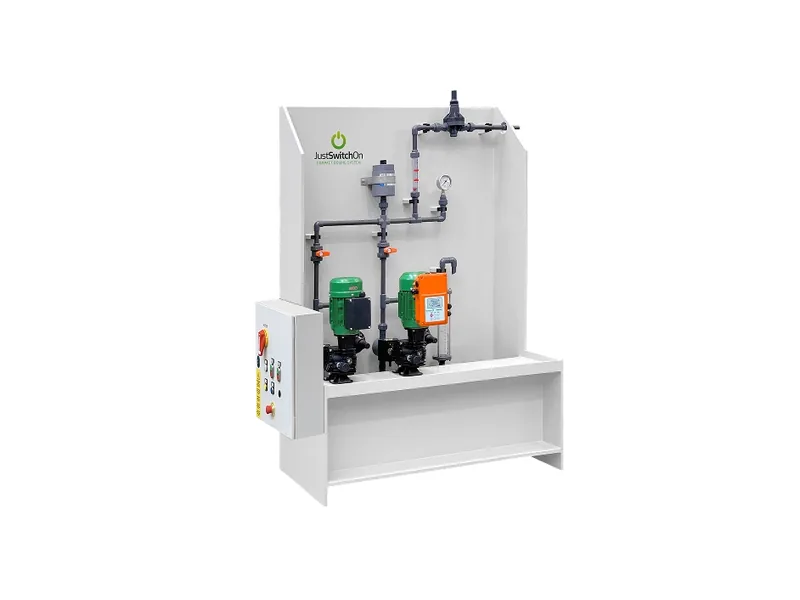
Figure 1: Doseuro JustSwitchOn compact dosing system. Image source: Doseuro official website (FPZ)
- Measurement: a sample stream from the circulation line passes a flow cell that measures free chlorine (or ORP) and pH.
- Control: the controller compares readings with set points and sends a signal to the dosing pumps.
- Dosing: one pump for chlorine, one for acid, each with its own tank, suction line and injection point.
- Interlocks: if the circulation pump stops or sample flow is lost, the dosing pumps stop too.
Wondering whether to control on free chlorine or ORP? See ORP vs chlorine.
Where to inject in a pool dosing system
Injection points usually sit after the filter and before the return to the pool. Some field rules:
- If there is a heater, inject chlorine downstream of it so strong solution does not hit the heat exchanger.
- Keep chlorine and acid injection points well apart; meeting at high strength in the pipe they release chlorine gas.
- Take the sample upstream of the injection points, or the controller sees fresh chemical and starts to hunt.
- Fit an injection valve at each point so circulation water cannot flow back into the pump head.
Why the pool dosing system must be interlocked with circulation
This is where most pool incidents start. The circulation pump stops but the dosing pumps keep going, so chemical builds up in the pipe. When circulation restarts, a slug of concentrated hypochlorite and acid goes into the pool together. At best swimmers get sore eyes; at worst you produce chlorine gas.
So build in at least two layers of protection:
- Power the dosing pumps from the circulation pump run signal, so no circulation means no power.
- Fit a flow switch on the flow cell; lose sample flow and the controller stops output and alarms.
A third layer is worth having: a maximum continuous dosing time. If the set point is not reached in that time, stop and alarm, because it is usually a failed probe or an empty tank.
Choosing a pool chlorine dosing pump
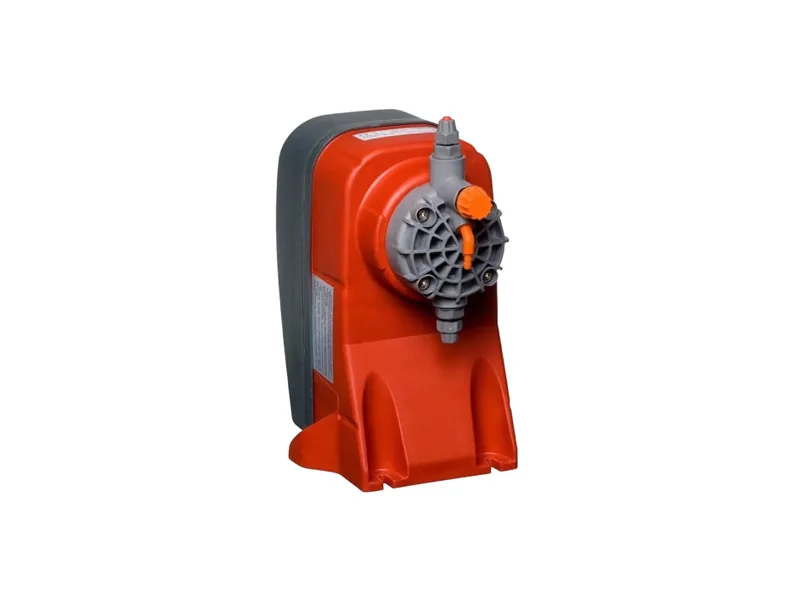
Pool dosing flows are small, so solenoid metering pumps are the usual choice. Take the Doseuro SDP solenoid pump as an example: the factory literature lists pools among its main applications, with a reinforced polypropylene housing, solid PTFE diaphragm and IP65 protection.
Models in the SDP family differ in how they are controlled, so match them to your scheme:
- SMC/SML: manual potentiometer adjustment; SML adds a level control input.
- SSC: flow follows a user-configured 0–20 mA signal.
- SWM: accepts pulses from a flowmeter with multiplier or divider functions.
- SMF: built-in pH, Rx (ORP) and chlorine instrument, covering 0–14 pH and –1000 to +1400 mV, with temperature compensation and a 4–20 mA output.
Do not size the pump on pool volume alone. Check the pressure in the circulation line at the injection point, and pick a pump rated above it with margin. Solenoid pumps struggle with long suction lines and high lift, so mount the pump next to the tank.
For a small pool, an SMF gives you a closed loop with one instrument and one pump. Larger pools or shared plant rooms usually have a separate controller with SSC pumps on an analog signal. Wiring and settings depend on the model, so follow the manual. For other control options, see pH/ORP/chlorine analyzers with dosing pump control and our pH/ORP instruments.
Storage and routine maintenance
Store hypochlorite and acid separately, ideally in different rooms or at least behind a dividing wall, with bunding under each tank. Routine pool dosing system maintenance comes down to three things:
- Calibrate and clean probes on the manual schedule; a drifting pH probe is the most common cause of runaway dosing.
- Hypochlorite suction lines and injection valves crystallize, so take them apart and flush them regularly.
- Compare manual test results with online readings every day; a big gap means check the probe first.
Conclusion
A good pool dosing system depends less on fancy pumps than on accurate measurement, correct injection points and reliable interlocks. Keep chlorine and acid on separate pumps, tanks and injection points, inject after the filter and heater, sample upstream of the injection points, and stop dosing whenever circulation stops. A solenoid pump such as the Doseuro SDP covers most pools, with manual, analog, pulse or built-in instrument versions. Tell us about your pool through our contact page and we will help you specify the pool dosing system.
FAQ
Can I just pour chemicals straight into the pool instead of using a pool dosing system?
In an emergency on a small pool, yes, but levels will swing. Busy pools need automatic dosing for stable chlorine and pH.
Can chlorine and acid share one injection point?
No. Concentrated hypochlorite and acid meeting in the pipe release chlorine gas, so keep the points well apart.
Why won't free chlorine come up?
Check the tank and suction line for air locks first, then the probe. Stored hypochlorite also loses strength over time.
Solenoid or motor-driven pump for a pool?
A solenoid pump suits most pools. Large water parks with high, continuous flows may justify a motor-driven metering pump.
Can the Doseuro SMF control chlorine on its own?
Yes. The SMF has built-in pH, Rx and chlorine measurement, so with probes and a level switch it closes the loop; settings follow the manual.