
Data Center Cooling Water Treatment: Towers and Closed Loops
Data center cooling has one rule that ordinary HVAC can bend: it never stops. The open cooling tower loop needs scale and corrosion inhibitor, biocide and conductivity-based bleed. The closed chilled water loop behind the chillers and plate heat exchangers needs corrosion inhibitor and some microbial control. Both should be dosed automatically, monitored online, and built with redundant pumps so you can service equipment without shutting anything down. This guide is written for facility engineers and mechanical contractors who run or design these plants.
How a data center cooling plant is split
Most data center cooling plants have three water-side pieces:
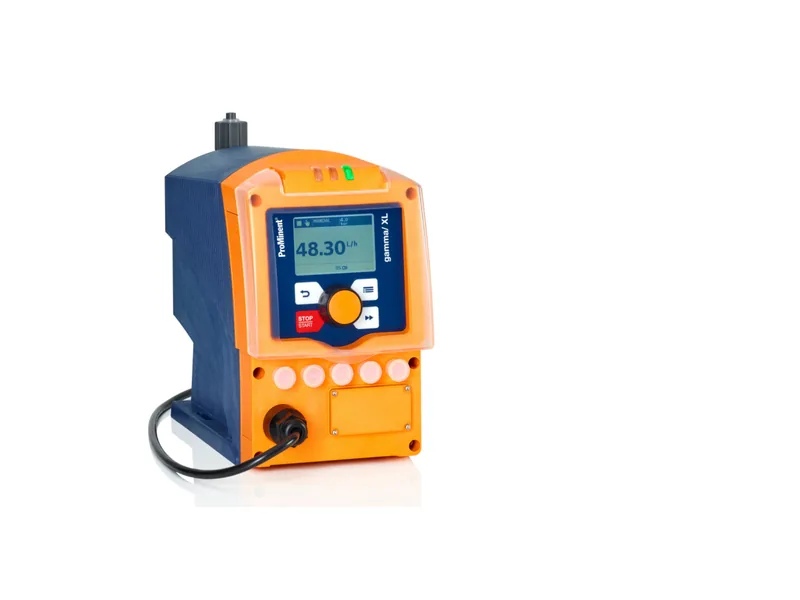
Figure 1: ProMinent gamma/ XL solenoid metering pump. Image source: ProMinent official website
- The open tower loop. Cooling towers, condenser water pumps, and one side of the chiller condensers or plate exchangers. Water evaporates in the tower, so it concentrates and picks up dust from the air.
- The closed chilled water loop. Chiller evaporators, CRAH units or cooling coils. Almost no evaporation, very little makeup, no air contact.
- Economizer plate exchangers. In cold weather the tower water cools the chilled water directly through a plate exchanger, with the two waters kept apart.
The two loops fail in different ways, so treat them as separate systems with separate programs.
Treating the tower side of data center cooling
The open loop is where most data center cooling water problems start. A typical program has four parts:
- Scale and corrosion inhibitor, fed continuously in proportion to makeup or bleed, to keep condenser tubes and exchanger plates clean and pipework intact.
- Biocide. An oxidizing biocide fed continuously or on a timer, plus a non-oxidizing product shot-dosed on a schedule, to control bacteria, algae and Legionella.
- Bleed, controlled automatically by conductivity to hold cycles of concentration.
- Side-stream filtration to strip out airborne dust and suspended solids.
Why each chemical is there and how they work together is covered in how cooling water dosing works. For conductivity setpoints and cycles of concentration, see conductivity monitoring for cooling water.
Plate heat exchangers are unforgiving. The channels are narrow, so a thin layer of scale or biofilm shows up quickly as a wider approach temperature. If your site relies on economizer hours, run the tower water tighter than you would for a normal chiller plant.
Dosing the closed chilled water loop
The closed loop holds a fairly fixed volume and takes very little makeup, so it is dosed differently:
- After filling or a large makeup, bring the corrosion inhibitor up to target with a bypass pot feeder or a small metering pump. Day to day, top up in proportion to makeup.
- Test inhibitor level, pH, turbidity and bacteria on a regular schedule, and add biocide when counts climb.
- Treat a sudden rise in makeup as a leak until proven otherwise. It also dilutes your inhibitor.
Closed loop problems rarely arrive fast. Corrosion products and biofilm build up slowly, and the first symptom is often a CRAH unit losing capacity or strainers clogging more often.
Automation and online monitoring
Staffing is lean and uptime matters, so tower-side dosing in data center cooling is normally fully automatic. A controller reads conductivity, pH and ORP, drives the bleed valve and the pumps, and passes data and alarms to the BMS or DCIM system. That way a stuck valve or an empty tank gets noticed in minutes, not at the next site visit.
Check that corrosion control is actually working with corrosion coupons or an online corrosion probe. Coupon placement and the calculation are in using corrosion coupons in cooling water.
Choosing and backing up the dosing pumps
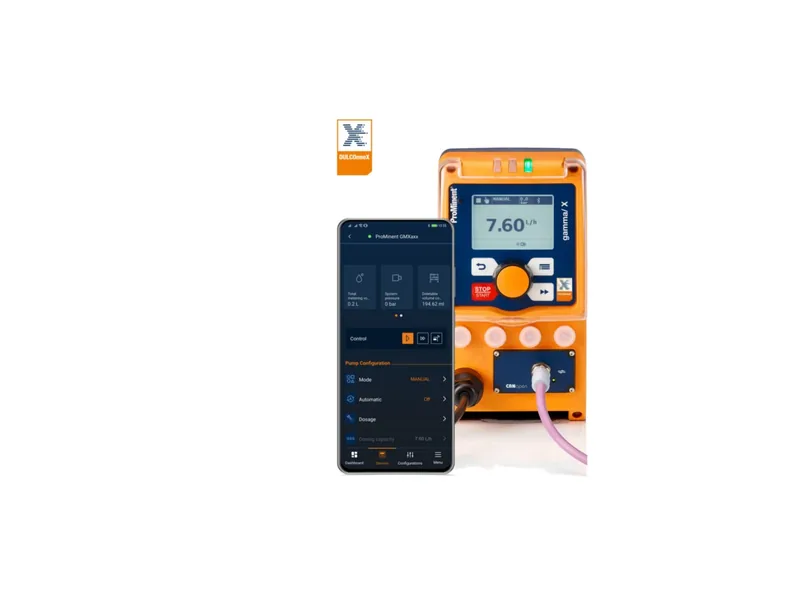
Chemical demand in data center cooling is usually small, so solenoid metering pumps are the common choice. The ProMinent gamma/ X has built-in pressure monitoring and accepts external signals; details are on the ProMinent gamma/ X page. Where flow is higher, the gamma/ XL steps up. You can compare other small pumps in the solenoid metering pump range.
For redundancy, plan on:
- Duty and standby pumps for inhibitor and biocide, swapped on a schedule so the standby is known to work.
- Low-level alarms on every day tank, wired into the monitoring system.
- Isolation valves and a bypass on each dosing line so a pump can come out while the plant keeps running.
- Regular calibration of key sensors, with spare electrodes kept on site.
Common data center cooling water problems
Here is what usually shows up in the field:
- Rising condensing temperature on the chillers. Scale or biofouling in the condenser. Check inhibitor and biocide feed first.
- Wider approach on the plate exchangers. Fouled channels. Improve side-stream filtration and biocide control on the tower side.
- Conductivity stuck high. A failed bleed valve, or the makeup water quality has changed.
- Unusual makeup on the closed loop. A leak somewhere, which also dilutes the inhibitor.
Store biocides and acid products apart and never dose them through the same line. Keep the chemical room ventilated, and isolate and depressurize before changing drums or opening a pump.
Conclusion
Good data center cooling water treatment keeps the open tower loop and the closed chilled water loop on separate programs. On the tower side, feed inhibitor continuously, alternate biocides, bleed on conductivity and filter a side stream. On the closed loop, hold inhibitor at target and test on a schedule. Automate the dosing, tie it into your monitoring, and build in redundant pumps and piping so maintenance never means downtime. Send us your tower count, system volume and makeup water analysis through our contact page, and we will size a dosing package for your site.
FAQ
How is data center cooling different from comfort cooling water treatment?
The equipment is similar. The difference is that data center cooling runs all year with no planned outages, so automation, alarms and redundancy matter much more.
Does the closed chilled water loop need chemical treatment?
Yes. It does not evaporate, but it still corrodes and can grow bacteria. Keep an inhibitor residual and test it regularly.
How often should the tower be bled?
Bleed on conductivity, not on a timer. The setpoint comes from your makeup water quality and the cycles of concentration you can safely run.
Will a failed dosing pump affect data center cooling capacity?
Not right away. But a long gap in feed leads to scale and corrosion, which is why duty and standby pumps with alarms are the norm.
Why do economizer plate exchangers foul so easily?
Their channels are narrow, so dust, scale and biofilm from the tower water settle quickly. Tighter filtration and biocide control on the tower side help.