
Online COD Analyzer: Dichromate Digestion vs UV254 Compared
An online COD analyzer should be chosen by measurement method first and brand second. If your readings must line up with regulatory lab results, a dichromate digestion analyzer is the usual pick. If you mainly need a fast trend for process control, a UV254 spectral probe uses no reagents and needs far less upkeep, but it has to be correlated against lab data. This guide is for wastewater operators, process engineers and instrument techs who need COD monitoring in wastewater and want to use the signal for chemical dosing.
Choosing a COD measurement method
COD (chemical oxygen demand) is the oxygen equivalent of everything in the water that a strong oxidant can oxidize. Higher COD means more organic load. There are two mainstream ways to measure it online.
Dichromate digestion: closest to the lab method
A digestion-type online COD analyzer pulls a sample on a cycle, adds potassium dichromate, sulfuric acid and a catalyst, heats it, and reads the result by colorimetry. Because the chemistry mirrors the standard lab test, the numbers carry weight with regulators and in acceptance tests. The trade-offs are real. Each result takes a full digestion cycle, so you get a reading every so often rather than a live trace. Every test consumes reagent, and the waste is acidic and contains chromium, plus mercury where it is used to mask chloride. That waste must be collected and handed to a licensed contractor.
UV254 spectral sensors: fast, but correlation-dependent
Many organics absorb ultraviolet light near 254 nm. A UV254 COD sensor measures that absorbance and converts it to COD using a correlation built against lab results. No reagents, almost no waste, continuous readings, and the probe can sit directly in a channel. The catch is that the correlation is a model. If the wastewater mix shifts toward compounds that absorb weakly in the UV range, the online COD analyzer will drift away from the lab value. It works best on fairly stable effluent or where you only need direction of change.
Maintenance and waste often matter more than accuracy
Buyers tend to ask about accuracy. Six months later, the workload is what they talk about.
Typical routine on a digestion online COD analyzer:
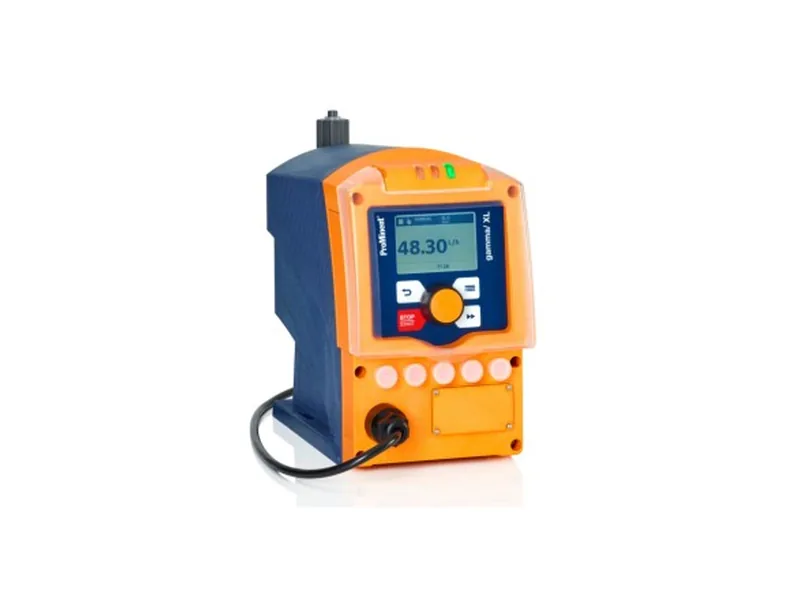
Figure 1: ProMinent gamma/XL solenoid metering pump. Image source: ProMinent official website
- Refill reagents and watch shelf life; mixed reagents degrade.
- Replace tubing, digestion vessels and peristaltic pump tubes on schedule.
- Keep an eye on the waste container level; a full drum stops measurement.
- Run standard checks and recalibrate; when results drift, check reagents before the lamp.
A UV254 online COD analyzer shifts the work to optics. Biofilm or grease on the window pushes readings up slowly, so choose a model with automatic wiping or air cleaning, and compare against lab samples on a regular schedule.
Rule of thumb: compliance data points to digestion; continuous control points to UV. Many plants run both, one for reporting and one for the process.
Range, sample conditioning and location
Size the range to your normal peaks with some headroom. Too narrow and the online COD analyzer keeps over-ranging; too wide and resolution at low values suffers. Influent and effluent are best handled by separate instruments.
Raw influent with grit and fibers needs sample conditioning before it reaches an online COD analyzer of the digestion type, or the lines block. Filtering also removes particulate COD, so the reading will sit below the raw-water lab value; agree on that with the process team up front. High-chloride industrial effluent needs a digestion online COD analyzer rated for chloride, otherwise results run high.
Using an online COD analyzer to pace dosing pumps
Decide during selection who will use the signal. Two cases come up most.
The first is carbon dosing for denitrification. When influent COD is low relative to nitrogen, plants add sodium acetate or a similar carbon source; see carbon source dosing for denitrification. A digestion online COD analyzer is slow, so use it as feedforward or a trend alongside nitrate and flow, not as the only input to a tight loop.
The second is oxidant dosing in tertiary treatment, such as Fenton or hypochlorite oxidation. Response speed matters more here, so a UV254 online COD analyzer fits better. Set output limits so a dirty window cannot drive the pump to dose continuously.
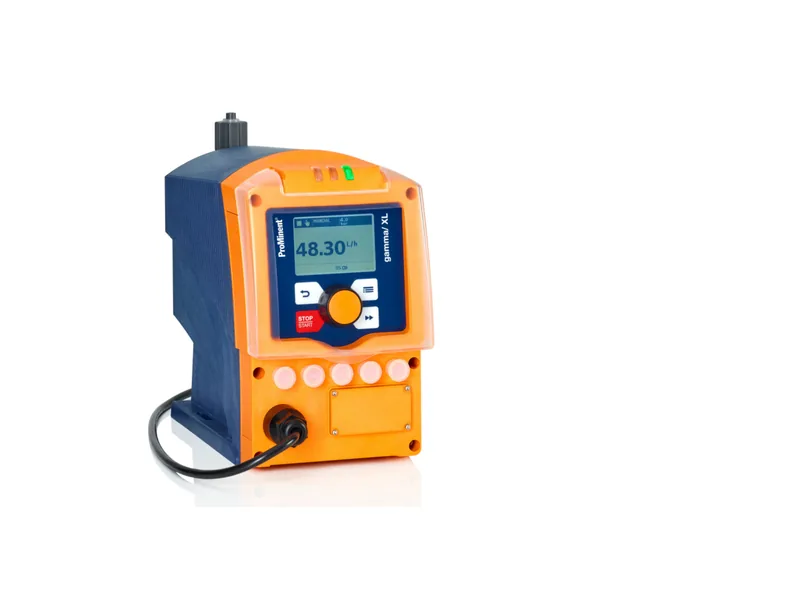
The final element is often a solenoid metering pump. The ProMinent gamma/XL, for example, is set directly in L/h, has configurable inputs and outputs plus bus interfaces, and detects gas in the dosing head and overpressure, which makes it easy to tie to a PLC or controller. For the full loop, read automatic chemical dosing for wastewater; for the chemicals themselves, see wastewater treatment chemicals.
Safety: wear acid-resistant gloves and goggles when changing digestion reagents or emptying waste, and stop the online COD analyzer before opening lines.
Conclusion
Pick an online COD analyzer in this order: purpose (compliance or control), method (dichromate digestion or UV254), then range, sample conditioning and cleaning, and only then brand and budget. For dosing control, digestion data is a reference and UV data is the faster driver. Pumps and controllers are listed under solenoid metering pumps and controllers and analyzers. Send us your wastewater type, rough COD range and the chemical you plan to pace, and contact our engineers to match the analyzer and pump.
FAQ
Can an online COD analyzer replace lab testing?
No. Even a digestion unit needs regular lab cross-checks, and a UV sensor depends on lab data to build and correct its correlation.
How accurate is a UV254 COD sensor?
Good enough for trend and control when the water is stable and the correlation is current. When composition swings, error grows, so compare more often.
Can digestion waste go back into the plant drain?
No. It is strongly acidic and contains chromium, sometimes mercury. Collect it separately and keep disposal records.
Can one analyzer measure both influent and effluent?
It is not recommended. Concentrations and solids differ too much, so range and sample conditioning end up wrong for one of them.
Can COD directly control a carbon dosing pump?
It can, but slow digestion data tends to overshoot in a tight loop. Use COD as feedforward and trim with nitrate or flow.