
Chemical Room Ventilation and Corrosion Protection
In a dosing room the pump is often still running when the cabinet doors, cable trays and fan blades are already rotting. Acid mist, alkali mist and moisture from open tanks creep along the ceiling and settle on electrics on the downwind side. Chemical room ventilation has to pull air at the points where the fumes start, and bring makeup air in from the opposite side, so the fan is not just spinning while the room stays wet. Corrosion control belongs with the airflow. Painting the floor will not stop dew inside a cabinet. This note is for electrical and mechanical staff working on an existing or new dosing room. Spill bunds are covered in chemical room spill containment and are not repeated here.
Put chemical room ventilation where the fumes start
Many rooms have one roof fan. The door then draws in cold air, the fan discharges relatively clean air at the ridge, and the mist from tank lids and unloading points still wanders around the equipment. Chemical room ventilation usually lines up if you check these points:
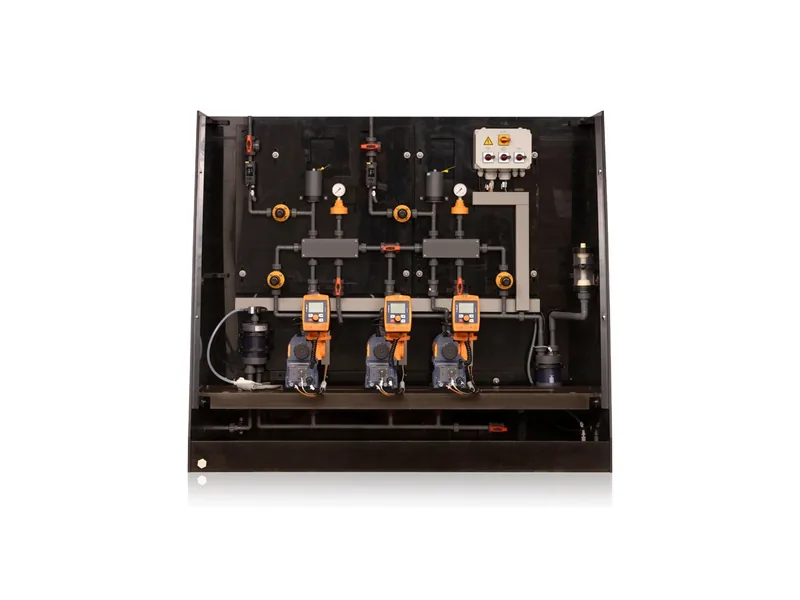
Figure 1: ProMinent DULCODOS panel dosing system. Image source: ProMinent official website
- Place exhaust grilles close to manways, mixer shaft seals, pump packing and unloading couplings.
- Set them at the height where the mist actually collects, not where the duct is easiest to run.
- Bring supply air in low on the opposite side, so it washes across the skid before it reaches the hood.
- If supply and exhaust sit next to each other, the room can show a healthy air-change number and still be short-circuiting.
Estimate airflow from the room volume and the number of tanks that may be open at once, and leave a margin for tanker unloading or a batch that is mixed with the lid off. Do not put acid and alkali on the same exhaust branch. They can neutralize in the duct, scale the fan and block the run. Chemicals that fog easily, such as sodium hypochlorite or hydrochloric acid, need local exhaust when a lid is open; the general room fan will not catch a plume at the tank. Room layout is discussed in PAC dosing room design. This page stays on inlets, outlets and airflow.
Closing the makeup air in winter and leaving only the exhaust running puts the room under suction. Damp air then leaks in through cable glands and door gaps and condenses on cold cabinets. The supply can be turned down, but it should not be shut. A simple filter or a little preheat helps, so outdoor dust and fog are not blown straight onto electrics. The outdoor discharge should be kept away from the plant's intake and from nearby windows, or the same mist will be drawn back in.
Protect electrics and steel before the paint on the floor
Good chemical room ventilation reduces corrosion; it does not end it. Chemical room ventilation and coatings have to work together. Cabinets, drives and junction boxes fail first from condensation and from mist that slips past a door gasket. If a control panel can be moved into a clean adjacent room, move it, and leave only local buttons and level displays in the dosing room. A panel that must stay in the room needs a sound door seal, sealed cable entries, and, if the room is cold, a cabinet heater or a slight positive pressure so opening the door does not fog the interior. Cable trays, light fittings and steel stands need a coating or a material that matches the atmosphere. Plain galvanizing does not last in acid mist. What you usually see is a white tray, then a wasted stand, then sticky cable sheaths.
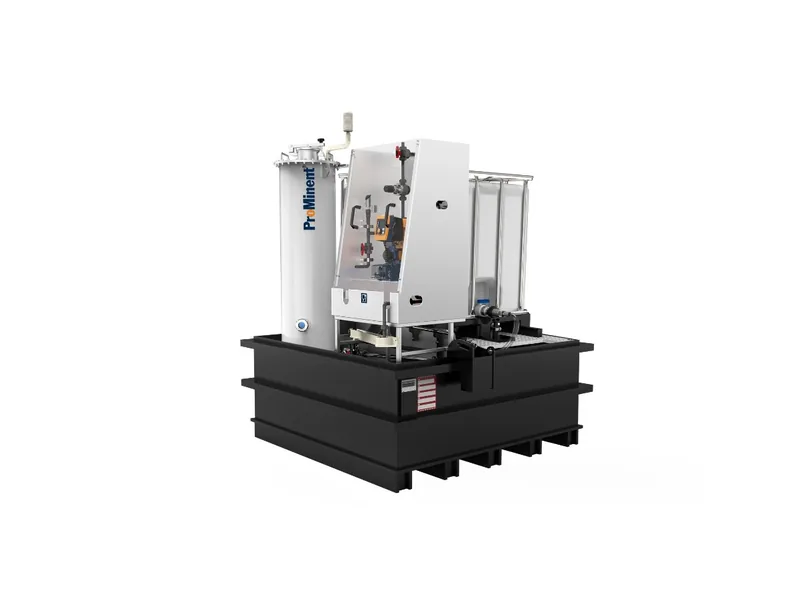
The fan and duct are corrosion targets too. Bare carbon-steel duct will leak. Plastic duct needs proper spans and UV protection outdoors, and elbows and the fan base should drain condensate so acidic water does not run back into the motor. If pump bases or skid frames are carbon steel, touch up broken coatings before the section perforates. A packaged unit such as a ProMinent SAFE IBC station or a DULCODOS panel keeps pumps and pipe inside a tighter frame and can keep spray off the seals, but the room still needs exhaust and cabinet protection.
Damp powder stores and open liquid tanks both raise the moisture load. Humidity control for stored PAC is covered in PAC dosing room humidity control. That is a different job from chemical room ventilation: one manages the store and the bags, the other manages airflow and equipment in the operating area. Both are needed. A dehumidifier is not a substitute for chemical room ventilation, and a fan is not a substitute for a sealed cabinet.
Check that the air is still moving
A fouled impeller, a stuck backdraft damper or a grille taped over with plastic will leave chemical room ventilation in name only. On a round, hold a ribbon at the exhaust, listen for a fan that is rubbing, and feel the duct for odd heat or drips. If you find beads of water or green terminals inside a cabinet, look first at whether supply air is blowing mist toward the panel, then at the door gasket and the heater. Keep local exhaust on when a tank is cleaned or a pump head is opened, wear protection for acid and alkali work, and do not pour residues down a general floor drain.
Send the chemical list, room size, whether tanks are open, and whether the electrics share the room to us via contact, and we will help match exhaust and corrosion protection. Packaged units can also be compared in the dosing skid category and on the ProMinent product page.
Conclusion
Chemical room ventilation works when air travels from the source of the fumes to the exhaust, supply air does not short-circuit, and acid and alkali do not share a duct. Corrosion control should start with cabinets, trays, stands and the fan itself: move panels out if you can, and seal and dehumidify the ones that must stay. Chemical room ventilation without protection, or paint without airflow, will not last. Fix grille locations, air quantity and the electrical layout in one pass; it is cheaper than replacing cabinets later.
FAQ
How much chemical room ventilation is enough?
There is no single air-change figure for every room. Start from the room volume, the number of tanks that may be open, and short bursts from unloading or lid-off mixing, then use a ribbon or smoke to see whether the air actually washes the equipment. A large nameplate duty is wasted if the grille sits in a clean pocket at the roof.
Can a general roof fan replace a local hood?
A roof fan only turns the room air over. It will not capture a plume at a tank lid or an unloading hose. Keep the general chemical room ventilation fan if you wish, but put a hood or a flexible take-off at the source. One should not stand in for the other.
Why do stainless cable trays still rust in a dosing room?
Ordinary stainless is not safe in chloride and acid mist, and welds and scratches go first. Move the tray out of the room if you can; if it must stay, use a more resistant grade or a sound coating, and stop condensate dripping onto it. Rust on a tray often means chemical room ventilation is blowing mist onto the steel, or a cabinet roof is dripping.
Do control panels have to leave the dosing room?
Move them if you can. Failures drop sharply. If a panel must stay, finish the door seal, the cable entries and cabinet anti-condensation so chemical room ventilation does not drive mist inside, and do not cut large vents in the door. Local stations can remain; drives and control circuits should sit away from the source of the fumes.
Can I do chemical room ventilation and skip the bund, or the other way around?
No. Ventilation and corrosion control deal with air and rust. The bund deals with a spilled liquid. They are not the same incident. A high bund will not stop mist attacking a cabinet, and a sealed cabinet will not catch a dropped drum.