
Textile Wastewater Treatment Chemicals: Dosing Order and Pumps
Textile wastewater treatment chemicals work best in a fixed order. After the equalization tank, add acid to bring pH down, then a decolorizing agent, then PAC as the coagulant, and finally polymer to build settleable floc. Clarified water goes to biological treatment, and if color is still too high after that, a second coagulation and decolorization stage polishes the effluent. Each chemical has one job. Put them in the wrong order or crowd them into one injection point and consumption climbs while results get worse. This guide is for environmental managers at dye houses, wastewater operators and contractors building textile effluent plants, and it focuses on sequence, injection points and metering pump selection.
Why dye house effluent is hard to treat with chemicals
Several problems arrive together in textile effluent:
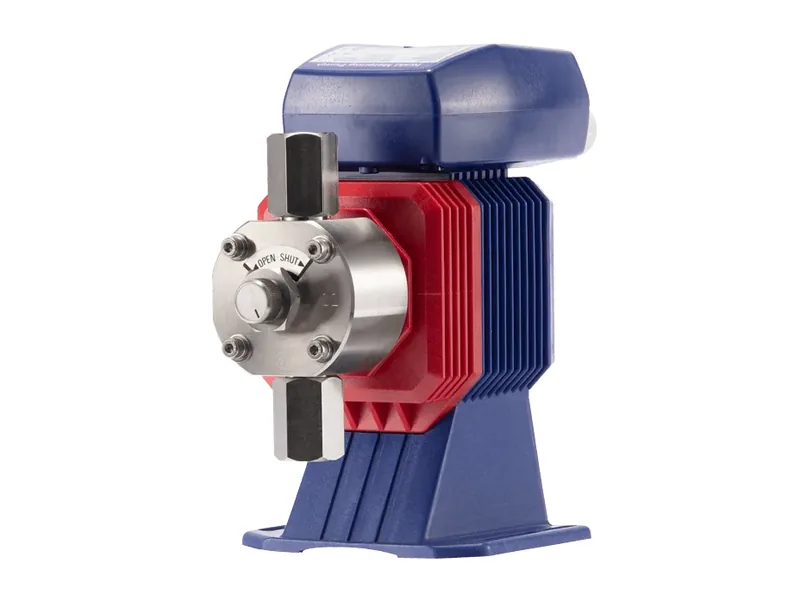
Figure 1: IWAKI EHN-R series electromagnetic metering pump, metal pump head. Image source: IWAKI official website
- High color. Reactive, disperse and vat dye residues are intense, and some are highly soluble, so coagulation alone cannot remove them.
- High pH. Desizing, scouring and mercerizing use a lot of caustic soda, and coagulants perform poorly in strongly alkaline water.
- High COD with poor biodegradability. Sizing agents, auxiliaries and dyes all add COD, and part of it resists biological treatment.
- Big swings. A new batch, shade or process step changes color and pH within hours.
That is why no single product covers all textile wastewater treatment chemicals, and why one fixed setting rarely works for long.
Stage 1: acid neutralization after equalization
At high pH, PAC and ferric salts hydrolyze poorly, so coagulation suffers and dose rises sharply. Bringing pH into the right range for coagulation is the foundation for every chemical that follows. Among textile wastewater treatment chemicals, sulfuric acid is the usual acid, and some plants use spent acid or flue gas.
Run neutralization as a closed loop with a pH sensor at the reactor outlet driving the acid pump. Textile effluent is strongly buffered, so pH falls slowly at first and then drops steeply near the end point. Tune the controller gently or it will overshoot. Our guide to pH dosing control and stopping overshoot explains the tuning. Concentrated sulfuric acid is aggressive, so select pump and piping materials carefully and provide an eyewash and splash protection.
Stage 2: decolorizer dosing
Among textile wastewater treatment chemicals, the decolorizing agent targets the soluble color that coagulants miss. Most are cationic organic decolorizing flocculants that pull dye molecules out through charge neutralization and bridging.
Decolorizer is normally dosed just before PAC or right next to it, so it can react with the dye first. Some plants dose PAC first and still get good results. Settle the order with jar tests on your own effluent, because dyes and batches differ widely.
Neat decolorizer is often viscous, and thicker still in winter. Pumping it undiluted can cause poor suction and inaccurate feed, so most plants dilute it first and choose a pump that tolerates moderate viscosity.
Stage 3: PAC coagulation and polymer flocculation
PAC goes into the rapid mix tank, where strong agitation disperses it. Polymer, the last of the textile wastewater treatment chemicals in this train, goes into the slow mix tank, where gentle mixing grows small floc into large flocs. Do not dose both at the same point, since early polymer gets sheared and the floc stays small. For spacing and sequence, see PAC and PAM dosing sequence.
Too much PAC pushes pH down further, makes floc finer and leaves the effluent cloudy. Too much decolorizer may carry residual product into the biological stage. Judge the dose of textile wastewater treatment chemicals by three things: floc size, supernatant color, and lab results for color and COD.
Where each chemical goes
A typical layout of injection points for textile wastewater treatment chemicals looks like this:
- Equalization outlet or neutralization tank: acid, with pH control.
- First cell of the reaction tank: decolorizer, rapid mixing.
- Second cell: PAC, rapid mixing.
- Flocculation tank: polymer, slow mixing.
- Tertiary stage after biological treatment: decolorizer or PAC and polymer again, depending on color and COD.
Allow enough reaction time between neighboring points, using inline mixers or compartmented tanks, and do not stack several chemicals on one pipe.
Choosing metering pumps for textile wastewater treatment chemicals
Textile wastewater treatment chemicals each put a different demand on the pump:
- Acid pumps: pump head, valve balls and seals must all resist the acid. Give the supplier the exact concentration.
- Caustic and high pH service: caustic crystallizes, so plan for flushing after stops. Our article on caustic soda dosing pump materials covers the details.
- Decolorizer and polymer: viscous, so choose a liquid end and valves suited to thick fluids, use a larger suction line and install with flooded suction where possible.
- Small flows: pilot trials, small dye houses or low-rate tertiary dosing can use solenoid metering pumps.
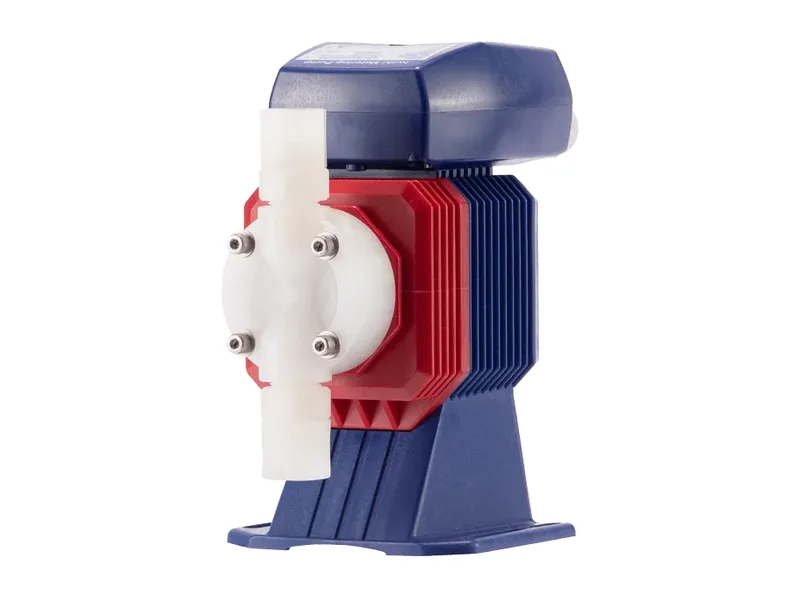
The IWAKI EHN-R series electromagnetic metering pump is a good example for small flows. It has a digital controller with stroke rate adjustable in single-stroke steps, which combined with stroke length gives a wide flow range. Pulse multiply and divide inputs make it easy to pace from a flow meter, a stop input connects directly to a level switch, and liquid ends come in GFRPP, PVDF and SUS316. For high-flow main injection points, move up to a motor-driven diaphragm metering pump. Compare models in our solenoid metering pump range or the IWAKI metering pump lineup.
Conclusion
Dose textile wastewater treatment chemicals in the order neutralize, decolorize, coagulate, flocculate. Give each chemical its own point and enough reaction time, and set the order and doses by jar test on real effluent. Pick pumps per chemical: materials first for acid, viscosity handling for decolorizer and polymer, solenoid pumps for small duties and motor-driven diaphragm pumps for the main feed. Send us your flow, raw pH, color and the textile wastewater treatment chemicals you plan to use, and contact our engineers for a dosing proposal.
FAQ
Do I need to adjust pH before adding textile wastewater treatment chemicals?
When raw pH is high, usually yes. Outside the right pH range, PAC hydrolysis suffers and extra dose does little.
Can decolorizer and PAC be mixed in one tank?
It is better not to. Prepare and dose them separately with a short reaction time between them for easier control.
How do I set doses for textile wastewater treatment chemicals?
Use jar tests on the day's real effluent. Change one chemical at a time and find the dose where color and COD drop most without waste.
Why can't the pump draw decolorizer in winter?
It has probably thickened. Dilute more, insulate the tank, shorten and enlarge the suction line, and mount the pump below the liquid level.
Which material suits an acid pump?
It depends on the acid and its concentration. Concentrated and dilute sulfuric acid suit different materials, so confirm in writing with the supplier.