
Multi-Parameter Water Quality Analyzer: Where One Panel Fits
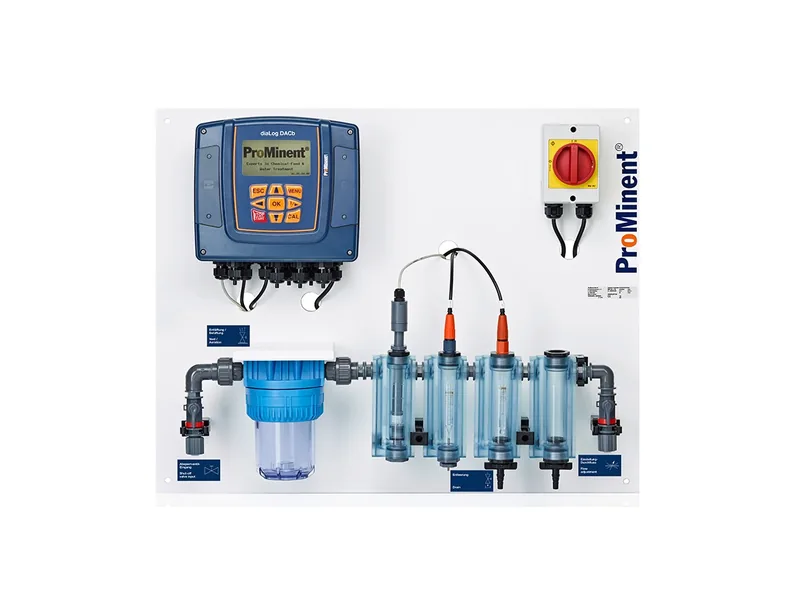
A multi-parameter water quality analyzer is one controller or one panel carrying several sensors, typically free chlorine, pH, turbidity, ORP and temperature, sharing a display, a communication link and often one flow cell. It fits best where measuring points are close together, the parameter list is fixed and maintenance staff are thin on the ground: booster pump stations, pool plant rooms and treated water outlets. When sensors need to sit far apart, or one parameter is critical and cannot go down, separate single-parameter instruments are the safer call. This article is for utility, facility and pool operators deciding where a multi-parameter water quality analyzer makes sense and how to link it to dosing pumps.
Formats of a multi-parameter water quality analyzer
Three formats are common:
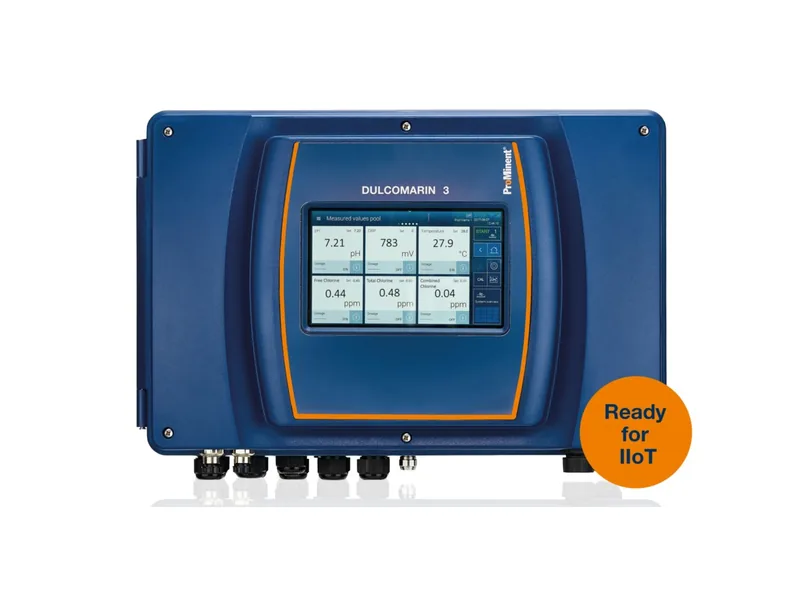
Figure 1: ProMinent DULCOMARIN 3 measuring and control system. Image source: ProMinent official website
- All-in-one cabinets with sensors, flow cell and controller in one housing, preconfigured at the factory.
- Panel systems with controller, flow cell and sensors mounted on a backplate, configured at order.
- Multi-channel controllers that accept several digital sensors added on site.
ProMinent shows both ends of this. Its DULCOTROL potable water panel mounts everything except the sensors on a polypropylene plate, configured for one or two measured variables, with a third retrofittable if the bypass fitting allows. Its DULCOMARIN 3 is a multiparameter controller for pools that can run as a multi-pool system covering up to 16 filter circuits. The first suits a fixed measuring point; the second suits central control of many pools.
Booster stations: chlorine and turbidity first
Booster station water monitoring is mainly about whether residual chlorine holds up and whether turbidity spikes, with pH and temperature sometimes added. Pump rooms are small and unattended, so a multi-parameter water quality analyzer that sends everything over 4-20 mA or Modbus to the utility SCADA saves wiring and lets a technician check all sensors in one visit.
Where the station re-chlorinates, the chlorine channel can pace a hypochlorite metering pump. For method choice, see online residual chlorine monitoring.
Pools: chlorine, pH and ORP together
Pools are where the multi-parameter water quality analyzer is most mature. Chlorine handles disinfection, pH controls comfort and chlorine effectiveness, and ORP adds a cross-check. They interact, so tuning them in one controller is easier. ProMinent describes DULCOMARIN 3 with a touch display, video-guided sensor calibration, and PLC or building management connection via OPC UA, BACnet IP and Modbus RTU; it can also adapt circulation pump output to water quality. For the full pool package, see pool dosing system design.
Treated water outlets: keep redundancy
Plant outlets usually measure chlorine, turbidity and pH. A multi-parameter water quality analyzer saves space and unifies data here, but outlet chlorine is a public health parameter. Back up critical parameters with an independent instrument for comparison or redundancy. For turbidity practice, read online turbidity monitoring in water treatment.
One panel or separate instruments?
A quick way to decide is to walk the site with four questions. Are all the measuring points within a few meters of each other, drawing from the same sample? Is the parameter list unlikely to change over the next several years? Can the process live with every reading going offline for a short repair? Is there one technician, rather than a team, looking after the instruments? If the answers are mostly yes, a multi-parameter water quality analyzer is a good fit. If samples come from different stages of the process, if a regulator treats one parameter as critical, or if you expect to add measurements later, separate instruments or a multi-channel controller with spare capacity will age better. Some plants split the difference: a multi-parameter water quality analyzer for routine monitoring, and a dedicated chlorine analyzer on the outlet that runs the dosing pump.
Limits: single-point failure and bunched maintenance
The weaknesses of a multi-parameter water quality analyzer are clear:
- Single-point failure. If the controller, power supply or shared flow cell fails, every reading drops out and dosing stops with it.
- Maintenance piles up. Chlorine sensors need frequent comparison, pH needs regular calibration, turbidity windows need cleaning, all on different schedules.
- Shared flow. One flow cell must satisfy every sensor, and a blockage hits all readings at once.
- Limited expansion. Adding a parameter to an all-in-one unit often means replacing it.
Mitigate by defining safe outputs on analyzer failure, such as hold last value or switch to manual; fitting a strainer and flow switch ahead of the flow cell; and putting every sensor task on one inspection sheet.
Safety: close the sample inlet and disable control outputs before cleaning the flow cell or changing sensors, so pumps cannot dose by mistake.
Wiring a multiparameter controller to dosing pumps
Each channel of a multi-parameter water quality analyzer usually has its own output: 4-20 mA, pulse frequency or relay. Let the chlorine channel run the hypochlorite pump and the pH channel run the acid or caustic pump. Never let one pump take signals from two channels. Interlock the pumps so they stop on loss of sample flow or low tank level.
Conclusion
A multi-parameter water quality analyzer pays off where points are clustered, parameters fixed and staff limited: booster stations, pools and small plant outlets. Accept the single-point risk, protect dosing loops against analyzer faults and duplicate critical parameters. See our controllers and analyzers. Tell us the site, the parameters and your dosing setup, and contact our engineers to decide between one panel and separate instruments.
FAQ
Is a multi-parameter water quality analyzer cheaper than separate units?
Usually the purchase, space and wiring cost less. The trade-off is a bigger impact when it fails.
Can chlorine, pH and turbidity share one flow cell?
Yes, most panels are built that way, but flow and pressure must suit every sensor. Fit a strainer upstream.
If one sensor fails, do the others keep working?
On most controllers, yes. Channels are independent; only controller or power failure takes everything down.
Do pools still need manual water tests?
Yes. Check chlorine and pH with a portable photometer regularly and recalibrate if the gap grows.
Must every booster station have multi-parameter monitoring?
It depends on local utility rules. Even where optional, online chlorine and turbidity catch tank contamination or chlorine loss early.