
Dosing Pump Tubing Connection: Hose to PVC Pipe Without Leaks
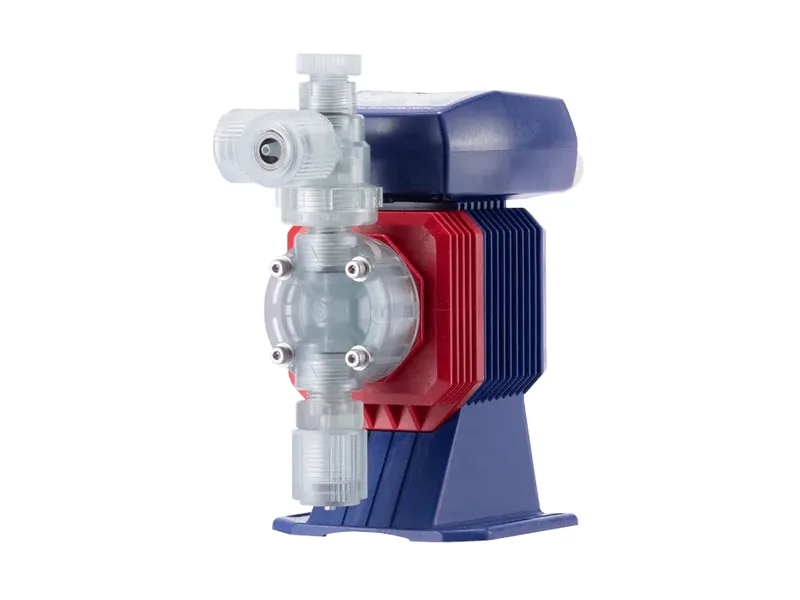
A reliable dosing pump tubing connection depends on three things: the hose size must match the pump head fitting, the adapter must suit the PVC pipe you are moving to, and the joint must be tightened and supported properly. Most leaks and blown-off hoses we see on site start in this short section between the pump and the hard pipe, not inside the pump.
Why the dosing pump tubing connection changes to rigid PVC
Small solenoid pumps usually ship with hose fittings. Each valve on the head has a compression nut, you push the tube on, tighten it, and you are dosing. For a short run from a day tank to a nearby injection point, one length of tube is fine.
Longer runs are a different story. Tubing exposed to sunlight goes brittle, gets stepped on, and is hard to clamp to a pipe rack. The usual layout is a short length of flexible tube at the pump, then a tubing to PVC pipe adapter, then rigid PVC for the main run. The flexible section near the pump also absorbs some of the pulsation.
Check the pump head before buying fittings
A good dosing pump tubing connection starts with reading the pump data, not with grabbing a roll of tube. Taking the IWAKI EHN solenoid metering pump as an example, the published connection sizes are:
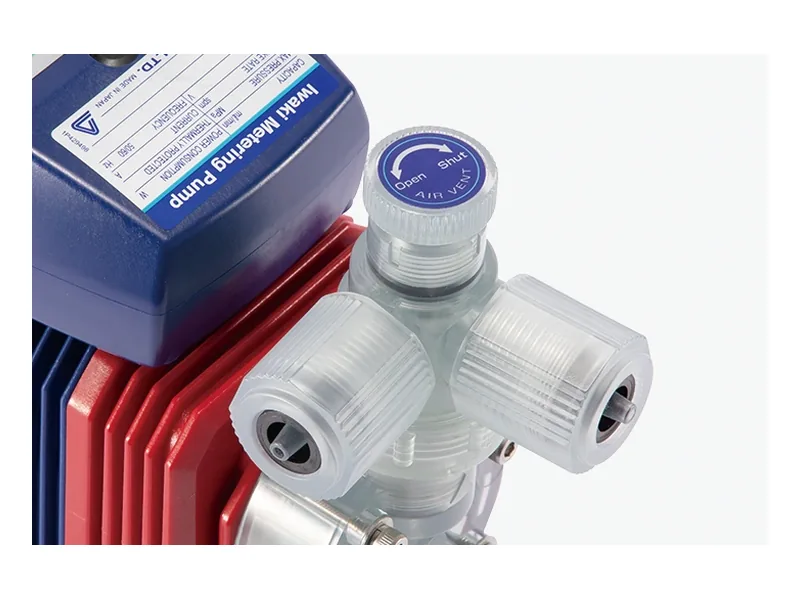
Figure 1: IWAKI EHN-R pump head with air vent valve. Image source: IWAKI official website
- BN11, BN16, BN21, CN16 and CN21 use Ø4×Ø9 or Ø4×Ø6 tubing.
- BN31, CN31 and CN36 use Ø8×Ø13 or Ø9×Ø12 tubing.
- The FC type uses Ø4×Ø6 and Ø10×Ø12, while the SH type has an Rc 1/4 female thread instead of a hose fitting.
Ø4×Ø9 means 4 mm inside diameter and 9 mm outside diameter. If the ID fits but the OD is wrong, the compression nut cannot seal and the joint will weep after a few days of vibration. IWAKI offers braided PVC hose as an option in Ø4×Ø9 and Ø8×Ø13, 3 m long, and PP heads come with EVA hose. Matching the adapter to the original tube size is usually the safest route. Other models are listed on our solenoid pump category page.
Three ways to make the dosing pump tubing connection
Hose barb or compression fitting to male thread
This is the most common dosing pump tubing connection on water treatment skids. One end of the adapter takes the tube, the other end is a male thread, typically 1/4 or 1/2 inch, which screws into a PVC female adapter or elbow. The PVC side is then solvent-welded to the pipe. Around 6 to 8 wraps of PTFE tape is usually enough; more than that can split a plastic female thread.
Hose fitting to a socket end
Some adapters have a solvent-weld socket on the second end sized for DN15 or DN20 PVC pipe. One threaded joint disappears, so there is one less leak path. The trade-off is that removal means cutting the pipe, so this dosing pump tubing connection suits permanent lines.
Adapter plus a union
Where the pump head or diaphragm gets serviced often, build the dosing pump tubing connection with a PVC union placed straight after the adapter. Undo the union and the pump comes off with its short tube, while the main line stays put. With sodium hypochlorite, which crystallises and forces frequent cleaning, this saves a lot of time. Material choice for that service is covered in sodium hypochlorite dosing pipe material.
Dosing pump tubing connection details that decide leaks
- Cut the tube square. A slanted cut seals on half the face and will leak sooner or later.
- Push the tube fully over the insert before tightening the nut. Hand tight, then roughly a quarter turn with a spanner is typically enough.
- Do not let the tube twist. IWAKI redesigned its hose plug to stop twisting during assembly, but the design does not cover FC or SH types, the back-pressure valve or the flow detector, so hold the tube there.
- Clamp the rigid pipe right after the adapter. The adapter should not carry the weight or the pulsation of the line.
- Leave a gentle bend in the flexible section, but not so much that it kinks.
For valve order and general layout around the pump, see dosing system piping connection.
Back pressure after the dosing pump tubing connection
This step is often missed. The EHN documentation states that discharge pressure should be at least 0.12 MPa to prevent overfeeding, or 0.05 MPa for BN31 and CN36. Below that, fit a check valve or a back-pressure valve. If the PVC line runs downhill into an open tank, back pressure is close to zero and chemical can siphon through, so the dose drifts.
A back-pressure valve usually sits just after the dosing pump tubing connection, before the rigid run. Once everything is assembled, pressure test the line and look at every joint; the method is in dosing pipeline pressure test.
Conclusion
A dosing pump tubing connection looks like a small job, yet it is where most leaks and blow-offs happen. Confirm the tube ID and OD from the pump model, choose a threaded, socket or union style adapter, cut square, push fully home, tighten moderately and clamp the rigid pipe. If back pressure is too low, add a back-pressure valve. Send us the nameplate model through our contact page and we can check the fitting sizes for you.
FAQ
Can I glue the tube straight into a PVC pipe?
No, that joint will not hold. Tubing does not bond with PVC cement, so pressure pushes it out; use a proper tubing to PVC pipe adapter.
Will a slightly larger tube OD still work?
Usually not for long. A dosing pump tubing connection with the wrong tube leaks, because the compression nut needs the correct OD to seal, and vibration opens small gaps within days.
What material should the adapter be?
Generally the same as the pump head. PVC heads take PVC or PVDF adapters, and PVDF is common for hypochlorite, depending on concentration and temperature.
How often should dosing tubing be replaced?
It depends on the chemical and sunlight. Indoors, inspect it about once a year and replace it if it turns stiff, white or cracked.
Which direction should PTFE tape go?
Wrap it in the tightening direction, clockwise when you face the thread end. Wrapped the other way, the tape unwinds as you tighten.