
Dosing Pump Stroke Rate: How to Set a Solenoid Pump Frequency
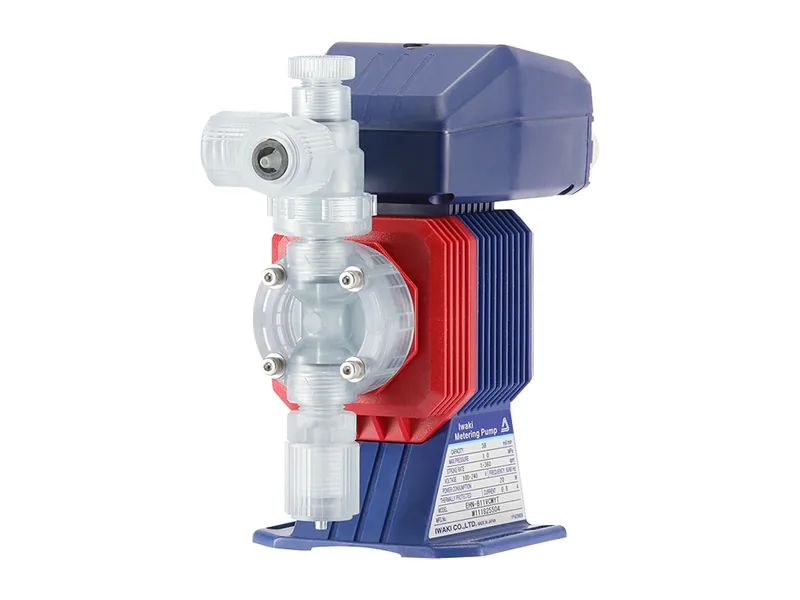
The dosing pump stroke rate is the number of strokes per minute, or spm, and on a solenoid pump it is the main way to adjust flow. The usual practice is to leave stroke length at a fairly high value and change spm day to day, then hand spm over to an external pulse or mA signal when dosing becomes automatic. Because the stroke rate on a solenoid pump is set electronically, it can be changed in finer and more repeatable steps than stroke length.
Why solenoid pumps are adjusted by stroke rate
A solenoid pump stroke is driven by a magnet, so the length range is limited. On the IWAKI EHN series, stroke length adjusts from 50 to 100% (0.5 to 1.0 mm), and from 40 to 100% (0.5 to 1.25 mm) on some models. Short strokes give small, less consistent volumes and the valve balls seat less cleanly.
The dosing pump stroke rate on the EHN is set from 1 to 360 spm in 1 spm steps on the digital controller. Combined with stroke length, this covers the whole range from minimum to maximum flow. So on site the habit is to set stroke at 80 to 100% and use spm for flow.
A starting dosing pump stroke rate
IWAKI rates EHN maximum output at 100% stroke and 360 spm with clean water. From that, a first estimate is:
spm ≈ 360 × target flow ÷ (maximum output × stroke fraction)
If the target is 30% of the pump's maximum output and stroke is 100%, start at about 108 spm. At 80% stroke, start at about 135 spm. Run the pump, measure, and correct. A measurement routine is in metering pump calibration method.
Two cautions:
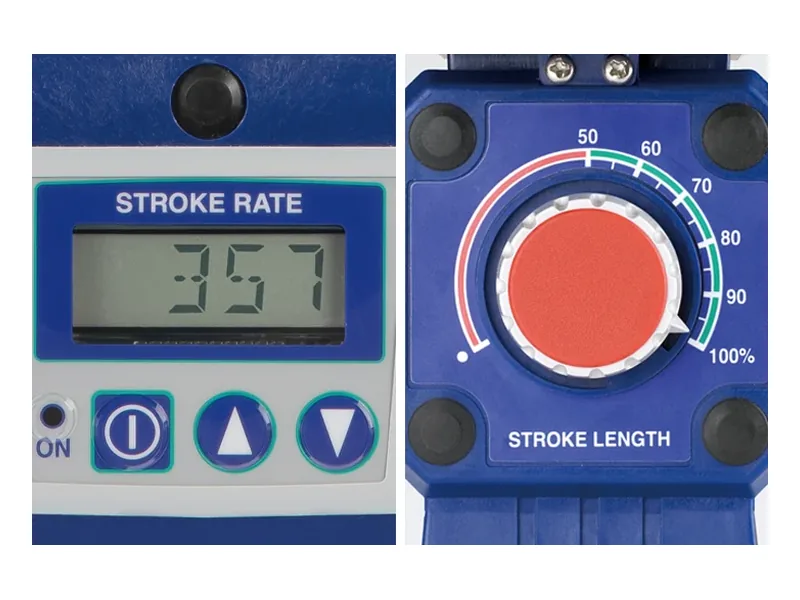
Figure 1: IWAKI EHN-R control panel with spm display and length knob. Image source: IWAKI official website
- Output per stroke depends on back pressure and viscosity. Catalogue data is for water, so viscous chemicals or higher pressure usually give a little less.
- A very low dosing pump stroke rate doses in pulses. At 10 spm the pump fires once every 6 seconds, which suits poorly where small lines need continuous mixing. In that case shorten the stroke a little and raise spm.
Setting the dosing pump stroke rate in manual mode
The EHN-R panel has three keys and a four-digit LCD. In manual mode, use the up and down keys to reach the required spm and confirm, and the pump runs at that rate. Turn on the key lock afterwards so nobody changes it by accident. On shared sites, write the dosing pump stroke rate on a label next to the pump as well, so the next shift can see at a glance whether someone has touched it.
Entering the number is not the end of the job. Check three things:
- The actual stroke count matches the display; count strokes for one minute against a watch.
- Measured flow is close to target once discharge pressure has settled.
- Discharge pressure is high enough. IWAKI specifies at least 0.12 MPa, or 0.05 MPa for BN31 and CN36, to prevent overfeeding. Below that, fit a back-pressure valve, or even a perfect dosing pump stroke rate will overdose.
Key functions and display codes are covered in IWAKI EHN control panel settings.
Pulse multiply and divide for the dosing pump stroke rate
For flow-proportional dosing from a water meter, switch the EHN-R to EXT mode. IWAKI offers two settings:
- Multiply 1:n, where each input pulse gives n strokes, n from 1 to 999.
- Divide n:1, where n input pulses give one stroke, again n from 1 to 999.
Example: the meter sends one pulse per 10 L and the process needs one stroke per 20 L, so set divide 2:1. The input must be a voltage-free contact or open collector; the wrong type and the pump sees nothing. There is also a STOP input, often wired to a low-level switch on the tank. For choosing between pulse and analogue control, see metering pump 4-20mA vs pulse control.
Two-point analogue setting
The EHN-YN adds a 0–20 mA input with a two-point setup linking current to dosing pump stroke rate. IWAKI's examples show both directions: 4 mA at 270 spm and 16 mA at 90 spm for reverse action, or 8 mA at 90 spm and 16 mA at 270 spm for direct action.
Between the two points the pump interpolates in a straight line. After setup, feed a few currents from a signal generator and check that spm follows. The EHN-YN has four keys, and holding up and down together runs the pump at maximum stroke rate for priming, which helps on first start.
Checks after the dosing pump stroke rate is set
- Recalibrate and adjust spm after any change in chemical or concentration.
- Log final stroke length, spm and measured flow, so they can be restored after a diaphragm change.
- If the pump sits near 360 spm for long periods it is undersized, and diaphragm life usually suffers; consider the next size up.
Compare other models on our solenoid pump category page.
Conclusion
Setting a solenoid dosing pump stroke rate comes down to a simple split: keep stroke length high and use spm for flow. Estimate a starting spm from maximum output, stroke fraction and 360 spm, then measure and correct. Use manual entry with key lock for fixed dosing, pulse multiply or divide for flow-proportional dosing, and a two-point 0–20 mA setup for automatic control. Add a back-pressure valve if discharge pressure is too low. For model-specific help, reach us through our contact page.
FAQ
Can the dosing pump stroke rate be set to zero?
Usually the minimum is 1 spm. To stop dosing, stop the pump or use the STOP input rather than relying on the lowest setting.
Which affects accuracy more, stroke rate or stroke length?
Stroke length generally matters more. Short strokes give unstable volumes, so keep length high and adjust spm.
What is the maximum stroke rate in pulse mode?
It is still the pump's maximum, 360 spm on the EHN. Pulses arriving faster than that are typically lost.
What happens if the 4-20 mA signal is lost?
It depends on the two-point setup. If low current maps to zero strokes, the pump stops, so build that into the interlocks.
Why is flow still high after setting the stroke rate?
Low discharge pressure is the usual cause. Measure it, add a back-pressure valve if needed, then recalibrate.