
SEKO Dosing Pump Repair: Service Manual Approach by Fault Type
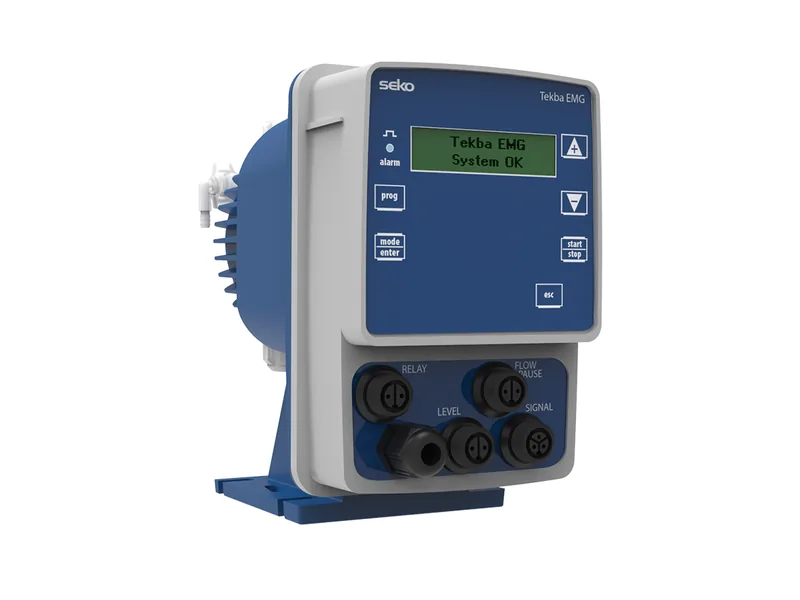
The quickest SEKO dosing pump repair starts by sorting the fault into a category before picking up a tool. Wet-end problems such as valves, diaphragm and seals can usually be fixed on site with spare parts. Electrical faults in the circuit board or solenoid coil are typically better handled by an authorized service center. This guide uses the base-mounted Tekba solenoid pump as the example and leaves alarm codes and not-dosing checks to our other articles.
Before Any SEKO Dosing Pump Repair
Five minutes of notes before you start saves a lot of back-and-forth later:
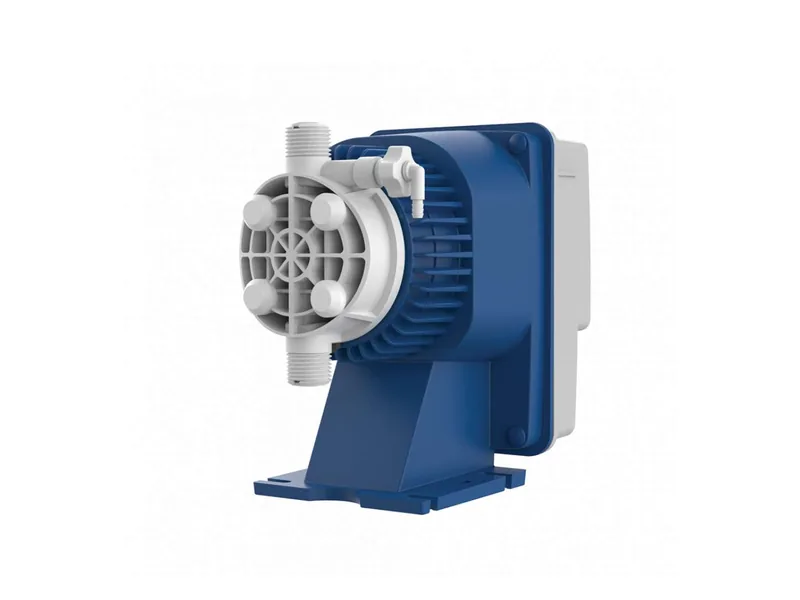
Figure 1: SEKO Tekba dosing pump head side. Image source: SEKO official website
- The full model code and serial number from the nameplate.
- The control version; Tekba comes as EMS, EML, EMC and EMM.
- The symptom: dead pump, running but not dosing, low output, leaking, or alarm.
- Chemical name and strength, back pressure, and daily running hours.
These details are also the entry point to the troubleshooting table in the SEKO service manual. The table is organized by symptom, so a clear description gets you to the right page faster.
SEKO Dosing Pump Repair for Wet-End Faults
The Tekba has a PVDF pump head, ceramic valve balls, a solid PTFE diaphragm and FPM or EPDM seals. Wet-end trouble usually means one of three things: crusted or worn valves causing low output, aged seals that weep, or a damaged diaphragm letting chemical reach the back of the head.
This kind of SEKO dosing pump repair follows a simple pattern. Isolate power, relieve pressure, drain the head, then put on gloves and eye protection and remove the valves. Clean or replace balls, seats and seals, tighten the head bolts in a cross pattern over several passes, and bleed the pump. Relieve discharge pressure before opening the head, or chemical can spray out.
Sites that change valves often should keep a valve kit and a diaphragm in stock. That typically brings a wet-end SEKO dosing pump repair down to under half an hour.
SEKO Dosing Pump Repair for Electrical Faults
A pump with no lights, no response to the keypad and no stroke has an electrical fault. Check outside the pump first: supply voltage within 100–240 V, a tight plug and cable, and an intact fuse. The Tekba panel shows stroke rate as a percentage (P%) and the number of strokes (F), so a normal display at power-up tells you the control board is alive.
If the supply is fine and the pump still does nothing, or the coil runs unusually hot, the fault is likely in the board or the solenoid. Opening that part of the pump can compromise the IP65 rating, so this SEKO dosing pump repair is usually best done as a factory or service-center job. Our article on burnt solenoid pump repair covers the checks in more depth.
Category 3: Signal Problems Mistaken for Pump Faults
The EMC takes a pulse signal, the EMM takes 4–20 mA, and the EML, EMC and EMM all have a level probe input. Plenty of "pump not dosing" calls turn out to be a level probe hanging in air and reporting low level, a PLC that is not sending a signal, or signal wires swapped.
The test is quick, and it saves an unneeded SEKO dosing pump repair. Switch the pump to manual constant mode. If it doses normally by hand, the pump is fine and the fault is in the signal source or wiring. For the meaning of on-screen messages, see our SEKO alarm codes guide.
Category 4: Physical Damage
A head cracked by frost or impact, or a housing split after long chemical exposure, falls into this group. A cracked head is normally replaced, not glued. A cracked housing affects the IP65 rating and lets moisture reach the electronics, so plan on a new housing or a full assessment. The Tekba also has mechanical stroke length adjustment; if that knob seizes or slips, it is usually a return-to-factory SEKO dosing pump repair.
Where to Draw the Line
A practical SEKO dosing pump repair rule: if a spare part fixes it, do it on site; if the electronics must be opened, send it back. Valves, diaphragm, seals, injection valve, foot valve and pump head are site-replaceable. Circuit boards, coils and internal mechanics go to an authorized service partner.
SEKO's brochure notes that the Tekba range is sold only through specially authorized distributors, and it makes sense to use the same channel for parts and repairs. For a broader view of where site repair ends, read our guide to metering pump repair methods. You can browse the range on our SEKO brand page or compare models in our solenoid metering pump range.
Repair Records and Returns
Log every SEKO dosing pump repair: date, fault category, parts changed, part numbers, and measured output before and after. After six months you can see which pump eats valve kits and which chemical is hardest on seals, and your spare parts plan writes itself.
Before returning a pump, drain the head, flush it with clean water, cap the ports, and include a fault description and nameplate photo. A pump shipped with chemical inside may be sent back for cleaning first.
Conclusion
A structured SEKO dosing pump repair works through four categories: replace wet-end parts on site, check the supply before sending electrical faults away, test signal issues in manual mode, and judge physical damage by location. Record the model, symptom and duty first, and the SEKO service manual becomes much faster to use. Measure output after the repair and compare it with your earlier record. If you are unsure whether to fix or return a pump, send the nameplate and symptom through our contact page.
FAQ
Do I need special tools for SEKO dosing pump repair?
For wet-end work, standard wrenches and screwdrivers are usually enough. Tighten head bolts evenly and avoid over-torquing.
Where can I get the SEKO service manual?
A manual usually ships with the pump, and an authorized distributor can typically supply the version for your model.
What does a leak behind the pump head mean?
Usually a damaged diaphragm. Stop the pump and replace it soon, before chemical reaches the drive side.
Can the circuit board be replaced on its own?
On some models a control module can be swapped, depending on model and parts supply. Ask an authorized service partner.
What should I check after a repair?
Bleed and test run, measure output, and check head bolts and fittings for leaks. Check again after a day or two.