
Peracetic Acid Dosing Pump: Gas Locking, Materials and Safety
A peracetic acid dosing pump has to deal with two things most chemicals do not throw at it at the same time: constant off-gassing and strong oxidation. Pick a head that vents gas automatically and wetted parts that resist oxidizers, and you avoid most problems. PAA slowly decomposes and releases oxygen, the gas collects in the pump chamber, and the diaphragm keeps moving without pushing liquid out. That is gas lock. This guide is for engineers running disinfection in food and beverage plants, hospitals and water treatment sites.
What peracetic acid actually is
Commercial peracetic acid (PAA) is an equilibrium blend of peracetic acid, hydrogen peroxide, acetic acid and water. It kills a broad range of microorganisms and breaks down mainly into acetic acid, water and oxygen, so it leaves little residue. That is why PAA disinfection is popular in food processing and healthcare.
Being a strong oxidizer also brings trouble. It attacks many metals and elastomers, smells sharp, and decomposes faster with heat or contamination. Nearly every design choice for a peracetic acid dosing pump comes back to these properties.
Why a peracetic acid dosing pump loses prime
PAA decomposes in the drum, the suction line and the pump head, creating fine bubbles. When the pump runs slowly or restarts after a pause, gas gathers at the top of the chamber. The diaphragm compresses the gas instead of the liquid, discharge pressure never rises high enough to open the outlet check valve, and nothing is delivered.
On site it looks like this: the pump light blinks, the clicking sounds normal, and downstream disinfectant residual keeps falling. Open the head of the peracetic acid dosing pump and half of it is gas. Hypochlorite and hydrogen peroxide behave the same way; our article on an Iwaki EHN pump not pumping because of air locks walks through the fixes.
How an auto-degassing pump head helps
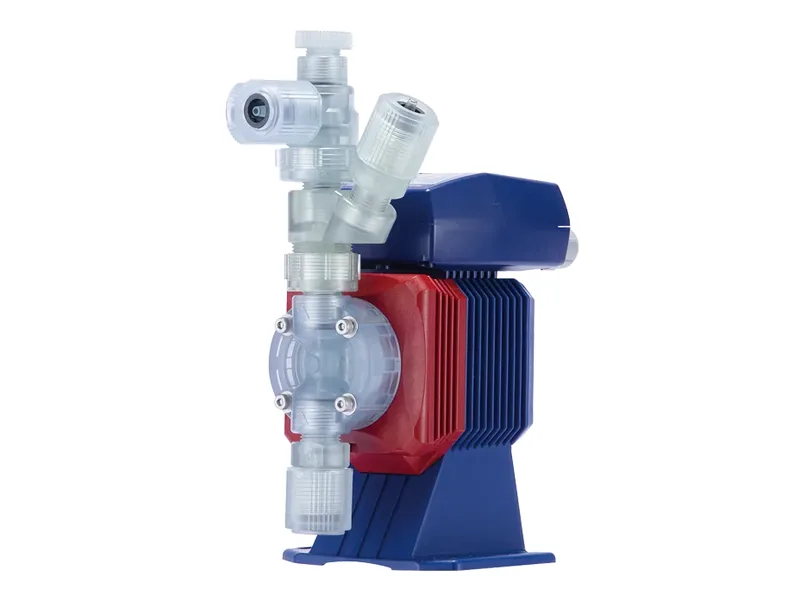
An auto-degassing head has a vent path at the top of the chamber that separates gas, along with a little liquid, without anyone turning a knob. Take the Iwaki EHN-NAE electromagnetic metering pump as an example. Iwaki describes an automatic air venting structure that separates gas from liquid, with a manual air vent fitted as standard and support for venting on restart. The listed maximum discharge pressure is 1.0 MPa and the liquid temperature range is 0 to 40°C. Route the vent outlet back to the drum through a return line so nothing drips onto the floor.
Material compatibility for a peracetic acid dosing pump
Wrong materials cause more grief than gas lock. Mild cases mean swollen seals and weeping joints. Severe cases mean a cracked pump head. Typical choices for a peracetic acid dosing pump:
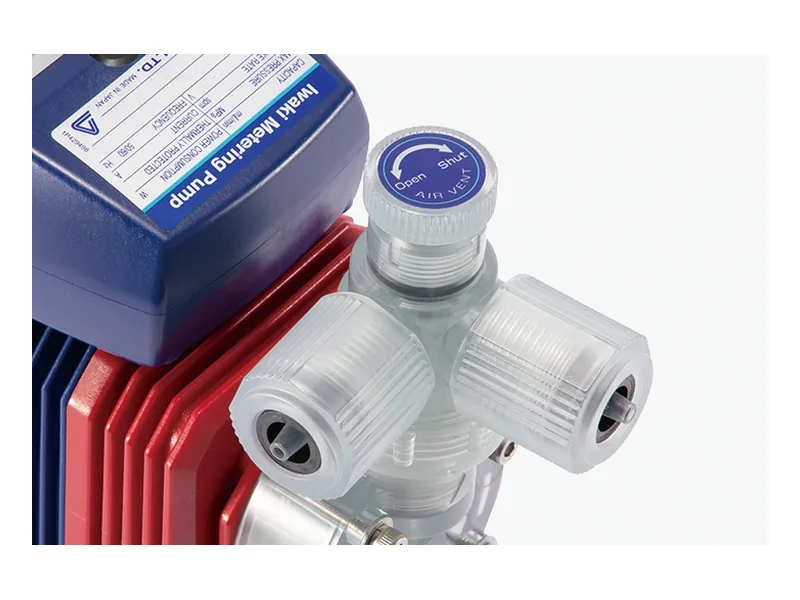
Figure 1: IWAKI EHN series pump head air vent valve. Image source: IWAKI official website
- Liquid end: PVDF is the usual choice; PVC is used at ambient temperature and low strength, but check against concentration and temperature.
- Valve balls and seats: ceramic or PTFE.
- Diaphragm and seals: PTFE-faced diaphragm, with FKM or PTFE O-rings. Avoid standard nitrile rubber.
- Metals: keep carbon steel, copper, brass and galvanized parts away from the chemical. Metal ions also catalyze decomposition.
Food plants often run 316L stainless pipework. It generally works with dilute use solutions, but plastic lines are the safer choice for concentrate.
Food, beverage and medical applications
Food and beverage plants use PAA for the final sanitizing step of CIP and for rinsing equipment and bottles before filling. Dosing usually follows the CIP program or water flow, so a peracetic acid dosing pump that accepts PLC pulses is enough. For the wider CIP picture, see CIP dosing pump selection for food and beverage plants.
Medical uses involve even smaller volumes, such as solution preparation inside disinfection equipment, or disinfection of hospital wastewater and reuse water. A small solenoid peracetic acid dosing pump typically handles these. Stable, uninterrupted feed matters more than capacity.
Cooling water and wastewater disinfection need larger, continuous flows. There the peracetic acid dosing pump should be paced by a flowmeter, with regular residual checks to correct the rate.
Sizing the pump
Calculate pure chemical demand at maximum flow and target dose, then divide by product strength to get pump flow. Choose a peracetic acid dosing pump where that figure sits mid-range. At very low flows check the minimum stroke rate too; long gaps between strokes let gas build up, which is exactly where an auto-degassing head pays off.
Storage and piping
Store PAA somewhere cool, shaded and ventilated, away from reducing agents, alkalis and metal powders. Original drums usually have vented caps. Do not swap them for sealed caps or decomposition gas will swell the drum.
Piping rules of thumb:
- Keep suction short and mount the pump below drum level for flooded suction.
- Avoid high points in the discharge line where gas can collect.
- Do not create closed sections between drum and pump that can trap gas.
- Ventilate the room and treat decomposition heat and gas as a real risk, as with hydrogen peroxide dosing systems.
Personal protection
PAA strongly irritates skin, eyes and airways. Stop the peracetic acid dosing pump and relieve pressure before opening the head or changing drums, and wear goggles or a face shield with acid-resistant gloves. Rinse any splash with plenty of water. An eyewash station near the dosing point is a sensible addition.
Conclusion
Choose a peracetic acid dosing pump with an auto-degassing head and wetted parts in PVDF, PTFE and ceramic, and keep carbon steel, copper and ordinary rubber out of contact. Keep suction short and flooded, avoid high points, store drums cool with vented caps. See our Iwaki brand page and solenoid metering pumps, then send us concentration, dose, back pressure and control method and contact our engineers to confirm materials and pump type.
FAQ
Can a standard solenoid pump work as a peracetic acid dosing pump?
It can, but it gas-locks easily. For low flows, slow stroke rates or stop-start duty, choose an auto-degassing head.
Is a stainless steel head acceptable?
For dilute use solutions 316L can be considered. For concentrate, a PVDF head is the safer option.
Liquid keeps coming out of the auto-vent. Is that normal?
A small amount is normal. It is a gas and liquid mix, so pipe it back to the drum.
Should I dilute PAA before dosing?
It depends on the process. Neat product means a smaller pump, while dilution makes the rate easier to set but the diluted batch loses strength over time.
How often should I inspect the pump?
Check weekly for gas in the head and seal leaks, and calibrate the flow regularly.