
CIP Dosing Pump Selection for Food and Beverage Plants
A CIP dosing pump and a hygienic additive pump do different jobs, so a food or beverage plant usually needs both rather than one pump that tries to cover everything. The first one fights corrosion; the second one protects the product.
This guide is for maintenance engineers at dairies, breweries and beverage plants, and for integrators building CIP skids. It explains what to look for in each pump and how to keep cleaning chemicals out of the product line.
Two pump jobs in a food plant
The first job is adding something to the product: flavors, colors, stabilizers, enzymes or liquid yeast. That pump touches the product, so its liquid end must be hygienically designed, free of dead zones, cleanable in place, and usually fitted with clamp connections.
The second job is the CIP station. Caustic and acid tanks need topping up with concentrate, and the final rinse may get a sanitizer. None of this goes into the product. A CIP dosing pump is chosen for chemical resistance and sealing, not for hygienic certification.
Short version: product side, check hygiene approvals; cleaning side, check the chemical resistance chart.
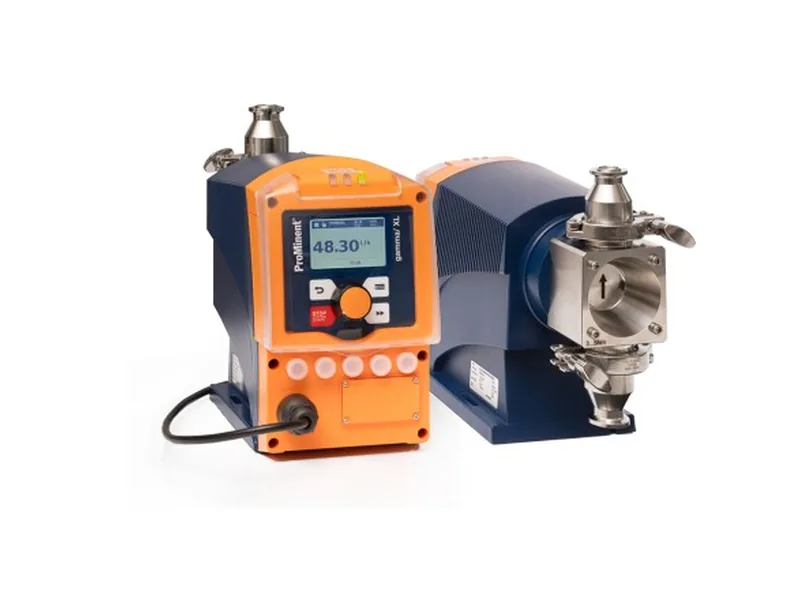
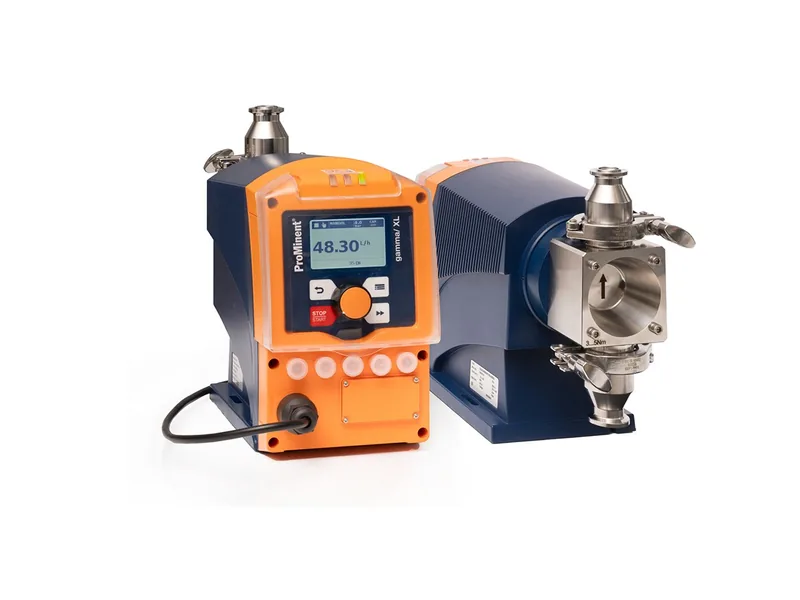
Figure 1: ProMinent gamma/XL Hygienic metering pump. Image source: ProMinent official website
Product side: what hygienic design means
ProMinent's gamma/XL Hygienic is a good example of the first type. According to ProMinent's official site, it follows EHEDG hygienic design with smooth surfaces and no dead spaces, uses DIN 11864-2 Form A clamp connections, covers 0.1 to 50 l/h at 4 bar, is set directly in l/h, and can dose continuously from around 100 ml/h. It is used for flavors, enzymes, colors and liquid yeast in confectionery and beverage production, and it supports batch traceability.
When you evaluate a hygienic pump, look at three things:
- Can the wetted parts be cleaned in place without hidden cavities?
- Do the seals and connections meet the food-contact rules of your market? Rely on the certificates.
- Is the pump stable at very low flow? Flavor dosing is typically tiny.
Product changeovers matter too. If a line runs orange in the morning and lemon in the afternoon, the flavor pump has to be cleaned with the line, or the next batch picks up a taint. More detail is on our gamma/XL page.
CIP dosing pump: match the material to the chemical
CIP chemicals are typically caustic soda, nitric or phosphoric acid blends, and sanitizers such as peracetic acid or sodium hypochlorite. Each one asks something different of a CIP dosing pump:
- Caustic: PVC, PP or PVDF heads generally work; watch the temperature limit of PVC.
- Nitric acid: at high concentration, prefer PVDF or PTFE and check the seals separately.
- Peracetic acid and hypochlorite: both off-gas, so pick a CIP dosing pump with a bleed valve or degassing head, or it will gradually lose prime.
In most plants a standard solenoid unit from our solenoid pump range is enough for this job. A hygienic pump on the CIP skid works, but the budget is better spent on concentration control.
Concentration control for CIP chemical dosing
CIP results depend on concentration, temperature, time and flow. The CIP dosing pump only controls concentration, so the control method decides whether it does its job.
The common method is conductivity control. A conductivity sensor in the caustic or acid tank feeds a controller, which starts the pump or sends a 4-20 mA signal until the setpoint is reached. Recovered solution that has weakened over several cycles gets topped up automatically.
The other method is flow-proportional dosing: every set volume of make-up water triggers pulses to the CIP dosing pump. It is simple, but it assumes stable concentrate strength and an air-free suction line.
Many plants combine the two, using proportional dosing for the rough top-up and conductivity for the fine trim. For wiring and control details, see our food CIP dosing control article, and for older lines, CIP retrofit.
Keeping cleaning chemicals out of the product
This is the risk food plants worry about most. The CIP dosing pump does not touch product, but the piping is connected, and a leaking valve can send caustic toward the filler.
Common safeguards:
- Inject into the CIP tank or CIP supply line, not directly into product pipework.
- Separate product and CIP circuits with mix-proof valves or a physical swing panel.
- Fit an injection valve and check valve at the dosing point so chemical cannot siphon back when the pump stops.
- Interlock each CIP dosing pump with the CIP program so it cannot start outside the dosing step.
We have seen a juice plant where a night operator started the pump by hand while the CIP program was still in the rinse step. Caustic reached a buffer tank. Afterwards they let the PLC run the pumps and left only an emergency stop on the local panel.
Conclusion
Start by separating the two jobs. Choose the additive pump on hygienic design and food-contact materials, with ProMinent's gamma/XL Hygienic as one example. Choose the CIP dosing pump on chemical resistance, add a degassing head for sanitizers that off-gas, and leave concentration to conductivity control plus program interlocks. Buying the two types separately saves money and prevents the worst accidents. To size pumps for your CIP sequence, contact us.
FAQ
Does a CIP dosing pump need a stainless steel head?
Not necessarily. Match the head to the chemical; PVC, PVDF or PTFE often resist CIP acids better than stainless steel.
Can I use a hygienic pump for CIP chemicals?
You can, but it is usually unnecessary. Cleaning chemicals do not enter the product, so a corrosion-resistant solenoid pump is generally enough.
Why does my peracetic acid pump lose prime?
Peracetic acid releases gas that collects in the pump head. Use a degassing head, keep the suction line short and keep the tank away from heat.
How is caustic concentration controlled in a CIP tank?
Typically with a conductivity sensor and controller. The pump runs when the reading falls below setpoint and stops when it is reached.
How do I stop CIP chemicals reaching the product line?
Dose on the CIP side only, isolate product and CIP circuits with mix-proof valves, and interlock the pump with the CIP program.