
Paper Mill Chemical Dosing: Sizing, Retention Aids and Biocides
Paper mill chemical dosing is concentrated in the wet end, from stock preparation to the forming section. Sizing agents, retention and drainage aids, wet and dry strength resins, biocides and defoamers can add up to ten or more separate feeds, each with its own injection point, concentration and accuracy needs.
In many mills the chemistry is fine but the feed is not. When machine speed changes and the dose does not follow, sizing and first-pass retention drift with it. This guide covers how to set up each feed so that paper mill chemical dosing stays steady.
Wet-end chemicals and where they go
A typical list looks like this:
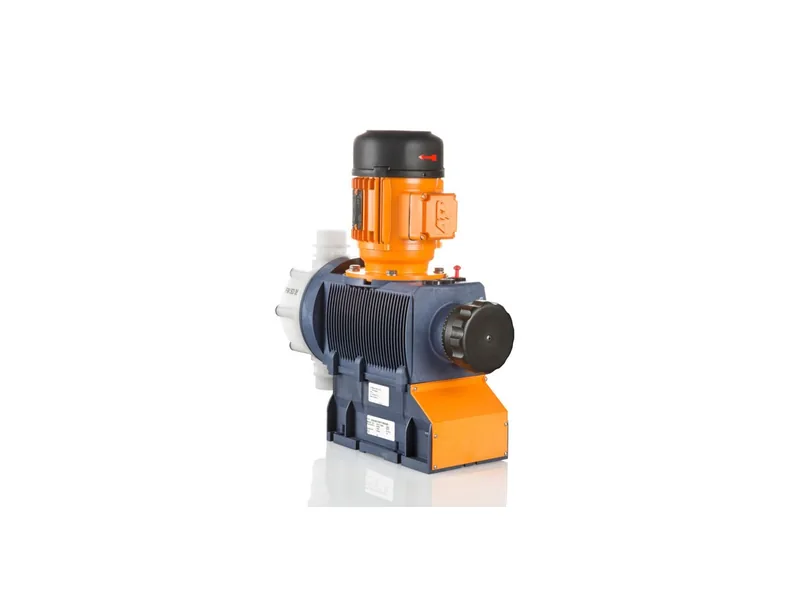
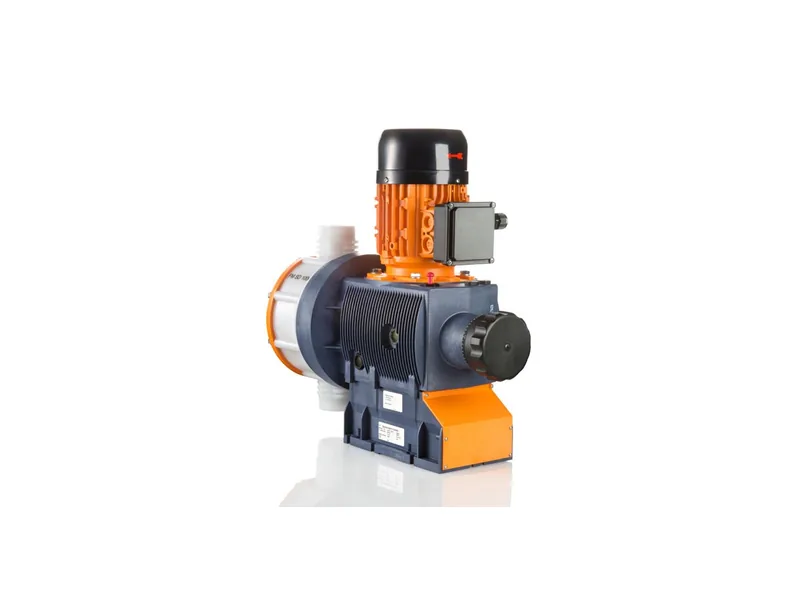
Figure 1: ProMinent Sigma/3 motor-driven metering pump. Image source: ProMinent official website
- Sizing agents: AKD, ASA or rosin size, usually added near the fan pump or into thin stock. ASA must be used soon after emulsification.
- Retention and drainage aids: cationic polyacrylamide or microparticle systems, typically around the pressure screen, close to the headbox to limit shear.
- Wet and dry strength: PAE resins and cationic starch, usually in thick stock to allow reaction time.
- Biocides: slime and deposit control, often shock-dosed into white water and stock chests.
- Defoamers: small but continuous feeds into white water and the wire pit.
In paper mill chemical dosing, the injection point decides the pressure the pump must overcome. Chests and white water silos are near atmospheric. The fan pump discharge or screen inlet adds line pressure, so size the pump with margin.
Sizing the metering pump
Paper mill chemical dosing is normally specified per tonne of paper. Take the dose per tonne, the maximum machine output and the dilution strength, calculate the maximum flow, then add 20 to 30 percent headroom. For paper mill chemical dosing on machines with frequent grade changes, base the range on both the lightest and heaviest grades.
Flows vary widely. Dyes and defoamers may need a few litres per hour, while starch and sizing can need hundreds. For the larger feeds, motor-driven diaphragm pumps from ProMinent are a common fit. ProMinent lists the Sigma/2 at 50 to 420 l/h across 16 to 4 bar and the Sigma/3 at 146 to 1,030 l/h across 12 to 4 bar. Small feeds can stay on solenoid pumps.
Check viscous chemicals separately
Cationic starch and some retention and strength products are viscous. Narrow suction lines and high stroke rates lead to starvation. Go one size up on suction pipe, mount the pump low with flooded suction and choose heads and valves suitable for viscous fluids. Our article on viscous polymer dosing problems covers the troubleshooting side.
What a dosing skid includes
Each chemical usually gets its own small system: a storage tank or IBC, a make-down or dilution tank, a mixer and level gauge, a Y-strainer and valves on the suction side, then a relief valve, back pressure valve, pulsation dampener and gauge on the discharge, ending in an injection quill.
With so many chemicals in one area, label every skid clearly and colour-code lines by chemical. Connecting the wrong chemical during maintenance is a more frequent failure in paper mill chemical dosing than any pump fault. Leave flushing water points and a drain channel in the pump room for tank changes and cleaning.
Linking paper mill chemical dosing to machine speed
When speed or basis weight changes, the dose has to follow. Three control levels are common:
- Manual: operators adjust stroke by production. Fine for small machines, but expect drift.
- 4-20 mA pacing: the DCS calculates a signal from speed or stock flow and sends it to the pump for frequency or stroke control.
- Closed-loop flow: a flow meter on the chemical line feeds back to the DCS. Best for sizing and retention aids, where quality is most sensitive.
The Sigma range is available with variable-speed motors and control versions, which keeps DCS integration straightforward.
Order and spacing of additions
Wet-end chemicals interact. Cationic retention aids react with anionic trash, and alum with rosin size, so the sequence matters. For paper mill chemical dosing, a general rule is to put slow-reacting chemicals upstream and shear-sensitive ones downstream, leaving mixing distance between points. The logic mirrors coagulant and flocculant order in water treatment, described in our PAC and PAM dosing sequence article.
Paper mill chemical dosing faults we see most often
Blocked injection points. Starch and size can build up at the quill. Use injection valves with a flushing connection and flush before shutdowns.
Biocide corrosion. Some biocides are strong oxidisers. Check pump head and line materials against the product; PVC is not always suitable.
Unstable dilution water. Many chemicals are diluted inline. If dilution water pressure swings, actual strength swings too. Give dilution water its own pressure regulation.
One pump, several points. This is the classic paper mill chemical dosing shortcut. Splitting one pump to several lines saves money and ruins accuracy. Use one pump per point for critical feeds, or a multi-head pump.
Conclusion
Good paper mill chemical dosing treats each chemical as its own system. Fix the injection point and back pressure, size flow from dose per tonne and maximum output, pick the right pump and head, then pace it to machine speed with 4-20 mA or a flow loop.
Viscous products, oxidising biocides and inline dilution cause most of the trouble, so design for them from the start. To size pumps for your machine, contact our engineers.
FAQ
What pumps are used for paper mill chemical dosing?
Solenoid metering pumps for small feeds such as defoamers and dyes, motor-driven diaphragm pumps for starch and sizing, and progressive cavity pumps for very viscous products.
Where should retention aid be added?
Usually around the pressure screen, close to the headbox. Confirm the exact point with retention trials on your machine.
Should biocides be dosed continuously?
Most mills shock-dose on a timer program. Continuous low-level dosing is also used, depending on deposit levels.
How do I link the dosing pump to machine speed?
Have the DCS calculate a 4-20 mA signal from speed or stock flow and send it to the pump, then add a flow meter for closed-loop correction on critical feeds.
Why must ASA be used right after emulsification?
ASA hydrolyses quickly once emulsified and loses efficiency, so it is emulsified inline and added immediately.