
Small Water System Chlorination: Hypochlorite Dosing Setup
Small water system chlorination has different priorities from a city treatment plant. Flows are small, sites are often unattended, and power cuts or empty chemical drums are common. Make the equipment too complex and the local operator cannot run it. Make it too basic and residual swings until residents complain about taste and someone switches it off.
For village wells, rural schemes, campsites and small communities, sodium hypochlorite with a small metering pump is the most common answer. This guide walks through a typical setup.
Disinfection options for small systems
The usual choices are:
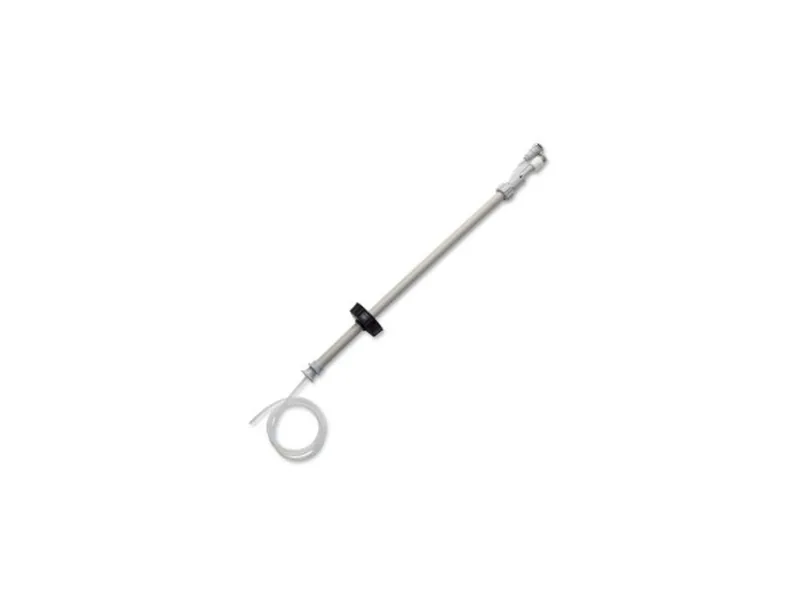
Figure 1: ProMinent suction lance. Image source: ProMinent official website
- Bulk sodium hypochlorite with a metering pump: buy liquid, dilute and dose. The simplest equipment.
- On-site hypochlorite generation: electrolysis of brine removes chemical deliveries but needs more maintenance.
- Chlorine dioxide generators: effective, but precursor handling is demanding for small sites.
- UV: no residual, so it is usually paired with chlorine.
For flows from tens to a few hundred cubic metres per day, small water system chlorination with bulk hypochlorite is the least troublesome, and it is the focus below.
Calculating the dose
Work from flow and target dose. An example:
- A well pump delivers 10 m³/h and the target chlorine dose is 1 mg/L, so 10 g of chlorine per hour is needed.
- Hypochlorite at about 10% available chlorine contains roughly 100 g/L, so about 0.1 L/h of neat product.
- That flow is tiny, so the product is usually diluted first. Diluted five times, the pump runs at about 0.5 L/h.
Set the dose from the free chlorine residual your regulator requires at the plant and at the far end of the network. Our hypochlorite dosage calculation guide covers the maths in detail.
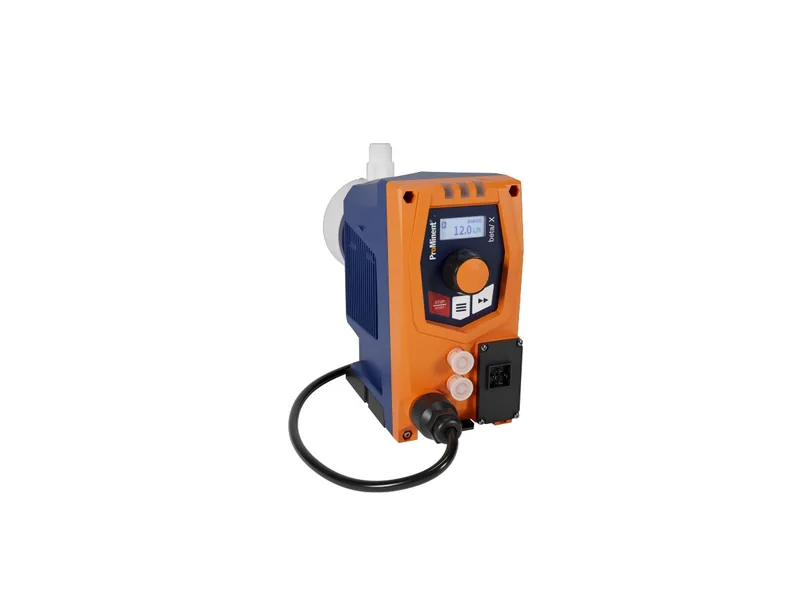
Flows this small suit solenoid metering pumps. ProMinent lists its beta/X at 10 ml/h to 50 l/h across 16 to 2 bar, which covers most small water system chlorination duties.
Interlock with the well pump
The most common fault in small water system chlorination is a dosing pump running while the well pump is off, or not running when it is on. The first loads the pipe with strong chlorine; the second means no disinfection at all.
Two standard approaches:
- Start/stop interlock: the dosing pump is powered or enabled from the well pump contactor, so it only runs with the well pump.
- Flow pacing: a pulse water meter on the outlet drives the dosing pump, so dose follows flow.
A single well with steady output is fine with an interlock. Multiple pumps or variable flow need a pulse meter. Whichever method you choose for small water system chlorination, test it by stopping the well pump and confirming the dosing pump stops within a few seconds.
Injection point and contact time
Inject into the well pump discharge or the inlet of a storage tank, and allow enough contact time before the first consumer. With a storage tank, contact time is rarely a problem. Without one, add a contact tank or pipe loop; otherwise the nearest houses get high residual and the furthest get too little.
Inject toward the pipe centre with a non-return injection valve, and fit it where it can be removed for cleaning.
What a small water system chlorination kit includes
- Chemical drum: 50 to 200 litres, corrosion-resistant plastic, with graduations.
- Suction assembly: foot valve, suction tube and low-level switch in one lance, so the pump alarms or stops before the drum is empty.
- Metering pump: solenoid type, ideally with automatic degassing.
- Injection valve: prevents backflow and siphoning.
- Contact volume: a tank or pipe section before the network.
A wall-mounted board or small skid keeps everything visible and easy to refill. Label the drum with the dilution ratio and the date it was mixed, so anyone covering for the regular operator can see at a glance whether the solution is fresh and what strength it should be.
Hypochlorite problems on small sites
Product decay. Hypochlorite loses strength over time, faster in summer. Buy one to two months of supply at a time and store it cool and out of sunlight.
Gas binding. Hypochlorite releases gas bubbles that stop the pump delivering. Use a self-degassing head and short suction, and see our hypochlorite gas lock article.
Scaling. Injection valves scale up and need periodic cleaning in dilute acid.
Freezing. In cold climates, insulate or heat the pump house and keep drums and lines indoors.
Running small water system chlorination unattended
Most small systems have no full-time operator. Ideally, small water system chlorination should include:
- Online free chlorine monitoring with remote data to the utility or regional platform.
- Low-chemical and pump fault alarms sent by SMS or app.
- Automatic restart after power returns.
On a tight budget, at least fit the low-level alarm and auto-restart, and give the operator a portable chlorine test kit for weekly checks. For building supplies, see our secondary supply disinfection guide.
Conclusion
Good small water system chlorination is simple and dependable: bulk hypochlorite with a solenoid metering pump, a dose calculated from flow, a firm interlock or flow pacing with the well pump, a complete kit of drum, suction lance and injection valve, and sensible chemical storage, freeze protection and alarms. Add online monitoring and telemetry when budget allows.
To size a small water system chlorination kit for your well, contact our team.
FAQ
What disinfectant do small water systems usually use?
Sodium hypochlorite, either bought in or generated on site. The equipment is simple and residual is easy to control.
What pump suits small water system chlorination?
Flows are often below a few litres per hour, so a solenoid metering pump with automatic degassing is the usual choice.
Must the dosing pump be interlocked with the well pump?
Yes. If the well pump stops, the dosing pump must stop too, or strong chlorine builds up in the line.
How long does hypochlorite keep?
Strength falls with time and heat. Buy one to two months at a time and store it cool and dark.
How do I know disinfection works with no operator on site?
Fit online residual monitoring with remote alarms. Where that is not possible, test residual manually at least weekly.