
Milton Roy Pneumatic Stroke Control: How It Works and Fails Safe
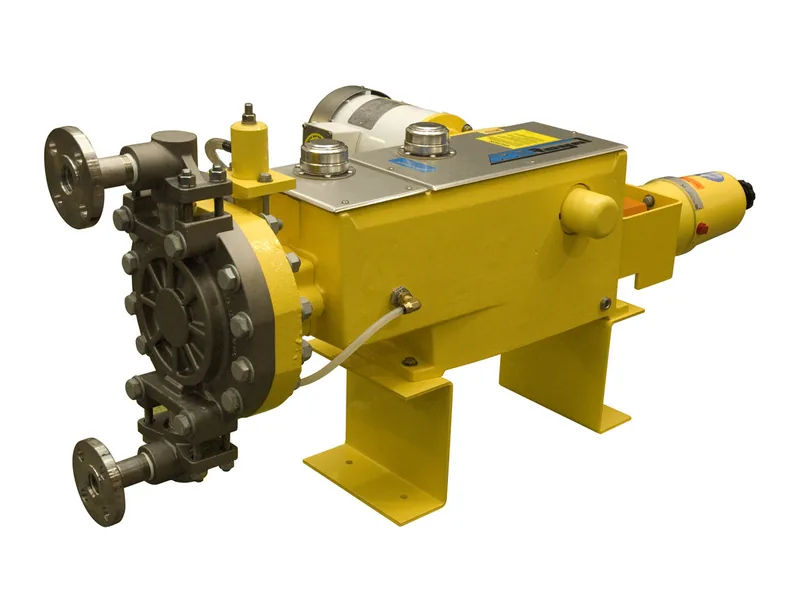
Walk through an older refinery or chemical plant and you will still find Milroyal pumps with no micrometer knob on the side. In its place is a clear plastic cylinder with a percent scale and two air lines running to it. That is Milton Roy pneumatic stroke control, which Milton Roy calls Pneumatic Capacity Control (PCC), and it still does a solid job where instrument air is the plant standard.
This article covers how the Milton Roy pneumatic stroke control works, the specs that matter, how it behaves when air is lost, and what a field retrofit involves.
What Milton Roy pneumatic stroke control does
The unit mounts on Milroyal B frame pumps in place of the manual micrometer adjustment. A 3-15 psi instrument air signal from your DCS or controller sets the stroke length anywhere from 0 to 100%. No electrical power is needed at the pump.
Milton Roy positions it for plants that already run on pneumatics, or that need automatic capacity adjustment in explosion-proof areas. An optional air control station adds local or remote manual adjustment and an auto/manual selector valve.
How it works inside
The design is a differential-area piston with a hydraulic lock, and knowing the parts makes Milton Roy pneumatic stroke control much easier to troubleshoot. The main parts are:
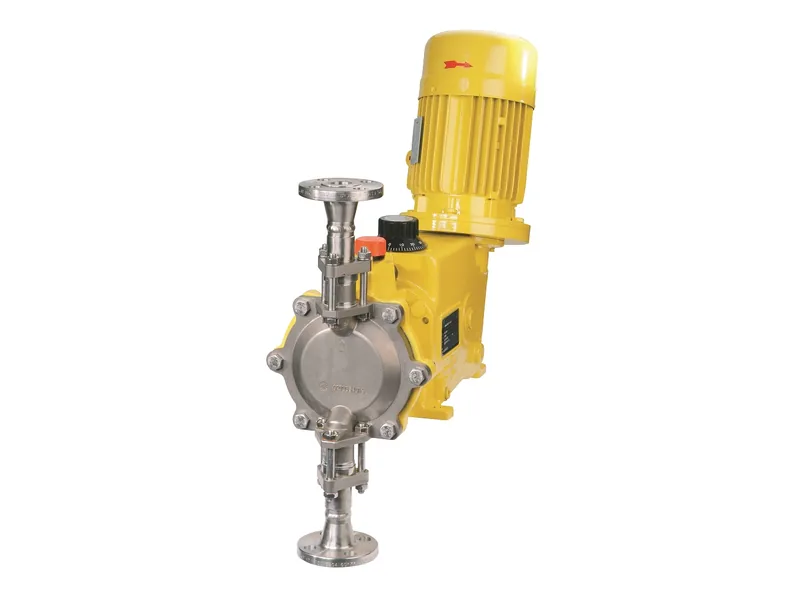
Figure 1: Milton Roy MAXROY B metering pump. Image source: Milton Roy official website
- Actuator piston, connected to the pump gear housing, which sets the stroke.
- Oil reservoir, which converts air pressure to oil pressure.
- Transfer shaft, which carries piston position to a range spring.
- Moore valve positioner, which compares the air signal with piston position and meters air to the reservoir.
- Transparent cylinder with a percent capacity scale, so you can read the actual position at a glance.
Inside the Milton Roy pneumatic stroke control, supply air at 80-100 psi pushes on the small side of the piston and creates a constant preload. The positioner adjusts air pressure on the oil reservoir, and that oil acts on the large side of the piston. The piston moves until the range spring force matches the signal.
Why oil and not air directly? The plunger thrust in a Milroyal pump pulses on every stroke, and compressed air would let the stroke setting wander. So the Milton Roy pneumatic stroke control closes an oil passage at the end of each suction stroke, which locks the piston in a closed cylinder of incompressible oil during the discharge stroke. On the next suction stroke the thrust reverses, the passage opens, and the piston can readjust.
Key specifications
From the Milroyal B manual for Milton Roy pneumatic stroke control:
- Control signal: 3-15 psi, direct or reverse acting (specify when ordering).
- Supply air: 80-100 psi, clean, filtered and dry.
- Air consumption: about 0.25-0.4 SCFM.
- Linearity: ±5% of full scale. Accuracy: ±1% or better.
- Minimum signal change to reset capacity: 0.25 psi.
- Capacity range: 0-100% standard, reduced range optional.
If your control system only puts out 4-20 mA, Milton Roy lists an electro-pneumatic relay as an accessory to convert the milliamp signal to 3-15 psi. For the general wiring picture, see metering pump 4-20 mA and pulse control.
Failure actions you must design around
This is the part safety reviews care about most. The Milton Roy pneumatic stroke control behaves like this:
- Loss of supply air: travels to 100%.
- Loss of signal air, direct acting: travels to 0%.
- Loss of signal air, reverse acting: travels to 100%.
In other words, if the instrument air header drops, the pump goes to full stroke. Where overdosing is a real hazard, add separate protection such as a low air pressure interlock that stops the pump, or a flow alarm. Whether you pick direct or reverse acting depends on whether your process is more sensitive to overfeed or underfeed, and that choice belongs in the purchase spec.
How to tell if a pump has it
Milroyal B pumps can be ordered with or without the unit fitted. If Milton Roy pneumatic stroke control was ordered with the pump, the model code shows "PN" in the 11th and 12th or the 13th and 14th positions. The code is on the pump data plate. More on the pump itself is on our Milroyal B page.
Retrofitting a manual pump
A field retrofit of Milton Roy pneumatic stroke control onto a manual pump is covered in the manual. Use a fitter who knows the pump. The outline:
- Turn the micrometer to zero stroke, then remove the manual lead screw following the pump IOM.
- Clean the housing threads and install the new adapter bushing with a medium-grade thread locker.
- Mount the control, re-engage the lead screw keys in the adapter shaft groove, refill the drive oil and reassemble.
- Connect signal and supply air and fill the reservoir with light oil (SAE 5 or SAE 10) to about 1 inch below the top of the small tube.
- Signal the control to 0%, rotate the input shaft by hand through a full turn, and adjust the mounting collar until the crosshead shows no movement. Then tighten the clamp.
- Cycle the full range to bleed air from the hydraulic cylinder, and check the scale against plunger stroke at 0% and 100%.
If you are working on an older pump, Milton Roy supplies the matching manual when you send the serial number.
Pneumatic or electric?
Milton Roy also offers electric stroke actuators with 4-20 mA input and options such as HART, which suit plants without reliable instrument air. For a comparison of motorized stroke control and speed control, see metering pump stroke control motors. As a rough guide:
- Stable instrument air, many hazardous areas, and a maintenance crew comfortable with pneumatics favor Milton Roy pneumatic stroke control.
- No dependable air supply, or a need for digital feedback, points to electric.
- In classified areas the final choice depends on the area rating and plant standards. Our explosion-proof metering pump selection guide goes through this.
Conclusion
Milton Roy pneumatic stroke control turns a 3-15 psi air signal into a stroke setting, holds it with a hydraulic lock against pulsing plunger loads, and runs with no electricity at the pump. Accuracy is around ±1%. Keep the supply air clean and dry, remember that losing supply air drives the pump to 100%, and set zero carefully by hand after any retrofit. For other options see our controller range and the Milton Roy brand page, or contact us with your pump model code.
FAQ
Which pumps use Milton Roy pneumatic stroke control?
The manual covers Milroyal B frame pumps. For other families, check the current Milton Roy literature and confirm with your distributor.
Can I feed a 4-20 mA signal directly?
No. Add an electro-pneumatic relay to convert the signal to 3-15 psi first.
How accurate is the percent scale on the cylinder?
It shows piston position, which tracks stroke length. Check it at 0% and 100% after service, and use a calibration column for actual flow.
What should I check if the control is slow to respond?
Start with supply air pressure and air quality. The design includes an oil bypass and bleed to speed response, so a big change in speed usually points to an air or oil issue.
Can the control be removed without losing calibration?
Yes. The Milton Roy pneumatic stroke control mounts on an adapter that is set at the factory, so the assembly can come off for service without disturbing the stroke calibration.