
Milton Roy Metering Pump Installation: Piping, Valves, Start-Up
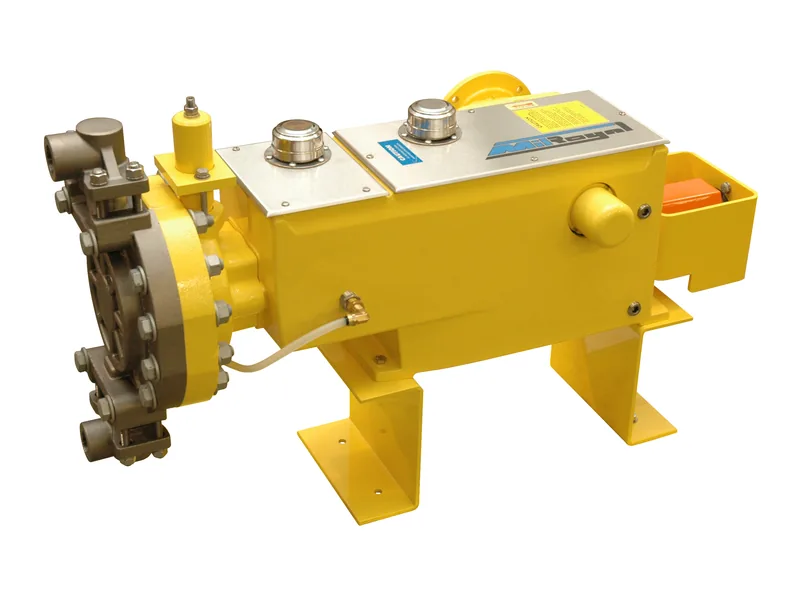
A good Milton Roy metering pump installation is mostly about the piping around the pump, not the pump itself. Bolting down the drive takes an hour, but undersized suction lines, missing back pressure and a badly placed relief valve cause most of the accuracy complaints we see later.
This checklist follows the Milroyal installation manual from Milton Roy, which is detailed and applies in spirit to most of their motor-driven pumps. Treat your own model's IOM as the final word.
Step 1: Mounting and leveling
Set the pump on a solid, vibration-free foundation and shim it level. The manual suggests raising the base above floor level so washdown water stays off it and service access is easier. Anchor bolts go through the mounting holes in the base.
Some Milroyal pumps ship with the motor removed. Anchor the drive first, then fit the motor. Check the nameplate for power and voltage, find the rotation arrow on the drive-side flange, and bump the motor to confirm direction before going further. That is the easy part of Milton Roy metering pump installation.
Step 2: Suction piping for Milton Roy metering pump installation
Suction is where pumps starve, so spend the most time here during any Milton Roy metering pump installation.
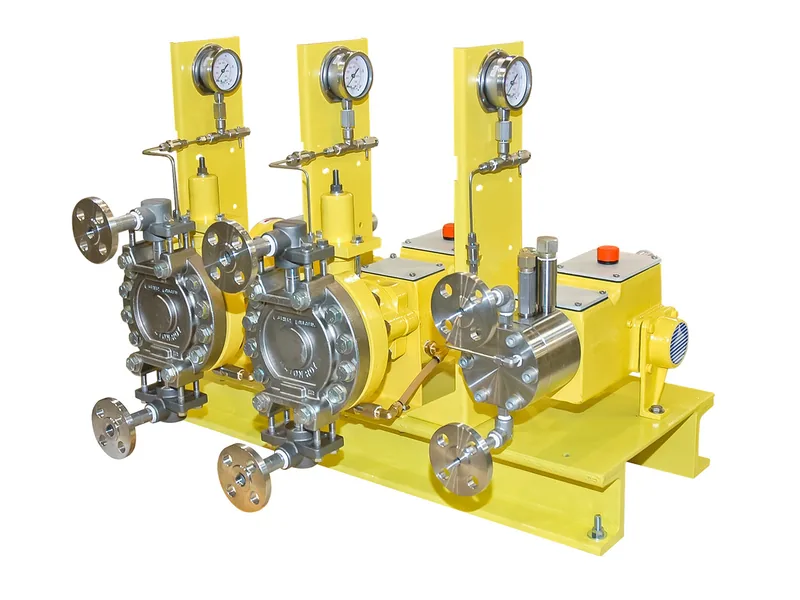
Figure 1: Milton Roy Milroyal D metering pump. Image source: Milton Roy official website
- Flood the suction. Place the liquid end below the lowest tank level. The manual warns that suction lift hurts metering accuracy.
- Size for peak flow. A reciprocating pump's instantaneous peak is roughly 3.14 times its average flow. The manual's example is an 88 gph pump that needs suction piping sized for about 276 gph.
- Fit a strainer. It keeps debris out of the ball checks. Clean it often, since a blocked strainer leads to cavitation.
- Keep it short, straight and tight. Above 70 strokes per minute with a long line, go noticeably larger than the suction fitting. Test for leaks with air and soap solution.
Do not hard-pipe rigid metal to a plastic liquid end; use flexible connections on both sides. For viscous liquids the manual allows line sizes up to four sizes larger than the pump port.
Step 3: Discharge piping and back pressure
On the discharge side of a Milton Roy metering pump installation, the pump only delivers a controlled flow if discharge pressure is higher than suction pressure. Milton Roy asks for at least 5 psi, about 0.35 bar, of positive differential.
When you discharge into an open tank, or the suction tank sits higher than the outlet, create artificial back pressure:
- Back pressure valve. Usually mounted near the pump. For large pumps with long, very small discharge lines, it may need to go near the injection point to limit siphoning.
- Vented riser. Nearly maintenance-free, but a blocked line makes it overflow, so use a dampener and back pressure valve instead on hazardous liquids.
Pair the back pressure valve with a pulsation dampener. Without one, the valve snaps open and shut on every stroke and wears quickly. With one, it floats around a partly closed position, and smaller discharge piping may be possible. See why a metering pump needs a back pressure valve for sizing ideas.
Step 4: Relief, check and shut-off valve locations
A motor-driven positive displacement pump can build very high pressure against a closed valve before the motor overload trips. That is why every Milton Roy metering pump installation needs a relief valve in the right spot:
- Put the relief valve between the pump and the nearest shut-off valve. Pipe its outlet back to the suction tank or a drain, with the end visible.
- Where the line enters a boiler or high-pressure vessel, add a check valve.
- Fit shut-off valves on suction and discharge next to the pump, with the discharge shut-off downstream of the relief valve inlet.
For boiler drum dosing, use one liquid end per drum. A manifold with even slight pressure differences sends more chemical to the lowest-pressure outlet.
Step 5: Oil, power and air
Before power goes on, remove the covers, look for debris, and install the oil-cleaning magnet. Fill the gear case to the bottom of the oil level plug, choosing viscosity for ambient and operating temperature; operating temperature typically runs around 75 °F above ambient. Hydraulic diaphragm liquid ends get their own hydraulic oil. Our Milton Roy pump oil guide lists the grades.
If the Milton Roy metering pump installation includes pneumatic capacity control, plan for two air supplies. Power air should be at least 60 psi, with about 80 psi recommended, and signal air comes from the controller or a regulator.
Step 6: Filling and first start
Fill the system with liquid before pressure testing, without discharge pressure applied. Start at a low stroke setting, watch for steady discharge, noise and leaks, then increase. After long idle periods, a valve at the outlet helps purge trapped air. The steps are covered in Milton Roy pump priming.
Step 7: Calibrate after 12 hours
Milton Roy recommends calibrating after the first 12 hours of running, at 100%, 50% and 10% stroke. Use tank drawdown, which is preferred for hazardous liquids, or collect from the discharge. Plot the three points and set stroke from that line. Calibration is the last step of Milton Roy metering pump installation, and skipping it is the most common shortcut.
Conclusion
In most Milton Roy metering pump installation jobs, the drive and wiring are rarely the issue. Accuracy depends on three things: flooded, generously sized suction; at least 5 psi of back pressure on the discharge; and a relief valve between the pump and the first shut-off valve. Run the pump for about 12 hours and do a three-point calibration before handover. Product details are on the Milroyal page and our Milton Roy brand page. If you want a second look at a piping layout before Milton Roy metering pump installation starts, contact us.
FAQ
What is the most common Milton Roy metering pump installation mistake?
Undersized or lifted suction piping is the most common one. Sizing for average flow instead of peak flow, or a dirty strainer, leads to low output and cavitation.
Do I need a back pressure valve when dosing into an open tank?
Yes, usually. Discharge pressure should be at least 5 psi above suction, which an open tank does not provide, so the pump may overfeed or siphon.
Can the relief valve go after the shut-off valve?
No. In a Milton Roy metering pump installation it belongs between the pump and the first shut-off valve, otherwise closing that valve leaves the pump and line unprotected.
What if the motor runs the wrong way?
Stop and swap the phases. Check the arrow on the drive-side flange during Milton Roy metering pump installation, before the pump runs under load.
Why wait 12 hours before calibrating?
Oil temperature, check valves and piping settle during the first hours. Calibrating after about 12 hours gives numbers closer to long-term performance.