
Metering Pump Flow Conversion: L/h, mL/min, GPH and mL per Stroke
Metering pump flow conversion mostly comes down to four factors: multiply L/h by about 16.7 to get mL/min, multiply US GPH by 3.785 to get L/h, divide kg/h by density to get L/h, and divide hourly flow by hourly strokes to get displacement per stroke. Datasheets, process sheets and calibration columns rarely use the same unit, and that mismatch is where sizing errors start.
This guide is for engineers, buyers and service technicians who need to compare pumps from different suppliers or check a pump on site.
The Units You Will Meet
European and Asian datasheets usually quote L/h. Larger pumps may be listed in m³/h. Small solenoid pumps and lab pumps often appear in mL/min. US catalogs prefer GPH or GPD, gallons per hour or per day. Process engineers sometimes give chemical demand in kg/h, or as a dose in mg/L of treated water.
Then there is displacement per stroke, the unit most often left out of a metering pump flow conversion, usually in mL per stroke. It links flow to stroke rate, and it is the most useful number when you set a pump by frequency.
Metering Pump Flow Conversion Factors
Keep these on a card in the control room:
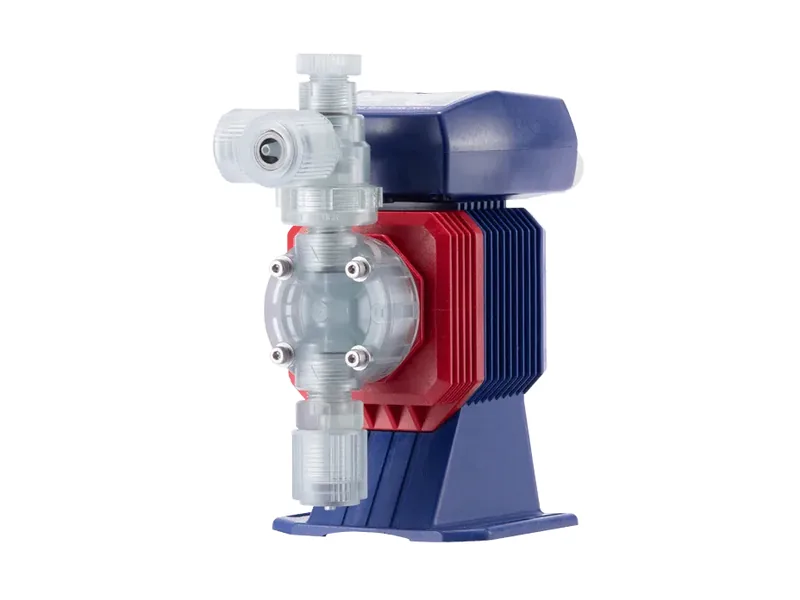
Figure 1: IWAKI IWAKI EHN electromagnetic metering pump. Image source: IWAKI official website
- L/h to mL/min: multiply by 1000, divide by 60 (about × 16.7)
- mL/min to L/h: multiply by 0.06
- m³/h to L/h: multiply by 1000
- US GPH to L/h: multiply by 3.785
- Imperial GPH to L/h: multiply by 4.546
- GPD to L/h: multiply by 3.785, then divide by 24
Example: a pump rated at 30 L/h delivers 30 × 1000 ÷ 60 = 500 mL/min at full output. A calibration reading of 200 mL/min is 200 × 0.06 = 12 L/h.
US and imperial gallons differ by about 20%. If a quote just says "gallons", ask which one. This single question prevents one of the most common metering pump flow conversion mistakes in international projects.
Displacement per Stroke in Metering Pump Flow Conversion
Displacement per stroke = hourly flow ÷ strokes per hour. Stroke rate is usually given in strokes per minute, so multiply by 60 first.
Worked example: a pump delivers 36 L/h at 100 strokes per minute and 100% stroke length. That is 6000 strokes per hour. 36 L is 36,000 mL, so displacement is 36,000 ÷ 6000 = 6 mL per stroke.
Now run it backwards. The process needs 18 L/h. With 6 mL per stroke you need 18,000 ÷ 6 = 3000 strokes per hour, or 50 strokes per minute. Keep stroke length at 100% and halve the frequency, and flow drops to roughly half.
Stroke Length Changes the Picture
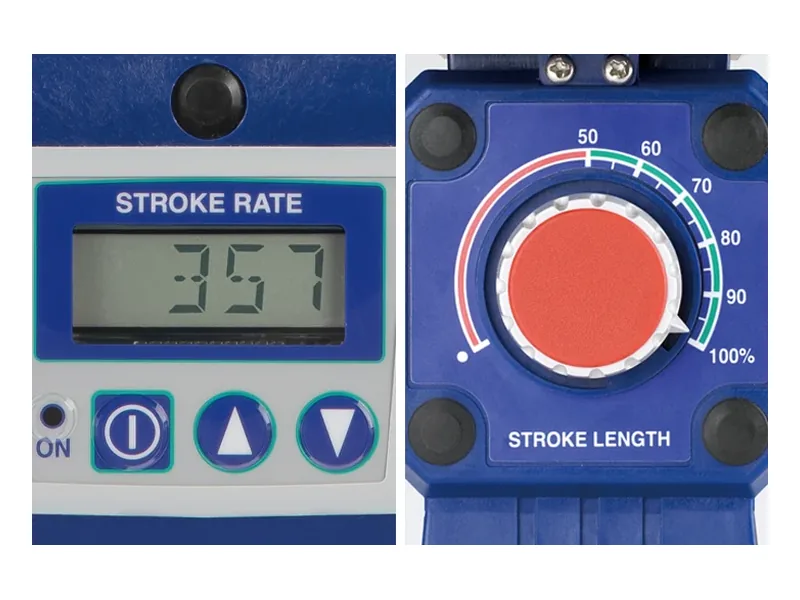
The number above is full-stroke displacement. At 50% stroke length, theoretical displacement is roughly half, but real output drifts further from theory at short strokes. That is one reason most suppliers advise against long-term running at very low stroke settings. A metering pump flow conversion done at full stroke should be checked again at the stroke length you actually plan to use.
Solenoid pumps such as the IWAKI EHN-R series have small per-stroke volumes and frequency set directly on the panel. Thinking in mL per stroke makes these pumps much easier to set than staring at an L/h figure. For the full stroke-and-frequency method, see our stroke frequency calculation guide.
Mass Flow to Volume Flow
When the process sheet gives kg/h, use: L/h = kg/h ÷ density in kg/L.
Example: a solution with a density of 1.2 kg/L and a demand of 30 kg/h needs 30 ÷ 1.2 = 25 L/h. Use the density of the diluted solution you actually dose, measured if possible, not the density of the neat product. Concentration changes density, and density changes your answer.
If you only have a dose in mg/L and a water flow, calculate chemical demand first, then do the metering pump flow conversion. The metering pump flow formula walks through that step.
Metering Pump Flow Conversion During Calibration
A calibration column reads in mL and you time it in seconds. Convert like this:
- Divide the drop in mL by the seconds to get mL/s.
- Multiply mL/s by 3.6 to get L/h.
Example: the column drops 50 mL in 30 seconds. That is about 1.67 mL/s, or roughly 6 L/h. Time at least 30 seconds; short readings carry a large percentage error. If the result is off target, adjust and repeat, as covered in how to adjust dosing pump dose rate.
A Sizing Sequence That Avoids Unit Errors
When comparing quotes from several suppliers, a fixed sequence helps:
- Convert every process demand into L/h. Divide mass flow by density first.
- Add margin so the normal duty sits somewhere around 30% to 70% of rated flow. This usually leaves room on both stroke length and frequency.
- Convert every datasheet value into L/h before comparing. Do not compare GPH against L/h by eye.
- Use displacement per stroke to check the stroke rate at normal duty. Very high rates wear parts faster; very low rates give more pulsation.
- Write each metering pump flow conversion into the sizing sheet, with the unit and factor in its own column, so a reviewer can check it.
Inquiries we receive often list a flow with no unit at all, or write mL/min where they meant mL/h. It is worth one extra email to confirm. The arithmetic of metering pump flow conversion is simple; the trouble is that each person in the chain assumes everyone else uses the same unit.
Common Conversion Mistakes on Site
- Sizing a pump in mL/min when the duty was L/h, a factor of about 16.7.
- Treating kg/h as L/h for dense chemicals such as sulfuric acid or caustic soda, which oversizes the flow.
- Mixing US and imperial gallons.
- Timing a calibration for only ten seconds.
Most of these disappear once the sizing sheet carries a dedicated unit column. A second person checking the metering pump flow conversion takes five minutes and can save a wrong pump order.
Conclusion
Metering pump flow conversion needs only a handful of factors: × 16.7 for L/h to mL/min, × 0.06 back again, × 3.785 for US GPH, ÷ density for kg/h, and flow ÷ strokes per hour for displacement per stroke. Convert everything to L/h for sizing, then back to mL when you calibrate. For low-flow duties, browse our solenoid metering pumps and the IWAKI brand page. If you are unsure about a figure, send us the chemical, its density and target flow through our contact page and we will check the numbers with you.
FAQ
How many mL/min is 1 L/h?
About 16.7 mL/min. Divide 1000 mL by 60 minutes; going the other way, 1 mL/min equals 0.06 L/h.
Where do I find displacement per stroke?
For a metering pump flow conversion, look first on the datasheet or manual. If only maximum flow and maximum stroke rate are listed, divide flow by strokes per hour yourself.
Is GPH a US or imperial unit?
Most US catalogs mean US gallons, so 1 GPH is about 3.785 L/h. UK sources may use imperial gallons, about 4.546 L.
Why is measured flow lower than calculated?
High back pressure, trapped gas, a short stroke setting or high viscosity are the usual causes. Prime the pump and recalibrate at real system pressure.
Can I use kg/h as L/h?
Only for dilute solutions close to 1 kg/L. For dense chemicals a metering pump flow conversion must divide by density, or the error is significant.