
Metering Pump Pulsation: Is Diaphragm Pump Flow Continuous?
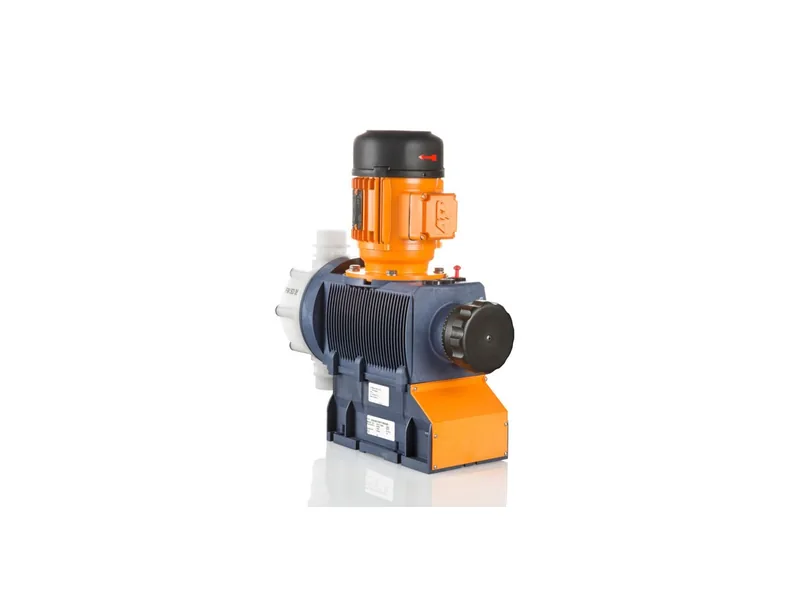
Metering pump pulsation is built into every mechanical diaphragm pump, so the short answer is no, the flow is not continuous. The pump discharges on the forward stroke and delivers almost nothing while it refills on the return stroke.
Operators who see chemical moving in jerks through a clear tube often assume something is wrong. It is normal for a reciprocating pump. The real questions are how large the pulses are, whether they cause trouble, and what to do about them.
Where Metering Pump Pulsation Comes From
A motor drives a worm gear and an eccentric, and a connecting rod moves the diaphragm back and forth. On the forward stroke the chamber shrinks, the discharge check valve opens and liquid is pushed out. On the return stroke the discharge valve closes and the suction valve opens. Discharge happens during only half of each cycle.
Diaphragm speed is not constant either. The eccentric gives a roughly sinusoidal motion, fastest mid-stroke and slowest at the ends, so instantaneous flow rises from zero to a peak and falls back. In theory peak flow from a simplex pump is about π times the average flow, a little over three times.
What Metering Pump Pulsation Does to a System
Pipes, valves and instruments see the peak, not the average. Typical symptoms:
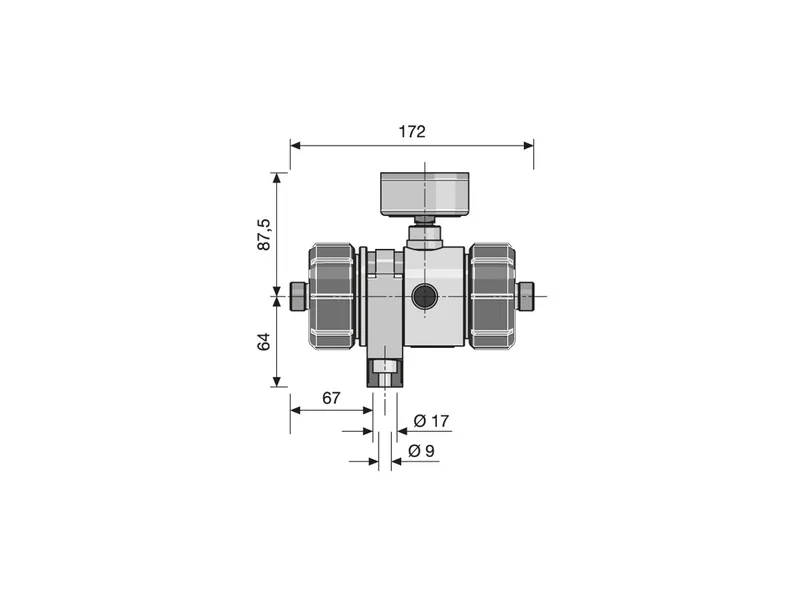
Figure 1: ProMinent inline pulsation dampener. Image source: ProMinent official website
- Pressure gauge needles swing so hard they cannot be read, and gauges wear out quickly
- On long or narrow discharge lines, acceleration pressure adds to system pressure and can lift the relief valve
- On the suction side, acceleration losses on long lines or high lifts cause cavitation and dosing errors
- Downstream magnetic flow meters and online analyzers bounce, and control loops start to oscillate
Poorly supported tubing also shakes in time with the strokes, and fittings loosen over months. Larger flows and longer lines make all of this worse. A quick way to size the problem is to compare peak flow, not average flow, with what the line and instruments can tolerate. Metering pump pulsation also shows up on the suction side, so check suction line length and lift as well as the discharge, since metering pump pulsation on a long suction line is a common cause of vapor pockets and missed strokes.
When Metering Pump Pulsation Needs Treatment
Not every installation needs smoothing. If the chemical goes straight into a large main line, it mixes almost immediately and pulsed delivery has little effect on the process. Extra hardware is usually unnecessary there.
Treatment typically pays off when the discharge line runs more than about 10 to 15 m, the tubing is small, a flow meter sits in the control loop, the injection point is a small branch with short mixing time, or system pressure runs close to the relief setting. If unsure, fit a gauge with a snubber at the pump outlet and compare the needle swing with working pressure.
Four Ways to Get Closer to Continuous Flow
Fit a pulsation dampener
A dampener stores liquid during the peak and releases it in the trough, turning a sawtooth flow into something close to a flat line. Bladder and diaphragm types are precharged with gas, generally to around 60 to 80% of working pressure; follow the supplier's figure. See our article on how a pulsation dampener works. Mount it as close to the pump outlet as possible, because every metre of pipe between pump and dampener reduces the benefit.
Run multiple heads out of phase
With two heads at 180°, one refills while the other discharges, and peak flow drops to roughly 1.6 times the average. Three heads at 120° are close to continuous. Multi-head designs cost more, so they make sense when metering pump pulsation must be very low and a dampener alone is not enough. Our guide to single vs double head metering pumps covers that choice.
Use a shorter stroke at a higher rate
For the same average flow, a shorter stroke at a higher rate delivers smaller slugs and less metering pump pulsation. Very short strokes hurt accuracy, so long operation below about 30% stroke is generally not recommended.
Add a back pressure valve
A back pressure valve does not remove pulses, but it gives the outlet steady resistance and prevents siphoning and overfeeding. It works best together with a dampener; see what a back pressure valve does.
A Field Example of Metering Pump Pulsation
A water plant dosed coagulant with a motor-driven mechanical diaphragm pump through more than 20 m of discharge line. The downstream magnetic meter jumped constantly and the PLC loop kept hunting. The fix was a diaphragm dampener within 1 m of the outlet, precharged to about 70% of working pressure, plus raising stroke length from 40% to 70% while lowering stroke rate. Meter readings settled and the loop became stable.
Problems like this rarely require a new pump. Mechanical diaphragm pumps such as the ProMinent Sigma range are designed to accept dampeners and back pressure valves, which handle most metering pump pulsation cases. Browse our mechanical diaphragm pumps or the ProMinent brand page.
Conclusion
Flow from a mechanical diaphragm pump is not continuous. Metering pump pulsation comes from the reciprocating design, and a simplex pump peaks at about three times its average flow. Short lines into large mains can be left alone, while long lines, meter-based control and high pressure need treatment. In order of cost: adjust stroke and rate, add a back pressure valve, fit a dampener, or move to a multi-head pump. Send us line length, diameter, pressure and flow and contact our engineers to size the acceleration loss and the dampener volume.
FAQ
Is metering pump pulsation worse on solenoid pumps?
Usually it is more noticeable. Each solenoid pulse is short and sharp, so long lines on solenoid pumps also benefit from a dampener.
What precharge pressure should a dampener use?
Typically 60 to 80% of working pressure. Too high and it does nothing, too low and the bladder bottoms out; check the manual.
Does a dampener reduce dosing accuracy?
No. It only stores and returns liquid, so average flow stays the same, and lower pressure swings often improve accuracy.
Can strong pulsation damage the diaphragm?
It can. High pressure peaks load the diaphragm and check valves and shorten their life on long high-pressure lines.
How can I tell the pulsation is under control?
Watch the outlet gauge. A wide swing should shrink to a small flicker and the downstream meter should read steadily; stop the pump and release pressure before removing a dampener.