
Hydraulic Diaphragm Pump vs Canned Motor Pump: Accuracy and Use
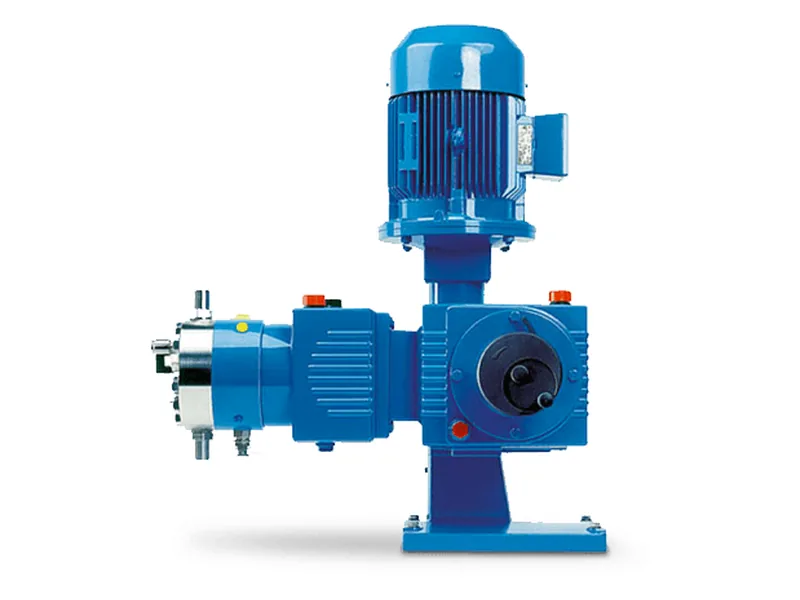
The hydraulic diaphragm pump vs canned motor pump question comes down to principle: a hydraulic diaphragm metering pump is a reciprocating positive displacement pump that delivers a fixed volume per stroke, while a canned motor pump is a sealless centrifugal pump whose flow moves with system resistance. Both are compared because neither has a dynamic shaft seal, which makes them candidates for toxic, flammable or expensive fluids. This guide is for process and equipment engineers choosing between the two.
How each design works
A hydraulic diaphragm metering pump uses a motor-driven plunger that pushes hydraulic oil, and the oil flexes a diaphragm that contacts the process fluid. Pressure is balanced on both sides of the diaphragm, so the pump handles high discharge pressure and the diaphragm lasts a long time. Our article on the hydraulic diaphragm pump working principle goes deeper.
A canned motor pump puts the motor rotor and impeller on one shaft. A thin metal can surrounds the rotor, the pumped liquid fills the rotor chamber, and the can separates it from the stator. No shaft leaves the casing, so there is no mechanical seal. The process fluid cools the motor and lubricates the bearings.
In short, one squeezes a fixed volume and the other throws liquid with an impeller. Every point in the hydraulic diaphragm pump vs canned motor pump comparison follows from that difference.
Metering accuracy
A hydraulic diaphragm metering pump typically holds steady-state accuracy of about ±1%, and flow changes very little when discharge pressure rises. You adjust output with stroke length or stroke rate, and turndown of 10:1 or more is usual.
A canned motor pump runs where its curve meets the system curve. Change the discharge pressure and the flow moves. To meter with it you need a flow meter plus a control valve or VFD in a closed loop, and accuracy then depends on the instrument and the loop. At low flow a centrifugal pump is inefficient and adds heat to the fluid.
Accuracy is the biggest gap in the hydraulic diaphragm pump vs canned motor pump comparison. Canned motor pump metering is a pump plus instruments, not something the pump does on its own. That is fine for continuous transfer where tight accuracy is not needed. For small, precise chemical injection it rarely makes sense. Our general guide to metering pump vs centrifugal pump covers the same logic.
Pressure and flow range
On range, the hydraulic diaphragm pump vs canned motor pump split is clear. Hydraulic diaphragm pumps are strongest at low flow and high pressure. From a few liters per hour to several cubic meters per hour, discharge pressure can reach tens or even hundreds of bar depending on the model.
Canned motor pumps suit medium to large flow at moderate head, often tens to hundreds of m³/h, but single-stage head is limited. In a low-flow, high-pressure duty, the hydraulic diaphragm pump vs canned motor pump decision is usually already made, because the canned pump has no sensible operating point.
Fluid compatibility
Fluid properties shift the hydraulic diaphragm pump vs canned motor pump balance too. Both designs have limits, but they fear different things:
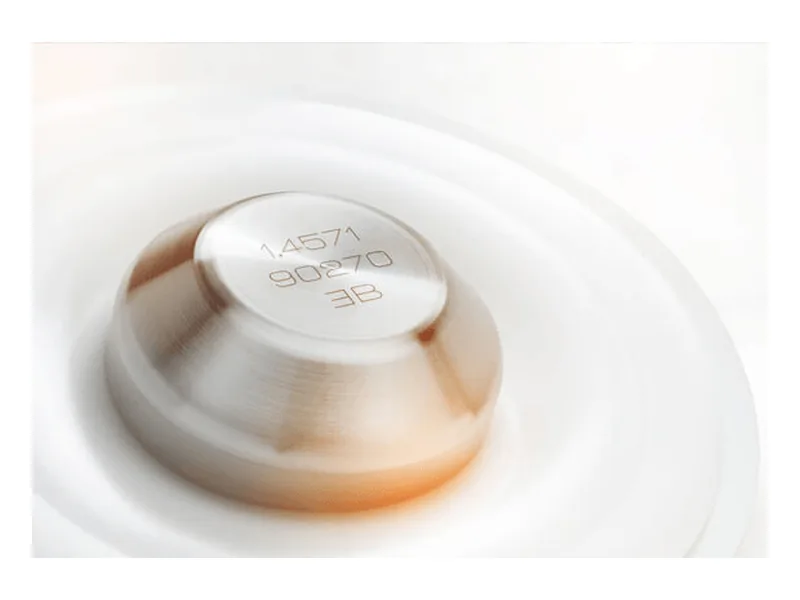
Figure 1: LEWA ecoflow multi-layer membrane detail. Image source: LEWA official website
- Viscosity. Hydraulic diaphragm pumps handle thicker fluids at reduced speed. Canned pumps lose efficiency quickly and rotor chamber cooling suffers.
- Solids. Canned pump bearings are product-lubricated, so particles wear them. Diaphragm pumps mainly risk solids holding check valves open.
- Volatile fluids. Motor heat goes into the fluid in a canned pump, so low boiling liquids can flash in the rotor chamber unless a dedicated cooling circuit is designed. Diaphragm pumps need good suction conditions to avoid cavitation.
- Dry running. A canned pump can damage its bearings within seconds of running dry. A diaphragm pump generally survives briefly but stops metering.
Maintenance focus
On a hydraulic diaphragm pump you watch the hydraulic oil, the diaphragm rupture alarm and the check valves, and diaphragms are generally replaced on a running-hours schedule. On a canned motor pump the bearings are the wear item, and many units carry a bearing wear monitor that flags when service is due. If the can wears through, fluid reaches the stator, which is usually harder to deal with than a diaphragm leak. Maintenance is often the deciding factor in a hydraulic diaphragm pump vs canned motor pump choice on remote sites.
Choosing between them
Use these rules for the hydraulic diaphragm pump vs canned motor pump decision:
- Precise dosing at low flow and high pressure: hydraulic diaphragm metering pump.
- Continuous transfer at high flow with relaxed accuracy: canned motor pump.
- High flow that still needs metering: either a canned pump with a flow loop or a multi-head diaphragm pump, depending on range and budget.
- Fluids with solids or a tendency to flash: lean toward the hydraulic diaphragm pump.
Taking LEWA ecoflow as an example, it uses a multi-layer diaphragm with rupture monitoring and is common for toxic chemical injection in refineries and chemical plants. Browse models on our hydraulic diaphragm pump page, see the LEWA brand page, and follow the steps in hydraulic diaphragm metering pump selection.
Conclusion
The hydraulic diaphragm pump vs canned motor pump comparison is really positive displacement metering against sealless centrifugal transfer. For accurate, low-flow, high-pressure dosing, choose the hydraulic diaphragm pump. For high-flow continuous transfer, choose the canned motor pump, and add a meter and control loop if it must meter. Send us the fluid, flow, pressure and accuracy target, and contact our engineers for a recommendation.
FAQ
In the hydraulic diaphragm pump vs canned motor pump comparison, which leaks less?
Neither has a dynamic seal, so both are leak-free in normal service. The difference is the failure mode, and a worn-through can is generally harder to handle than a ruptured diaphragm.
How accurate is canned motor pump metering?
It depends on the flow meter and control loop. It usually suits continuous transfer, but it is less precise than a metering pump for small doses.
Can a canned motor pump run at low flow for long periods?
It is not recommended. At low flow the motor heat stays in the fluid, which can cause flashing and bearing damage, so a minimum flow bypass is typically installed.
Can a hydraulic diaphragm pump handle hot fluids?
Yes, with the right diaphragm material and pump head design. High temperature duties generally need confirmation from the manufacturer, and temperature rarely settles the hydraulic diaphragm pump vs canned motor pump choice on its own.
Can the two pumps work together?
Yes, and the hydraulic diaphragm pump vs canned motor pump choice is not necessarily either-or. A common setup uses a canned motor pump for bulk transfer and a hydraulic diaphragm metering pump for precise injection from the day tank.