
Magnetic Drive Pump for Chemical Dosing: Transfer Yes, Metering No
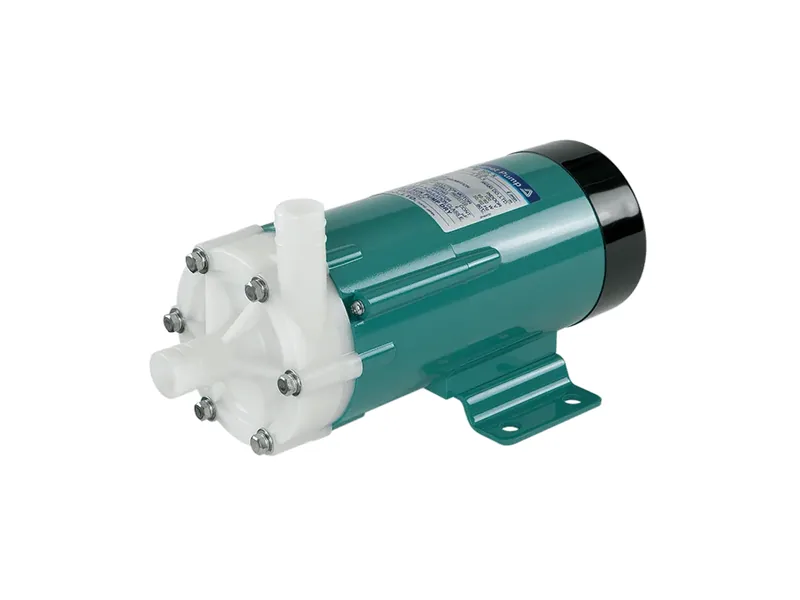
Short answer: a magnetic drive pump for chemical dosing works well for moving chemical around, but it is the wrong tool for accurate feed. A mag drive pump is a sealless centrifugal pump. Its flow follows the system back pressure, so when the pressure changes, the dose changes. Where you need a set number of litres per hour, use a metering pump. Use the mag drive pump for unloading, tank-to-tank transfer, recirculation and day tank filling.
This article is for plant operators, engineers laying out chemical feed systems, and buyers who have been told a mag drive pump is cheaper and never leaks.
What a magnetic drive pump actually is
A magnetic drive pump has an outer magnet on the motor shaft and an inner magnet inside the impeller, separated by a sealed containment shell. The motor turns the outer magnet and the magnetic field drags the impeller round. IWAKI describes its MD series this way: a centrifugal pump driven by a pair of magnets in the impeller and motor shaft, with the pump chamber shielded by the casings so no mechanical seal is needed.
The big benefit of a magnetic drive pump for chemical dosing rooms is no shaft seal, so no seal leaks. For acids, caustic and sodium hypochlorite that matters. IWAKI builds MD series wetted parts in glass fibre reinforced polypropylene (GFRPP), which handles a wide range of common chemicals.
But the hydraulics are still centrifugal. The impeller produces head, not a fixed volume.
Why a magnetic drive pump for chemical dosing cannot meter
A metering pump is positive displacement. Each stroke moves a fixed volume, so stroke length times stroke rate gives flow, and flow stays nearly constant across its pressure range.
A mag drive pump runs on a performance curve. Low resistance gives high flow, high resistance gives low flow, and a closed valve gives zero flow while the impeller keeps spinning. Real systems shift all the time: header pressure changes through the day, strainers load up, temperature and viscosity drift. With a magnetic drive pump for chemical dosing, the dose drifts with them and nothing on the pump tells you.
Three more limits:
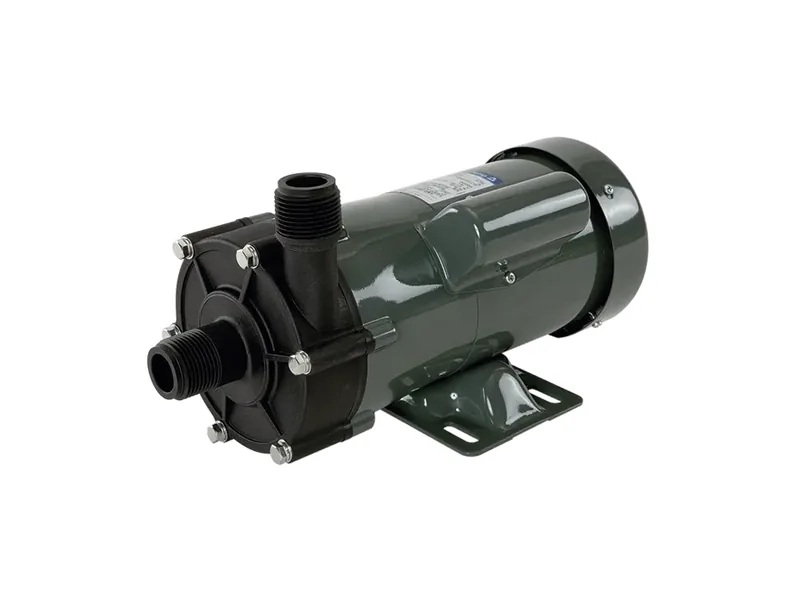
Figure 1: IWAKI MD series GFRPP sealless pump. Image source: IWAKI official website
- No real turndown. Throttling a centrifugal pump down to a small flow wastes energy and heats the liquid.
- Small flows are outside its working range. Many chemical feeds are a few litres per hour.
- No direct proportional control. It will not take a pulse or 4-20 mA signal and pace to flow without an added drive and control loop.
For the full comparison of pump principles, see metering pump vs centrifugal pump.
Where a mag drive pump belongs in a dosing system
You will find a magnetic drive pump for chemical dosing support work in most chemical rooms. It does the transport work:
- Unloading hypochlorite, sulphuric acid or caustic from a tanker or IBC into bulk storage.
- Transfer from a bulk tank to a day tank, started and stopped by level switches.
- Recirculation to keep a tank mixed and stop settling.
- Dilution water supply to a make-up system.
None of these care about exact litres per hour. A sealless pump that just moves liquid reliably is ideal. The standard arrangement is a magnetic drive pump for chemical dosing system transfer duties and a metering pump for the final injection.
When a magnetic drive pump for chemical dosing can be made to work
Some jobs need large flows with loose accuracy, such as shock dosing a cooling water system. A mag drive pump can be considered there, provided you add what it lacks:
- A flow meter on the discharge, suited to the chemical. Our guide to dosing system flow meter selection compares the options.
- A control valve or variable speed drive closing the loop on that flow signal.
- An operating point in the sensible part of the curve, not permanently choked back on a valve.
Even then, a magnetic drive pump for chemical dosing falls short of a metering pump on accuracy and stability. Do not use one to replace a metering pump on disinfection, pH control or any feed that drives compliance or safety.
Practical limits when pumping chemicals
Specific gravity. Motor power and magnetic coupling torque are sized for a given density. IWAKI lists a specific gravity limit of about 1.3 for the MD series, depending on model. Heavy chemicals such as concentrated sulphuric acid must be checked, or the motor overloads and the coupling can slip.
Dry running. The internal bearings are cooled and lubricated by the pumped liquid. Running dry at the end of an unloading job damages them quickly. Fit dry-run protection or a low-level interlock.
Solids and crystals. Particles wear the bearings. Flush crystallising chemicals after shutdown.
Temperature. IWAKI gives 0 to 80°C liquid temperature for the MD series; check the data for other models.
When unloading acids or caustic, confirm valve positions first and wear a face shield and chemical gloves.
Conclusion
Can you use a magnetic drive pump for chemical dosing? For transfer, yes. For accurate metering, no. It is a centrifugal pump whose flow follows back pressure, with no stroke-based turndown or direct signal pacing. Put it on unloading, transfer, recirculation and day tank filling, and let a metering pump handle injection. If a mag drive pump must dose, close the loop with a flow meter and control valve, and check specific gravity, dry-run protection and temperature. Browse magnetic drive pumps and IWAKI pumps, then send us the chemical, density, flow and head and contact our engineers.
FAQ
Can a mag drive pump and a metering pump share one system?
Yes, and it is the usual layout. The mag drive pump fills the day tank from bulk storage and the metering pump doses from the day tank, each with its own interlocks.
Is a magnetic drive pump for chemical dosing self-priming?
Most standard models are not. Install them below the liquid level or prime them first. Self-priming versions exist; check the model.
If I run it on a VFD, does that make it a metering pump?
No. Speed and flow are related, but the relationship moves whenever back pressure moves. Without flow meter feedback, a dose calculated from drive frequency can be far off.
Can a magnetic drive pump for chemical dosing handle hypochlorite?
With suitable materials, yes, and it is common for hypochlorite unloading and transfer. Hypochlorite gasses off, so allow for venting to avoid gas locking the pump.
Is a magnetic drive pump for chemical dosing cheaper than a metering pump?
Not once you add the flow meter, control valve and controls, and it is still less accurate. For the injection point, a metering pump is the better buy.