
Diaphragm Metering Pump for Slurry: Solids, Sludge and Valve Choice
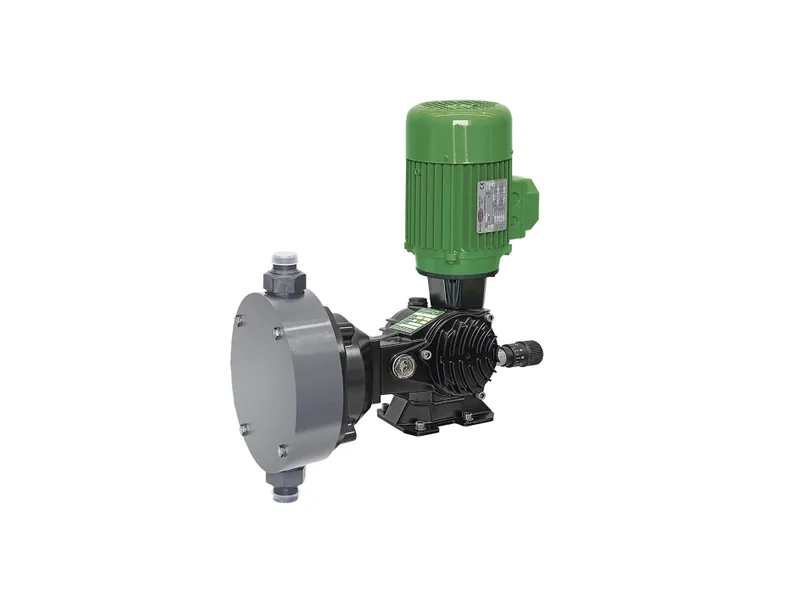
Is a diaphragm metering pump for slurry a good idea? Short answer: light, fine suspended solids that stay in suspension can work; heavy slurry and sludge usually cannot. The diaphragm is not the weak point. The check valves are. A metering pump measures by opening and closing its suction and discharge valves in turn, and once a particle wedges between ball and seat, the valve leaks back, the output swings and in bad cases stops. This guide helps operators at wastewater, chemical and power plants decide whether their fluid suits a diaphragm pump, how to set it up if it does, and what to use if it does not.
Why solids are hard on a diaphragm metering pump for slurry
Think of the check valves as heart valves. On the suction stroke the inlet opens and the outlet closes; on discharge it reverses. Each stroke moves only a small volume, so a ball held off its seat by one grain of sand lets back a large share of it. Solenoid pumps have even smaller stroke volumes, which makes a solenoid unit the worst diaphragm metering pump for slurry.
Solids cause two more problems. Hard particles erode the seat face, so a new ball still will not seal. And solids settle in low-velocity pockets of the head and at low points in the line, especially after shutdown.
Manufacturers say this plainly. The IWAKI EHN solenoid pump data, for example, states its operating conditions assume the liquid has not changed through freezing, viscosity change or slurry contamination. Small solenoid pumps are designed for clean liquids.
Three checks before choosing a diaphragm metering pump for slurry
Work through them in order:
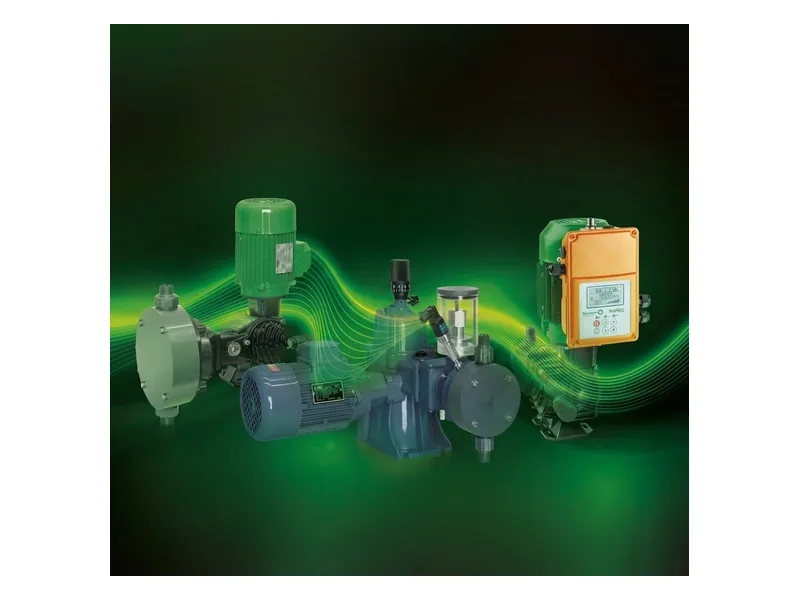
Figure 1: Doseuro metering pump range. Image source: Doseuro official website
- Particle size and hardness. Fine, soft floc is far easier than hard grit.
- Solids content and settling speed. If it settles within minutes, it will pack solid in the head and pipe when the pump stops.
- Are the solids the product or contamination? Contamination can be filtered out. If the solids are what you are dosing, such as lime milk or powdered activated carbon slurry, a strainer is no answer and the pump type has to change.
Setting up a diaphragm metering pump for slurry with light solids
For light suspended solids at modest pressure, a motor-driven mechanical diaphragm pump beats a solenoid pump: longer stroke, bigger valve ports. The Doseuro Model D datasheet lists exactly this case, a pumped liquid containing small amounts of suspended solids where high pressure is not required, and offers a range of wetted materials. See the Doseuro range and our mechanical diaphragm metering pumps.
Changes worth making on a diaphragm metering pump for slurry duty:
- Valves. Use larger bore valves and consider double ball valves so a second seat backs up the first. Spring-loaded valves trap solids. Our guide to single, double ball and spring check valves explains the trade-offs.
- Velocity. Do not oversize the pipe; slow flow lets particles drop out. Avoid U-bends. The Cheonsei KD manual specifically warns against a U-shaped bend when feeding a settling slurry.
- Flushing. Add a clean water flush at the inlet and flush the head and discharge line before every stop.
- Mixing. Keep the tank agitated and lift the suction above the settled zone.
Is a diaphragm pump a good sludge dosing pump?
Generally not. Sludge carries high solids, mixed particle sizes, fibers and debris, and a diaphragm metering pump for slurry of that kind will jam its valves almost immediately. For sludge transfer, recirculation and feed, plants use progressive cavity pumps. A rotor turns inside a stator and moves cavities of liquid forward with no check valves at all, so solids and fibers pass, and flow is roughly proportional to speed, which gives usable metering.
Peristaltic hose pumps are the other option. The liquid only touches the hose bore, rollers squeeze it along, and again there are no valves. They handle abrasive slurries and lime milk well; the trade-off is regular hose replacement. For the basics, compare peristaltic, diaphragm and other pump types.
Does polymer feed for dewatering count as pumping sludge?
No. Polymer solution has no solids; it is simply viscous. Both diaphragm and progressive cavity pumps are used, as covered in diaphragm vs progressive cavity pumps for polymer. It is the sludge feed pump to the press or centrifuge that must be a progressive cavity type.
Common misdiagnoses with a diaphragm metering pump for slurry
Output drops and the first guess is a failed diaphragm. The diaphragm is replaced, nothing improves, and when the valves come out there is a ring of mud on the seat. Another site fitted a fine strainer on the discharge to protect the line; it blocked, pressure built and the relief valve lifted. When a diaphragm metering pump for slurry misbehaves, inspect the valves first. Stop the pump, close the isolation valves and relieve line pressure before opening anything, and wear PPE on acid or caustic slurries.
Conclusion
A diaphragm metering pump for slurry works only when the solids are light and fine: choose a mechanical diaphragm pump, larger bore or double ball valves, keep velocity up and flush at every stop. Heavy slurry and sludge belong on progressive cavity or peristaltic pumps. Send us the fluid, solids content, particle description, flow and pressure and contact our engineers for a recommendation.
FAQ
Can a diaphragm metering pump for slurry handle lime milk?
Some sites run dilute, well-mixed lime milk through large-valve diaphragm pumps with flushing, but sticking valves and scale are routine. For higher strength or bigger flows, progressive cavity and hose pumps are steadier.
Will a suction strainer let me pump liquids with solids?
Only if the solids are contamination. If they are the chemical, the strainer removes your product and blocks quickly.
Can a solenoid diaphragm metering pump for slurry handle a few particles?
We would not. Small strokes and small valve ports make solenoid pumps the most sensitive, and most data sheets ask for clean liquid.
What do I do when particles jam the check valves?
Stop the pump, relieve pressure, remove the valves, rinse balls and seats and inspect the seat faces. Replace scored parts rather than just cleaning them.
Is a progressive cavity pump accurate enough for dosing?
With steady speed and stable back pressure, flow tracks speed closely, and a VFD plus flow meter covers most dosing duties. For very small, precise doses a diaphragm metering pump is still better.