
High Flow Metering Pump Selection: One Large Pump or Pumps in Parallel
Choosing a high flow metering pump starts with one question before any brand comparison: one large pump, or several smaller pumps in parallel? Once a dosing rate reaches several hundred or a few thousand liters per hour, a single pump becomes expensive, heavy and power hungry, and its failure stops the whole dose. Several pumps add piping, valves and control logic. Neither option wins every time; it depends on flow range, pressure, standby needs and floor space. This article covers that trade-off and leaves duty/standby sizing math to a separate guide.
How large can a high flow metering pump get?
Published ranges give a useful reference:
- NEWDOSE ND2000 mechanical diaphragm pumps run from 500 L/h at 1.0 MPa to 2000 L/h at 0.3 MPa. Rated pressure falls as flow rises.
- SEKO NEXA literature lists up to 9000 L/h from a single head.
- Milton Roy documents single-head mechanical diaphragm pumps up to 1800 L/h, and its hydraulic diaphragm range can be built as multiplex units with up to 13 heads.
Maximum flow and maximum pressure rarely come together. Check every high flow metering pump at the actual duty point instead of combining the top flow and top pressure from a brochure.
One large high flow metering pump
Advantages
With a single high flow metering pump you get one pump, one pipe run and one control point. The layout is simple, the footprint small and the valve and instrument count low. For steady demand with little variation, a single large pump is the easiest answer.
Drawbacks
There is no spare capacity, so you normally add an identical standby, which means two large pumps. Turndown is limited; mechanical diaphragm pumps lose accuracy at very short stroke, so a big pump struggles to dose accurately at low load. Heads, diaphragms and valve sets are large parts, and spares cost more and take longer to change.
Parallel pumps and multi-head pumps
Multiple-pump designs come in two forms: separate pumps discharging into a common header, or a multi-head pump with several heads on one drive.
Separate pumps in parallel
Flexibility is the main benefit of splitting the high flow metering pump duty. With three pumps, one runs at low load, two run at peak and the third stands by. Each pump stays in the middle or upper part of its stroke range, so accuracy holds, and one can be serviced while the others run. The cost is more piping, with a check valve, relief valve and isolation valve on every discharge, plus staging logic in the PLC.
Multi-head pumps
One motor drives two or more heads, each with its own stroke setting. This high flow metering pump layout is compact and suits feeding several injection points or splitting one chemical into several streams. The weak point is the shared motor and gearbox: if it fails, every head stops.
Deciding between the two
A few rules of thumb help when you specify a high flow dosing pump:
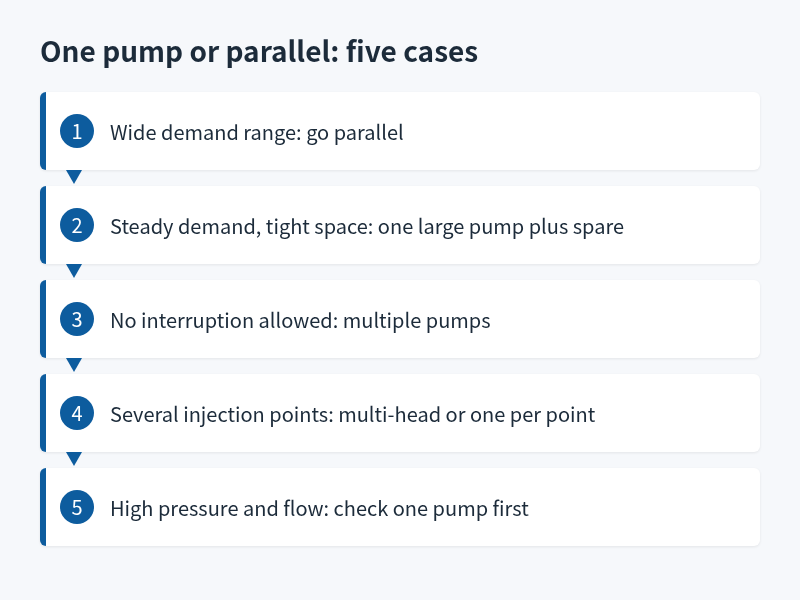
Figure 1: With pumps in parallel, one failure loses only part of the flow.
- Wide demand range: go parallel so each pump works in a good part of its range.
- Steady demand and tight space: one high flow metering pump plus a standby is simpler.
- No interruption allowed: multiple pumps generally give better availability, since one failure only removes part of the flow.
- Several injection points metered separately: use a multi-head pump or one pump per point.
- High pressure and high flow together: confirm a single pump can meet that duty point; if not, parallel is the only route.
For calculating the flow itself and how much margin to keep, see dosing pump flow selection.
Controlling pumps in parallel
Parallel pumps only pay off with sensible control of each high flow metering pump. The usual approach lets the PLC decide how many pumps run from the demand signal. One pump runs at low demand; when it approaches its upper limit the second starts, and total demand is shared between running pumps through 4-20mA or VFD speed control. Rotate the standby by run hours so wear is even.
Put hysteresis on the staging points, or demand hovering near a switch point will cycle the second pump on and off. For plant-wide design ideas, read large water treatment dosing design.
Piping mistakes with a high flow metering pump
Size the suction generously. When several pumps draw from one suction header, velocity rises and the last pump in line tends to cavitate. Give each pump its own suction branch from the tank where possible.
Pulsation from pumps sharing a discharge header adds up, so pressure swings are larger than with one pump. Do not skip pulsation dampeners and back pressure valves. Fit a check valve on each discharge, or header pressure will push back through idle pumps.
A large capacity metering pump also has a large motor with high starting current. Stagger the start of several pumps so the supply is not hit all at once.
Conclusion
Whether a high flow metering pump installation uses one pump or several comes down to three things: how wide the demand range is, whether dosing may stop, and whether flow and pressure can be met at the same duty point by one unit. Steady demand and limited space favor one large pump plus standby. Variable demand and continuous dosing favor parallel or multi-head pumps. In every case, size suction lines, check valves and dampeners for the full flow. Standby sizing is covered in wastewater dosing pump redundancy, and you can browse hydraulic diaphragm metering pumps and Milton Roy pumps. Send your maximum and minimum dose, pressure and chemical, and contact our engineers for a comparison.
FAQ
What counts as a high flow metering pump?
There is no fixed threshold. Several hundred liters per hour and up is usually treated as high flow, and head and piping design need extra attention.
Can two different pump models run in parallel?
Yes, but commissioning and control get harder. Matching models generally makes control and spares simpler.
Is total flow simply the sum of both pumps?
Roughly, but poor suction or high header pressure can reduce it. Confirm by calibration on site.
Mechanical or hydraulic diaphragm for a high flow dosing pump?
As a high flow metering pump, a mechanical diaphragm unit usually suits clean chemicals at moderate pressure. Hydraulic diaphragm pumps fit higher pressure or long continuous duty.
Can a multi-head pump keep running if one head fails?
Usually you can isolate that head and service it while the others run. Check the model manual for your pump.