
Metering Pump Flow Range by Pump Type: Low Flow vs High Flow
The metering pump flow range question has two layers: the capacity band a pump type covers across its sizes, and the turndown a single pump can hold below its own rating. The first tells you which type to buy. The second tells you whether one pump can handle both your maximum and minimum dose.
Buyers often ask for a single metering pump flow range chart that answers everything. Below we use published catalogue data to walk through solenoid, mechanical diaphragm, hydraulic diaphragm and plunger pumps, giving typical upper limits and how each adjusts. Values for a specific model should be checked against the manual for that model. These figures are here to point you in the right direction.
Capacity band vs turndown ratio
The capacity band is the span from the smallest to the largest size in a series, for example a solenoid line running from 2 L/h to 50 L/h. Turndown is the ratio between one pump's maximum flow and the lowest flow it can hold steadily. At 10:1, a 100 L/h pump runs stably down to around 10 L/h.
The two get mixed up all the time. When a supplier says the metering pump flow range is "very wide", ask whether that means the series or one pump.
Solenoid pumps: the low-flow workhorse
An electromagnet drives the diaphragm, so the design is simple and the metering pump flow range sits at the low end:
- NEWDOSE DFD runs from DFD-02-16 at 2 L/h to DFD-50-02 at 50 L/h, with pressure falling as flow rises.
- Cheonsei SP-B tops out between 25 and 240 mL/min, roughly one to fourteen liters per hour.
- SEKO TEKNA reaches 54 L/h at 20 bar, and KOMPACT 9 L/h.
Most solenoid pumps adjust both stroke length and stroke rate. SP-B stroke length runs from 40 to 100 percent, and stroke rate stacks on top, so the combined range goes lower. Digital solenoid pumps stretch it much further, and the LMI EXCEL AD data sheet quotes up to 1000:1 turndown.
Mechanical diaphragm pumps: the widest middle band
A motor and gearbox push the diaphragm directly. This type has the widest metering pump flow range in the middle band:
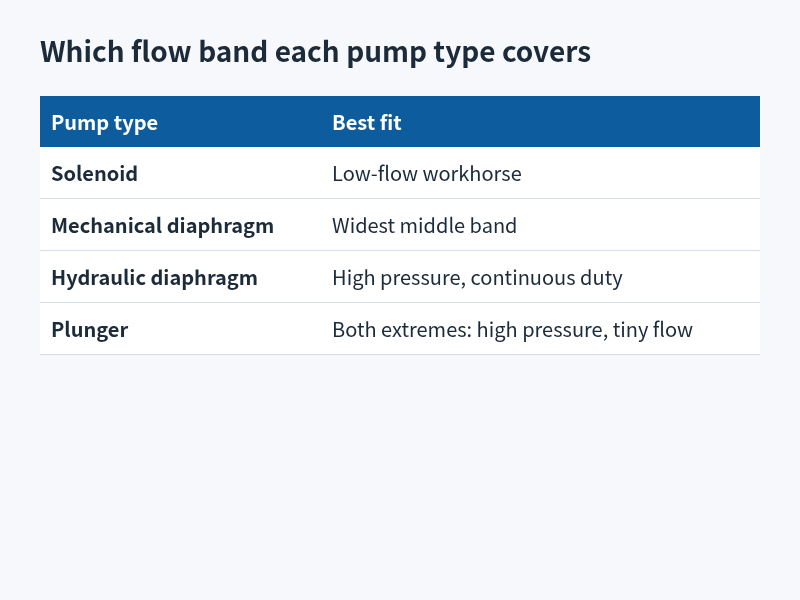
Figure 1: Capacity band and turndown ratio are different things; check both.
- NEWDOSE NDWS covers 8 to 386 L/h, NDWL 275 to 530 L/h and ND2000 500 to 2000 L/h.
- Cheonsei KD covers 20 to 45,000 mL/min with an effective adjustment of 20 to 100 percent, about 5:1.
- SEKO KOSMO goes up to 2300 L/h at 12 bar.
- The Milton Roy smart digital mechanical diaphragm series reaches 1800 L/h per head with a stated 1000:1 turndown.
A plain manual-stroke mechanical diaphragm pump typically manages around 10:1. NEWDOSE HND reaches up to 30 bar in a 47 to 160 L/h metering pump flow range, and its catalogue positions it as a replacement for some low-pressure hydraulic units.
Hydraulic diaphragm pumps: pressure and continuous duty
Hydraulic oil drives the diaphragm, which stays balanced on both sides. That suits high pressure and around-the-clock running, and it pushes the metering pump flow range upward. SEKO NEXA reaches 9000 L/h and 200 bar, and NYVA 660 L/h and 124 bar. The large Cheonsei KHV-14 and KHV-24 go beyond 10,000 mL/min.
Steady-state accuracy and repeatability are usually better than on mechanical diaphragm pumps. Our article on hydraulic diaphragm pump flow accuracy explains how to read those figures.
Plunger pumps: both extremes
Plunger pumps stretch the metering pump flow range at both ends, with very small flows and very high pressures. SEKO PS1 reaches 304 L/h and PS2 1000 L/h. Milton Roy PQ offers a plunger liquid end with up to 8657 L/h and up to 1035 bar. Cheonsei KP comes in a full spread of plunger sizes, and its small sizes exceed 100 bar. The price you pay in maintenance is packing wear, and toxic chemicals need care.
Choosing by metering pump flow range
Low flow
Under about 15 L/h at modest pressure, start with a solenoid pump. It is cheap, easy to install and low maintenance. For even smaller doses with automatic control, a digital solenoid pump holds steady at low flow. More detail is in our small dosing pump selection guide.
High flow
Above a few hundred L/h, the metering pump flow range overlaps between types, so sort by pressure. Up to roughly 12 bar, a mechanical diaphragm pump fits. Higher pressure or continuous duty points to hydraulic diaphragm. Above that, or where a small controlled leak is acceptable, use a plunger pump.
Wide swings
If your maximum and minimum doses differ by more than ten times, one manual pump usually cannot cover the metering pump flow range you need. Use a high-turndown digital pump, or pair a large and a small pump. Why normal flow belongs mid-scale is covered in dosing pump flow selection, and why stroke should not sit very low for long is in the 30 percent stroke rule.
Safety note: before commissioning or calibration, confirm the discharge valve is open and the back-pressure valve is set correctly, then start the pump.
Conclusion
There is no single metering pump flow range. Solenoid pumps cover tens of liters per hour and below, mechanical diaphragm pumps from a few liters to around two thousand, and hydraulic diaphragm and plunger pumps take over for higher pressure and larger flows. Single-pump turndown runs from about 5:1 to 1000:1 depending on how it adjusts. Pick the type from maximum flow and pressure, then check turndown against minimum flow. Send your duty data through our contact page and we will shortlist models from our metering pump range.
FAQ
Where can I find a metering pump flow range chart?
Every brand catalogue has spec tables. Checking by pump type is more accurate than one master chart.
Is 1000:1 turndown better than 10:1?
Not always. High turndown means strong low-flow ability, but you pay for it, and narrow-range duties do not need it.
Can a solenoid pump deliver 100 L/h?
Generally no, most solenoid pumps stay within tens of liters per hour. Beyond that, look at mechanical diaphragm pumps.
Does high viscosity change the flow range?
Yes, actual output is usually lower than catalogue values with viscous liquids. Use high-viscosity valves and derate per the manual.
Is it normal for real flow to differ from the rated value?
Yes. Catalogue values are typically measured on standard liquid at set pressure, so calibrate on site.