
Iron and Manganese Removal: Oxidant Dosing for Well Water
Iron and manganese removal from groundwater comes down to one rule: iron is easy, manganese is stubborn. Dissolved ferrous iron oxidizes quickly once the water is aerated. Manganese reacts with air so slowly at neutral pH that aeration alone rarely gets it below the limit, so most plants dose an oxidant such as sodium hypochlorite or potassium permanganate ahead of a greensand or manganese dioxide filter. This guide is for operators and designers of small municipal wells, rural water systems and industrial intakes who need to plan the chemical feed.
Why well water needs iron and manganese removal
Fresh well water often looks clear, then turns yellow and cloudy after it stands. That is ferrous iron meeting air. Manganese is sneakier. The water stays clear, but fixtures and pipes slowly pick up black-brown deposits, laundry gets stained, and softener resin or RO membranes downstream foul.
A common story: the plant was built with aeration and a sand filter, iron dropped, manganese never did. The operator then has to retrofit oxidant dosing, and the injection point and piping get reworked. Planning iron and manganese removal as one process from the start avoids that.
The typical iron and manganese removal train
Most systems follow the same sequence: aeration, oxidant dosing, pH correction if needed, filtration, then disinfection. Each step has its own job:
Figure 1: ProMinent gamma/XL solenoid metering pump. Image source: ProMinent official website
- Aeration oxidizes most of the iron and strips some carbon dioxide.
- The oxidant handles manganese and finishes off any iron the air missed.
- The oxide coating on greensand or manganese dioxide media catalyzes manganese oxidation and holds the particles.
- Final disinfection brings the water to drinking or process requirements.
High-iron, low-manganese water sometimes needs only aeration and filtration. Where manganese is clearly above the limit, oxidant dosing is part of iron and manganese removal.
Choosing an oxidant for iron and manganese removal
Sodium hypochlorite
Chlorine oxidizes iron fast but manganese slowly unless the filter media is coated and catalytic. The upside is that one chemical also covers disinfection, and free chlorine is easy to monitor online. The downside is off-gassing: small pump heads vapor-lock. Our article on hypochlorite gas lock explains the fixes.
Potassium permanganate
For iron and manganese removal where manganese dominates, permanganate works fast, and the manganese dioxide it forms helps filtration. Many plants with a real manganese problem use it. The catch is overdosing turns the water pink, and customers call the same day. Underdose and manganese slips through the filter. Permanganate feed needs fine adjustment and, ideally, flow pacing from the well pump.
You can combine both: hypochlorite for iron and disinfection, permanganate to polish manganese. Use separate pumps and lines, and never mix them in one tank.
Potassium permanganate dosing for iron and manganese removal
Permanganate comes as dark purple crystals. It dissolves slowly and has limited solubility, so a few habits save trouble:
- Mix to the supplier's recommended strength and lean toward dilute. Strong solutions drop crystals that jam check valves.
- Use a tank mixer. Add water first, then chemical, and mix until no grains remain on the bottom.
- Keep the foot valve above the tank floor and fit a strainer so undissolved grains stay out of the pump head.
- Choose oxidation-resistant wetted parts, typically a PVDF head with PTFE seals, and keep the solution away from ordinary rubber and organics.
- Wear gloves and goggles. Splashes stain skin brown.
If the water goes pink, cut the dose first, then check whether well flow dropped while the pump kept running at a fixed rate. That mismatch is the usual cause in small plants.
pH correction and the injection point for iron and manganese removal
Low pH slows every step of iron and manganese removal, manganese most of all. Aeration nudges pH up by stripping carbon dioxide. If raw water is still too acidic, feed dilute caustic before or with the oxidant, paced by an online pH analyzer. Probe placement and control tuning are covered in our pH dosing system control guide.
Inject after aeration and ahead of the filter, with enough mixing and contact time in between. An inline mixer or reaction pipe after the injection point helps. Dose too close to the filter and the chemical enters the bed unmixed.
New greensand has not yet built a stable oxide coat, so manganese can run high for the first weeks. A slightly higher oxidant dose during this period, plus close watch on water color, keeps iron and manganese removal on track.
Metering pumps for iron and manganese removal
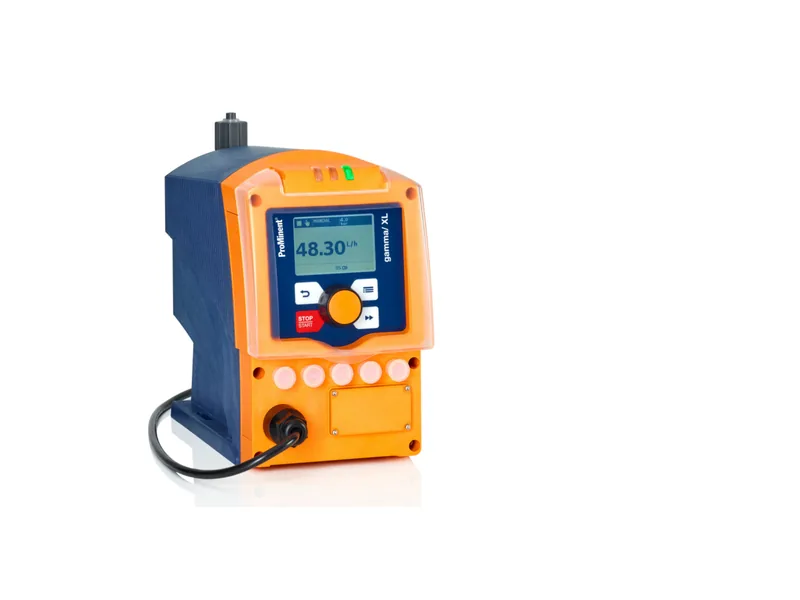
Most well systems need small flows, so solenoid metering pumps are the usual choice. The ProMinent gamma/XL solenoid metering pump, for example, is listed by ProMinent at 4 mL/h to 80 L/h, offers a self-degassing dosing head, and detects hydraulic faults such as gas in the head, overpressure and no pressure, which suits off-gassing hypochlorite. PVDF heads with PTFE seals are among its material options. Browse solenoid metering pumps and our ProMinent brand page for more.
A few selection tips for iron and manganese removal:
- One pump per chemical (hypochlorite, permanganate, caustic), ideally duty plus standby.
- The pump should accept a flow signal so dosing follows well output.
- Size from the active ingredient. The method in our hypochlorite dosing calculation article works for permanganate too.
Conclusion
Successful iron and manganese removal starts with separating the two problems. Aeration handles most iron; manganese needs chlorine or permanganate working with a catalytic filter. Correct low pH first, inject ahead of the filter with enough contact time, and keep permanganate dilute and flow-paced to avoid pink water. Send us raw water iron, manganese, pH and flow, and contact our engineers for a dosing package that fits.
FAQ
Can aeration alone handle iron and manganese removal?
Usually not. Manganese reacts with air very slowly at neutral pH, so most systems need an oxidant.
What do I do if the water turns pink?
Reduce the permanganate dose, then check whether well flow dropped. Long term, pace the pump from a flow signal.
Can I use chlorine and permanganate together?
Yes, as long as each has its own tank, pump and injection line. Never premix them.
Why is manganese high right after a media change?
New media has no stable oxide coating yet. Raise the oxidant slightly and monitor until the bed conditions.
What head material suits these chemicals?
Both are oxidizers. A PVDF head with PTFE seals is common; confirm against your solution strength.