
Hydraulic Diaphragm Pump Refill Valve: Function and Setting
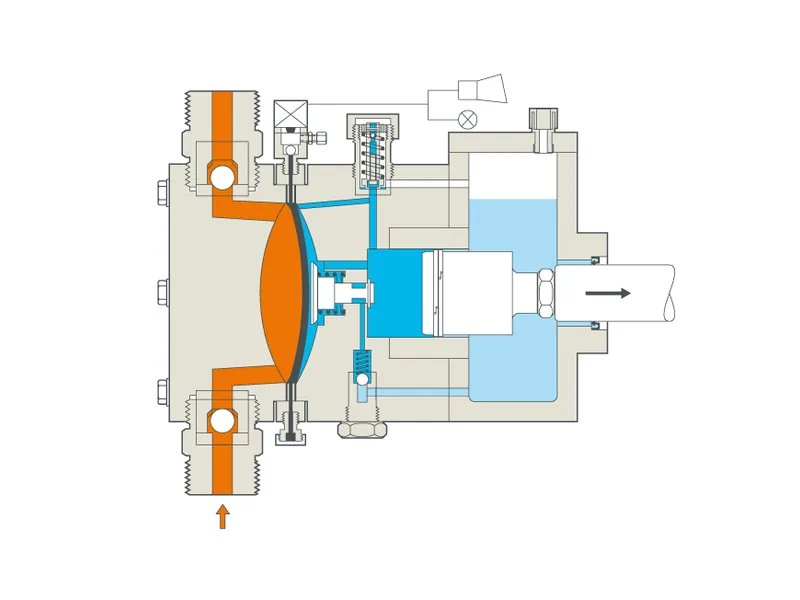
The hydraulic diaphragm pump refill valve tops up the hydraulic chamber from the oil reservoir on every suction stroke. It replaces oil lost past the plunger clearance and oil dumped by the relief valve, so the chamber stays full. Too little refill and the diaphragm never reaches full stroke, so flow drops. Too much refill and the diaphragm is pushed past its working position into the head support plate, and its life falls sharply. A correctly working hydraulic diaphragm pump refill valve is what keeps both accuracy and diaphragm life where they should be.
This article covers how the valve works, what failure looks like and how to set it. Relief valve lifting has its own article; it is mentioned here only where the two valves interact.
Why the Hydraulic Chamber Needs Refill
In a hydraulic diaphragm pump, the plunger moves oil and the oil moves the diaphragm. In theory the oil volume never changes. In practice a little oil slips past the plunger clearance on every stroke and returns to the reservoir, and the relief valve dumps more whenever it lifts. Without refill, the chamber slowly empties, the diaphragm displaces less on each stroke, and delivered flow drifts down.
The hydraulic diaphragm pump refill valve solves this. It is usually a spring-loaded check valve, or a refill mechanism controlled by diaphragm position.
Two Common Refill Valve Designs
Spring-loaded refill valve
Near the end of the suction stroke the diaphragm reaches its rear stop. Chamber pressure falls below the valve's cracking point, the valve opens and oil flows in from the reservoir. Spring preload sets the timing: too loose and it over-refills, too tight and it under-refills.
Diaphragm position control
Some premium designs only let the refill valve open when the diaphragm has truly reached its rear position, which prevents over-refill. LEWA ecoflow pumps use this kind of approach, so site work is usually limited to cleaning and inspection rather than adjustment.
How the Refill Valve and Relief Valve Work Together
The relief valve lets oil out when pressure is too high. The hydraulic diaphragm pump refill valve lets oil in when the chamber is short. One takes away, the other puts back, and together they hold the chamber balance. If the relief valve lifts often, the refill valve works harder. If the refill valve sticks closed, oil lost through the relief valve never comes back. When you chase a flow problem, look at both.
Signs of Under-Refill and Over-Refill
Under-refill: flow falls slowly, the pump delivers less after an hour than at start-up, the discharge gauge swing gets smaller, and you may hear gurgling from air in the chamber. Typical causes are a stuck poppet, dirty oil blocking the refill passage, low oil level or the wrong oil viscosity.
Over-refill: a distinct knocking, imprint marks on the diaphragm, and a removed diaphragm that bulges in the centre. Typical causes are a hydraulic diaphragm pump refill valve spring set too loose, or high suction resistance pulling the valve open early.
Inspecting and Setting the Hydraulic Diaphragm Pump Refill Valve
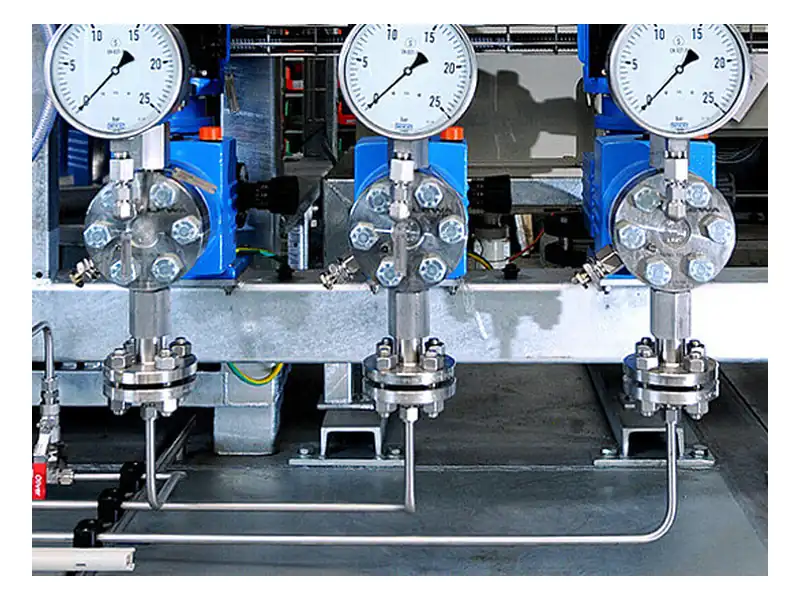
Figure 1: LEWA 力华 ecoflow diaphragm pump heads with gauges. Image source: LEWA 力华 official website
- Stop the pump and release pressure from the discharge line.
- Check reservoir level and oil condition. Change dirty or emulsified oil first; see which oil to use.
- Remove the hydraulic diaphragm pump refill valve and clean the poppet, seat and strainer. Check the spring for distortion.
- Refit it at the turns or scale setting in the manual. Do not guess from experience.
- Start the pump, bleed the hydraulic chamber until air is gone, then measure actual flow with a calibration column.
- If flow is still low, trim the setting per the manual and recalibrate after every change.
If flow stays low after adjustment, look at the suction side using our hydraulic diaphragm pump no flow guide.
What to Watch on Routine Rounds
You cannot see the hydraulic diaphragm pump refill valve from outside, but its condition shows up elsewhere. A steadily falling reservoir level means an external leak that keeps the valve busy. A rising level suggests a damaged diaphragm letting chemical into the oil. Dark, milky or emulsified oil will soon gum up the poppet. Louder gurgling than usual points to air from under-refill.
Log delivered flow and oil level on the rounds sheet and compare weekly. If flow drops beyond your tolerance, schedule a check of the valve and oil before the pump stops dosing.
Suction Conditions Affect Refill
Undersized or long suction lines and blocked foot valves or strainers increase vacuum in the pump head on the suction stroke. Oil pressure behind the diaphragm falls with it, and the refill valve may open early and over-refill. When you inspect the valve, also check suction pipe size and the strainer.
A Quick Field Test for Refill Problems
You can check the hydraulic diaphragm pump refill valve without stripping the pump. Run at full stroke against normal back pressure and time a calibration column fill right after start-up. Repeat after one hour of running. If the second reading is clearly lower, oil is leaving the chamber faster than it comes back, which points to under-refill. If flow is steady but the pump knocks at the end of each discharge stroke, suspect over-refill and check the setting before the next diaphragm is damaged.
Conclusion
The hydraulic diaphragm pump refill valve replaces oil lost through clearances and the relief valve. Too little refill costs flow; too much costs diaphragms. Check it alongside the relief valve, get oil level and quality right first, clean and inspect the valve, set it to the manual and confirm with a calibration column. For models and spares, see our hydraulic diaphragm metering pumps and the LEWA range, or contact our engineers.
FAQ
Does the hydraulic diaphragm pump refill valve need regular adjustment?
No. It is set at the factory. Adjust only after replacing the valve or spring, or when flow is clearly wrong.
Flow dropped after an oil change. Is it the refill valve?
Usually it is air in the chamber. Bleed per the manual first.
What happens when the refill valve clogs?
Flow is normal at start-up and falls the longer the pump runs.
Can the refill valve and relief valve be swapped?
No. They differ in design and setting, and they do opposite jobs.
Why does the diaphragm bulge in the middle?
Usually over-refill. Check the refill setting and suction resistance.