
Chemical Dosing System Components: Tank to Injection Point
When you prepare a specification, check a quotation or accept a dosing skid, "a tank and a pump" is not a useful description. Missing one small item can cause months of trouble on site. This guide walks through chemical dosing system components in the order the chemical flows, from the tank to the injection point, so you can use it as a checklist or as the layout for a system diagram.
Chemical dosing system components at a glance
A typical system breaks down into five functional groups:
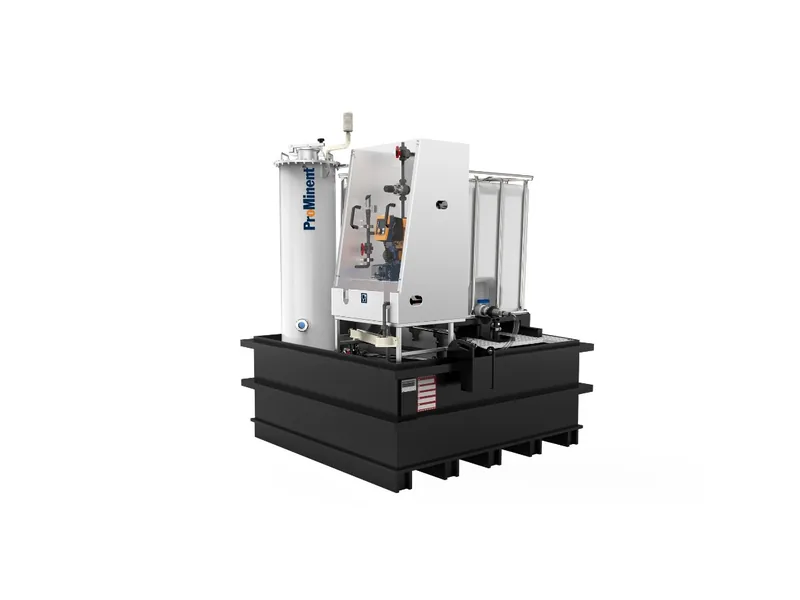
Figure 1: ProMinent DULCODOS safe IBC dosing station. Image source: ProMinent official website
- Storage and preparation: day tank or bulk tank, mixer.
- Level and suction: level sensor, fill valve, foot valve, strainer.
- Metering: one duty and one standby metering pump in most plants.
- Line accessories: pressure relief valve, back pressure valve, pulsation damper, pressure gauge, check and injection valves.
- Controls: control panel, VFD or 4–20 mA signal, interlocks and alarms.
Which chemical dosing system components you actually need depends on the chemical, the dose rate and the level of automation.
Storage and preparation
Tanks
Material follows the chemical. Sodium hypochlorite and PAC usually go in PE or PP tanks; strong acids and caustic need a proper compatibility check. Tanks are the first of the chemical dosing system components, so size the day tank for one to a few days of use. Too small means frequent refills; too large and some chemicals degrade before use.
Mixers
Powder chemicals and polymer need mixing; most liquid chemicals do not. Polymer mixers must run slowly, as high shear breaks the polymer chains and cuts performance.
Level and suction
The level sensor shows how much chemical remains and provides low-level protection. The pump should stop at low level, because running dry wears diaphragms and valve balls quickly.
A Y-strainer and isolation valves usually sit ahead of the pump suction for cleaning and maintenance. Do not choose a mesh that is too fine, or viscous chemicals will block it.
The metering pump
Of all chemical dosing system components, the pump decides how accurate the dose is. Most systems run duty and standby pumps in parallel, switched with valves. Size for maximum dose with 20–30% margin, and set pressure from injection point pressure plus line losses.
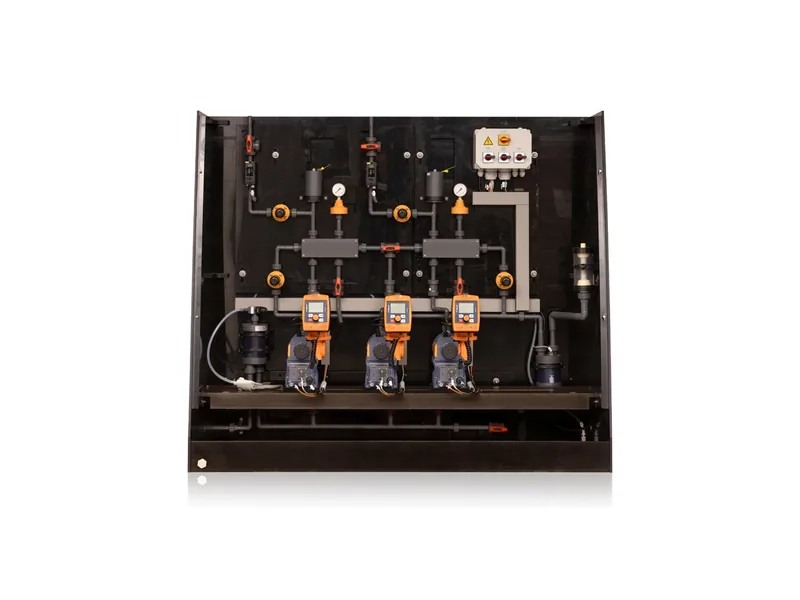
Solenoid pumps suit small flows; motor-driven diaphragm pumps suit larger flows or higher pressure. Suppliers such as ProMinent also offer complete panel-mounted units with pump, valves and controls on one plate. Typical PAC unit sizes are covered in our PAC dosing unit specifications.
Line accessories: the part most often skipped
This is where many site problems start, so list these chemical dosing system components explicitly:
- Pressure relief valve: protects pump and piping if the discharge is blocked. See relief valve setting.
- Back pressure valve: keeps dosing accurate when discharge pressure is low or siphoning is possible.
- Pulsation damper: smooths pressure peaks on long lines or high flows. See damper installation.
- Pressure gauge with diaphragm seal: shows pump and line condition.
- Check valve and injection valve: stop process fluid flowing back.
- Calibration column: measures actual pump output without breaking into the line.
Differences by chemical
The same name, "dosing unit", hides very different chemical dosing system components:
- Sodium hypochlorite: off-gasses, so use a pump head with a degassing valve, keep suction short and use PVC or PVDF rather than metal.
- PAC: liquid PAC can be dosed directly; powder needs a dissolving tank and mixer.
- Polymer: needs a make-up and ageing tank, slow mixing and a pump that handles viscosity.
- Sulfuric and hydrochloric acid: material selection and fume control are the priorities.
- Caustic soda: crystallises in cold weather, so outdoor lines need heat tracing.
Controls
The panel handles start and stop, duty and standby changeover and alarms. In automatic mode the pump follows a 4–20 mA or pulse signal from a flow meter or residual analyser. Common interlocks are low tank level, high discharge pressure and no main-line flow. Outdoor units need weather protection; chemical rooms need ventilation.
Using the list during acceptance
At factory acceptance or site handover, walk the skid with the drawing in hand and tick off the chemical dosing system components one by one. Check that wetted materials match the datasheet, not just the label on the box. Open the relief valve outlet and confirm it returns to the tank. Run each pump against the calibration column and record the result. Trip the low-level switch and watch the pump stop. These checks take about an hour and catch most problems before the chemical arrives.
Keep the finished checklist with the O&M manual. When spare parts are ordered later, the record of chemical dosing system components, models and materials saves a lot of guesswork, especially when the original installer is no longer around.
Common specification mistakes
- No relief valve, or a relief outlet not piped back to the tank.
- Low discharge pressure without a back pressure valve, giving unstable flow.
- Long, narrow suction lines that the pump cannot prime.
- Hypochlorite piping in an incompatible material.
- No calibration column, so the dose is a guess.
For a hypochlorite example, see our sodium hypochlorite dosing flow diagram.
Conclusion
Chemical dosing system components fall into five groups: storage and preparation, level and suction, metering pumps, line accessories and controls. The items most often cut from a budget are the relief valve, back pressure valve, damper and calibration column, yet these decide whether the system runs safely and accurately. Check each of the chemical dosing system components against this list before you sign off a design or a quote.
To configure a dosing unit for your process, contact our engineers.
FAQ
Do I need duty and standby pumps?
For continuous dosing that cannot stop, yes. For intermittent low-flow duty, one pump plus spares may be enough.
Do liquid chemicals need a mixer?
Usually not. Mixers are for dissolving powders and preparing polymer.
Can I skip either the relief valve or the back pressure valve?
No. The back pressure valve protects accuracy; the relief valve protects equipment from overpressure.
What is a calibration column for?
It measures actual pump output in place, for commissioning and routine checks, without opening the line.
What should a chemical dosing system diagram show?
Tank, pumps, valves and instruments with flow direction, plus pipe sizes, materials and control signals.