
Flocculant Dosing System: Role, Main Parts and Skid Layout
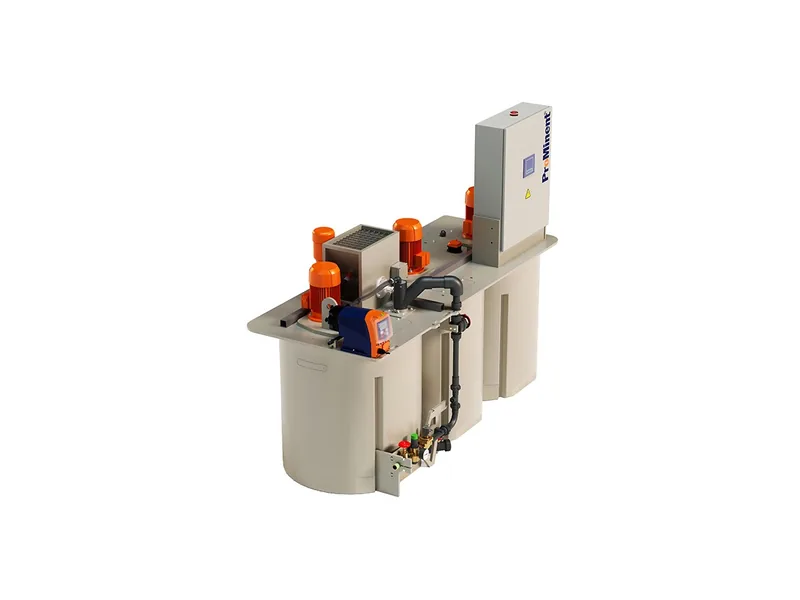
A flocculant dosing system exists to turn a coagulant or polymer into a stable solution and feed it continuously, so fine solids can form flocs that settle or dewater. You will see this on sewage plants ahead of clarification, on drinking-water works before filtration, and on sludge conditioning lines before a press. This article is for operators and for engineers laying out a chemical room, and it stays with the unit itself rather than jar-test doses.
What a flocculant dosing system is supposed to do
Fine particles will not settle on their own. A coagulant such as PAC first reduces surface charge, then a polymer such as PAM binds the micro-flocs into larger ones. If the solution strength drifts or the injection point is wrong, the clarifier or filter press cannot make up for it later.
The flocculant dosing system has three jobs: dissolve a powder or a concentrate into a pumpable solution, give PAM enough aging time, and meter the solution to the process. Skip any of those steps and you get undissolved lumps, weak flocs or a dose that no longer tracks the water flow. The order of PAC and PAM is covered in PAC and PAM dosing sequence; this page is about the hardware.
Main parts of a flocculant dosing system
A typical flocculant dosing system is built from these pieces:
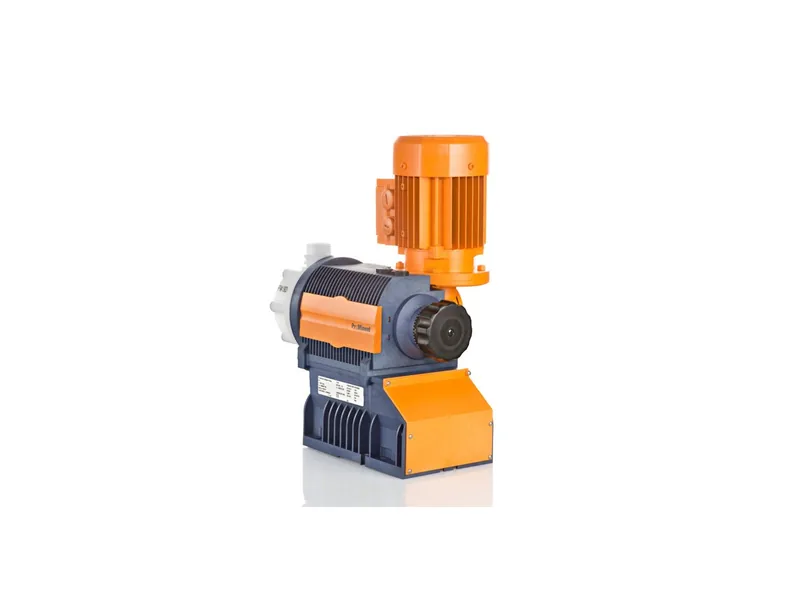
Figure 1: ProMinent Sigma motor-driven metering pump. Image source: ProMinent official website
- Solution tanks. PAC often uses two tanks, one dissolving and one in service. PAM is usually a three-chamber unit for wetting, aging and storage.
- Mixers. PAC needs enough agitation to break cakes. PAM should be stirred gently, or the polymer chains shear and the solution loses strength.
- Metering pumps that deliver the prepared solution to the pipe or basin, with enough turndown for normal operation.
- Level sensors to start make-up water and to stop the pump before it runs dry.
- A control panel for mixing, refill, pump start-stop and status signals back to the plant.
- Valves and accessories: a suction strainer, relief and back-pressure valves, a calibration column and an injection valve at the dose point.
PE tanks are the usual choice. PAM is sticky, so a sloped floor and a wash-out connection save a lot of cleaning time. Size the pump for the diluted solution flow, not the neat chemical, and keep PAM suction lines short and reasonably large. ProMinent's Ultromat line is a packaged polymer preparation unit described as a continuous make-down system for dry or liquid polymer; the feed pump on many skids is a Sigma motor-driven mechanical diaphragm metering pump.
Packaged skid or a split flocculant dosing system
A packaged flocculant dosing system puts preparation, aging, storage and the pumps on one skid. The footprint is small and field wiring is light, which suits mid-size plants that want to start quickly. Connect water and power, calibrate, and the unit can run.
A split layout keeps the make-down room separate from the pump room. That helps when several dose points share one solution, or when a chemical store already exists. The trade-off is long interconnecting pipe. PAM left standing in those lines will film the wall, so you need a recycle line or a flush routine.
Choose a skid when the plant is compact and wants a fast start; choose a split flocculant dosing system when you have multiple dose points or an existing chemical store. In either case the pumps should come out for service without cutting the frame. For component-level detail see PAC automatic dosing system components, how a PAM automatic unit works and the three-chamber PAM unit.
Prep and feed problems that show up first
Dry PAM cakes if the feeder outlet picks up moisture. Lumps drop into the wetting cone, the aging chamber fills with white knots, and the pump valves stick. Keep the hopper dry and check the screw for buildup.
Aging time is the next failure. Some sites treat a three-chamber tank as a two-chamber one and pull solution before it has finished hydrating. Follow the chemical supplier's aging time, and add margin in winter when the water is cold.
Injection location matters as well. PAC needs strong mixing; PAM should follow with enough distance for flocs to grow. Dosing into an elbow or a pump suction can shear the flocs apart. PAC solution is acidic, so rinse skin or eyes immediately with plenty of water. Spilled PAM turns a floor into ice; keep wash water out of the sludge line so you do not plug it. Isolate and depressurize the pump before opening the head.
Conclusion
A flocculant dosing system prepares PAC or PAM and feeds it at a controlled rate. The core parts are the tanks, mixer, metering pump, level sensor and panel. Use a packaged skid for compact plants and a split layout for large or multi-point duty, and get drying, aging and the injection point right before you chase dose on the clarifier. Compare packaged units on the dosing skid page and brand data on the ProMinent page. Send us the flow, the chemical and the number of dose points, and contact our engineers to check a layout.
FAQ
Does every flocculant dosing system need automatic make-down?
No. A small, steady plant can batch by hand and use a metering pump. Automatic make-down is worth it when water quality changes often or the dose must track flow.
Can PAC and PAM share one flocculant dosing system tank?
Do not share a tank. The two chemicals dissolve and age differently, and you cannot adjust them separately if they are mixed. They can sit in the same room with their own tanks and pumps.
How should I size the pump on a flocculant dosing system?
Size it on the prepared solution flow, with a little spare capacity. For PAM, keep the suction short and choose a pump head that tolerates polymer; a mechanical diaphragm metering pump is the usual choice.
What fails first on a packaged flocculant dosing system?
Mixers, level switches and pump valves. Read the panel alarm, then check for a false level and for a dry suction. Keeping a spare valve kit on site cuts downtime.
What changes in winter when making down PAM?
Cold water slows dissolving, so extend the aging time and, if needed, insulate the make-up water and tanks. Otherwise the solution looks strong but still under-performs in the basin.